Nihal Pushpakumara Don Bamunusinghage, Dangolla Ashoka, Hettiarachchi Ranjani, Abeynayake Preeni, Stephen Craig
Department of Wildlife Conservation, Sri Lanka.
Faculty of Veterinary Medicine and Animal Science, University of Peradeniya, Sri Lanka.
J Vet Med. 2019 Jul 11;2019:7808517. doi: 10.1155/2019/7808517. eCollection 2019.
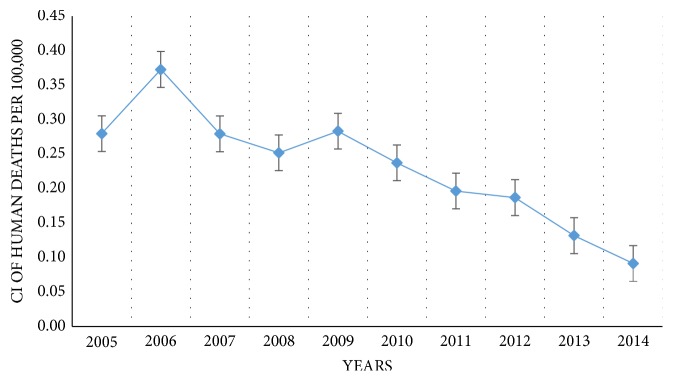
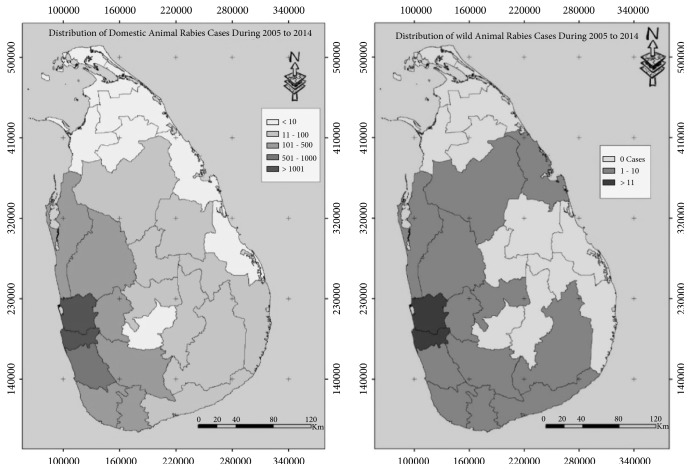
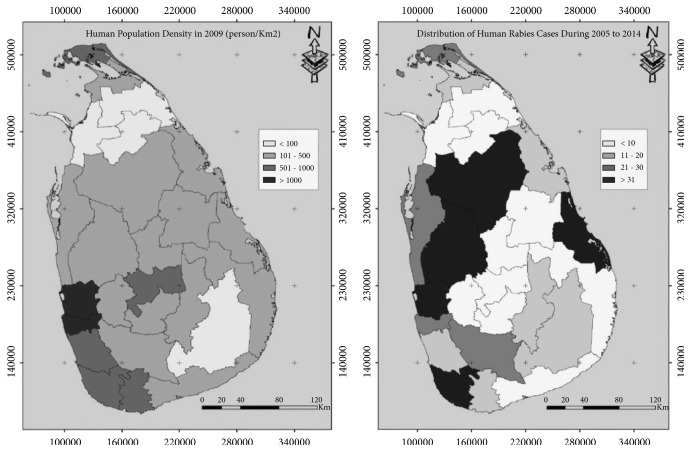
Sri Lanka is progressing towards its goal of eliminating human rabies. This goal rests on programs designed to limit canine rabies, which in turn requires a combination of targeted dog rabies control and a better understanding of the movement of the virus between domestic animals, people, and wildlife. Coordinated and integrated surveillance of the disease between human and animal health sectors underpins successful rabies elimination. Our objective was to review surveillance data from 2005 to 2014 to assemble the first multispecies synthesis of rabies information in Sri Lanka and, in doing so, assess needs and opportunities for a One Health approach to rabies surveillance in the country. Our descriptive epidemiological findings were consistent with other studies showing a decline in human cases, endemic and unchanging numbers of dog cases, a relationship between human density and the occurrence of human and animal cases, and significant gaps in understanding trends in rabies incidences in livestock and wildlife. Assessing the trends in the data from the three government organizations responsible for rabies surveillance was difficult due to lack of information on animal population sizes, unquantified sampling biases due to inequities in access to diagnostic capacities, regulatory and administrative barriers, and a continued reliance on clinical means to establish a diagnosis. The information required for a comprehensive rabies control programme was not standardized or consistent, was not in one place, showed significant gaps in completeness, and was not amenable to routine and rapid analysis. Achieving rabies elimination in Sri Lanka would benefit from harmonization of diagnostic and information management standards across animal and human health sectors as well as equitable access to diagnostic capacity for all regions and species.
斯里兰卡正在朝着消除人类狂犬病的目标迈进。这一目标基于旨在控制犬类狂犬病的项目,而这反过来又需要有针对性地控制犬类狂犬病,并更好地了解病毒在家畜、人类和野生动物之间的传播情况。人畜健康部门之间对该疾病进行协调和综合监测是成功消除狂犬病的基础。我们的目标是回顾2005年至2014年的监测数据,汇编斯里兰卡第一份狂犬病信息的多物种综合资料,并在此过程中评估该国采用“同一健康”方法进行狂犬病监测的需求和机遇。我们的描述性流行病学研究结果与其他研究一致,显示人类病例数下降、犬类病例数呈地方性且不变、人类密度与人类和动物病例的发生之间存在关联,以及在了解家畜和野生动物狂犬病发病率趋势方面存在重大差距。由于缺乏动物种群规模信息、诊断能力获取不平等导致的未量化抽样偏差、监管和行政障碍以及持续依赖临床手段进行诊断,评估负责狂犬病监测的三个政府组织的数据趋势很困难。全面的狂犬病控制计划所需的信息没有标准化或一致,没有集中在一处,在完整性方面存在重大差距,也不便于进行常规和快速分析。在斯里兰卡实现狂犬病消除将受益于动物和人类健康部门之间诊断和信息管理标准的统一,以及所有地区和物种公平获得诊断能力。