Nie Shuangxi, Zhang Yuehua, Wang Linmao, Wu Qin, Wang Shuangfei
State Key Laboratory of Biobased Material and Green Papermaking, Qilu University of Technology, Shandong Academy of Sciences, Jinan 250353, China.
School of Light Industry and Food Engineering, Guangxi University, Nanning 530004, China.
Nanomaterials (Basel). 2019 Aug 3;9(8):1121. doi: 10.3390/nano9081121.
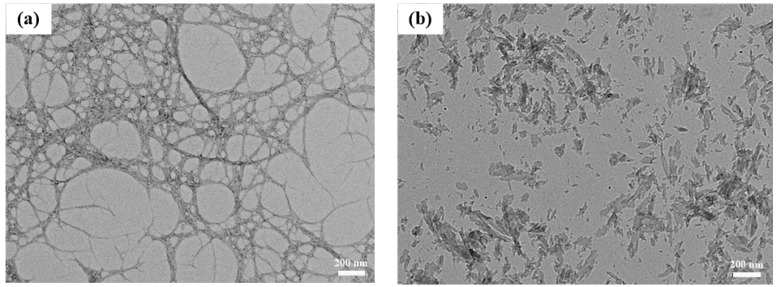
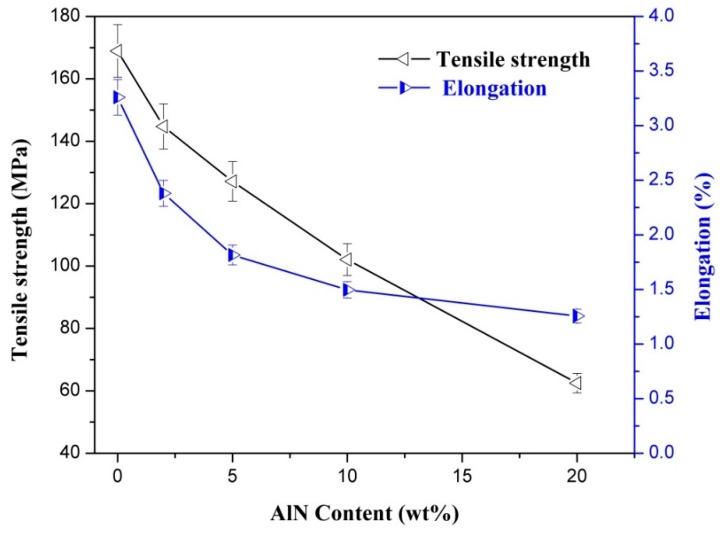
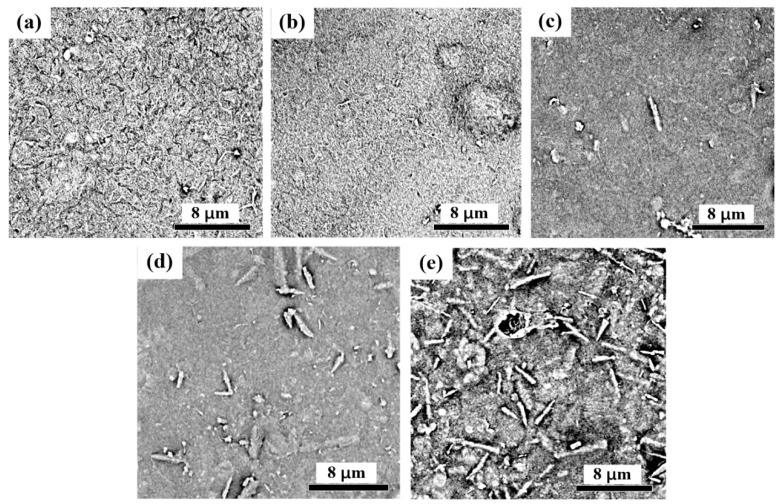
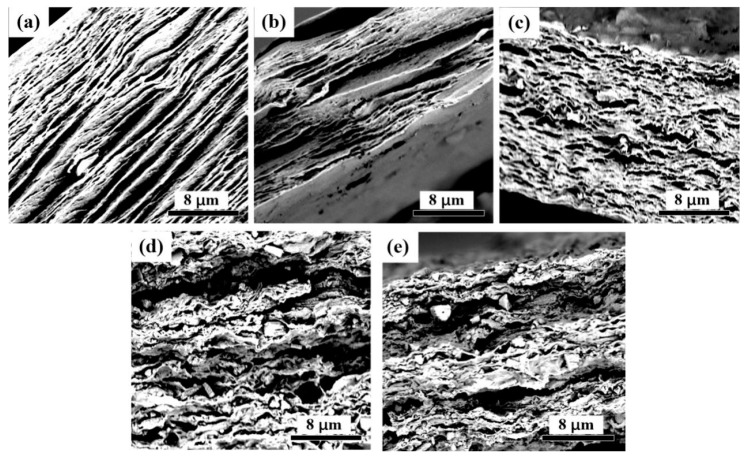
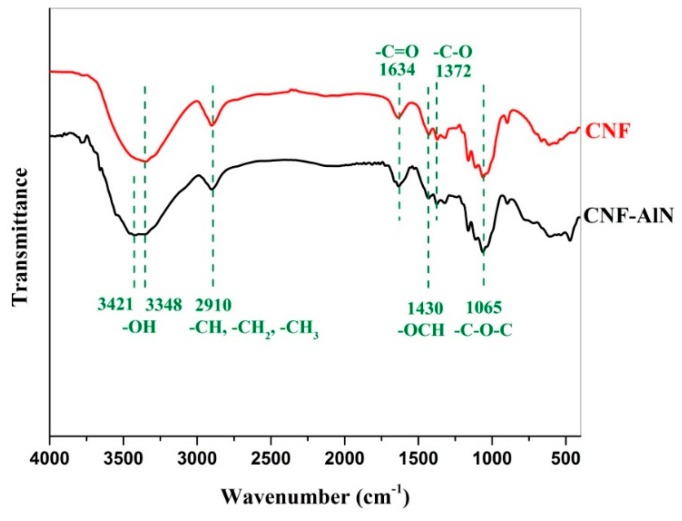
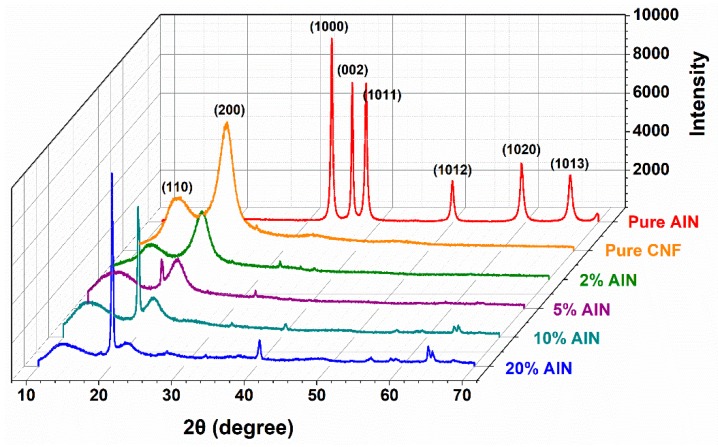
Nanocomposites consisting of cellulose nanofibrils (CNFs) and nano-aluminum nitride (AlN) were prepared using a simple vacuum-assisted filtration process. Bleached sugarcane bagasse pulp was treated with potassium hydroxide and sodium chlorite, and was subsequently ultra-finely ground and homogenized to obtain CNFs. Film nanocomposites were prepared by mixing CNFs with various AlN amounts (0-20 wt.%). X-ray diffraction revealed that the crystal form of CNF-AlN nanocomposites was different to those of pure CNFs and AlN. The mechanical performance and thermal stability of the CNF-AlN nanocomposites were evaluated through mechanical tests and thermogravimetric analysis, respectively. The results showed that the CNF-AlN nanocomposites exhibited excellent mechanical and thermal stability, and represented a green renewable substrate material. This type of nanocomposite could present great potential for replacing traditional polymer substrates, and could provide creative opportunities for designing and fabricating high-performance portable electronics in the near future.
采用简单的真空辅助过滤工艺制备了由纤维素纳米纤丝(CNFs)和纳米氮化铝(AlN)组成的纳米复合材料。将漂白甘蔗渣浆用氢氧化钾和亚氯酸钠处理,随后进行超微粉碎和均质化以获得CNFs。通过将CNFs与不同量的AlN(0 - 20 wt.%)混合制备薄膜纳米复合材料。X射线衍射表明,CNF - AlN纳米复合材料的晶体形式与纯CNFs和AlN的不同。分别通过力学测试和热重分析对CNF - AlN纳米复合材料的力学性能和热稳定性进行了评估。结果表明,CNF - AlN纳米复合材料表现出优异的力学和热稳定性,是一种绿色可再生的基底材料。这种类型的纳米复合材料在取代传统聚合物基底方面具有巨大潜力,并可能在不久的将来为设计和制造高性能便携式电子产品提供创新机会。