Immunology Research Center, Inflammation and Inflammatory Diseases Division, School of Medicine, Mashhad University of Medical Sciences, Mashhad, Iran.
Vascular Independent Research and Education, European Foundation, Milan, Italy.
Orphanet J Rare Dis. 2019 Aug 5;14(1):189. doi: 10.1186/s13023-019-1166-6.
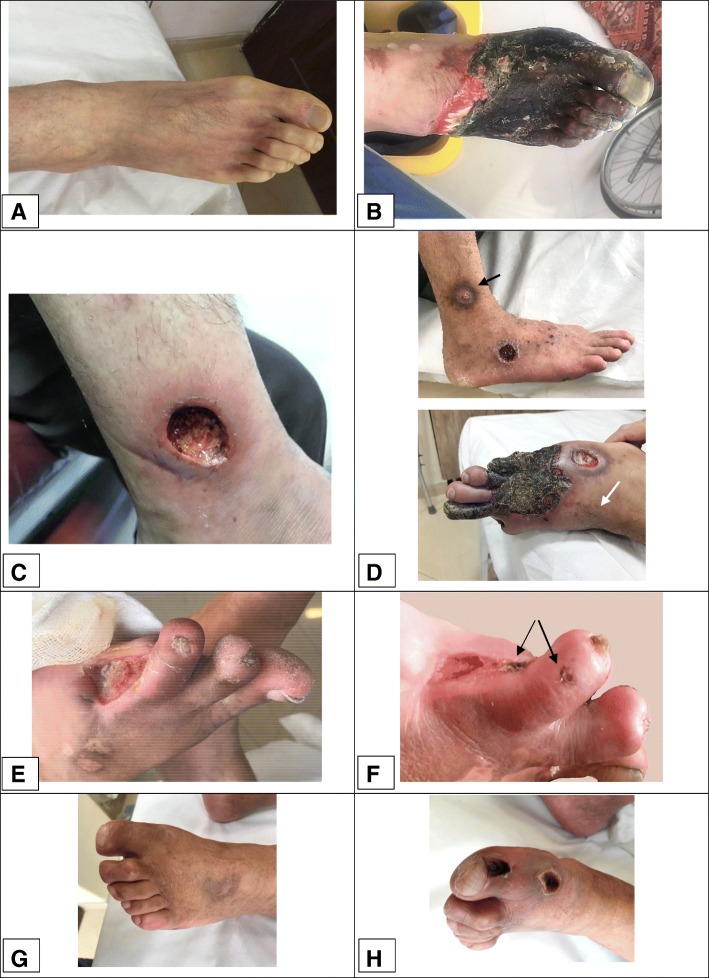
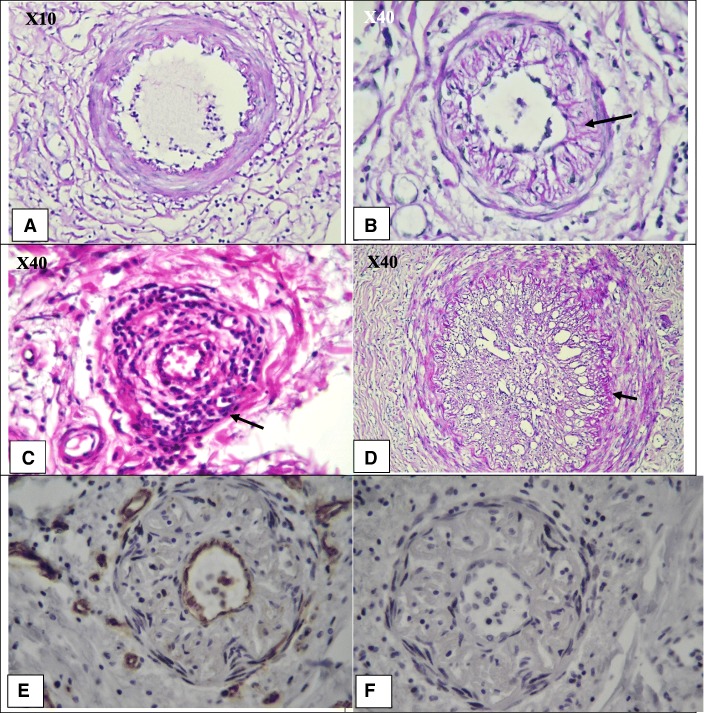
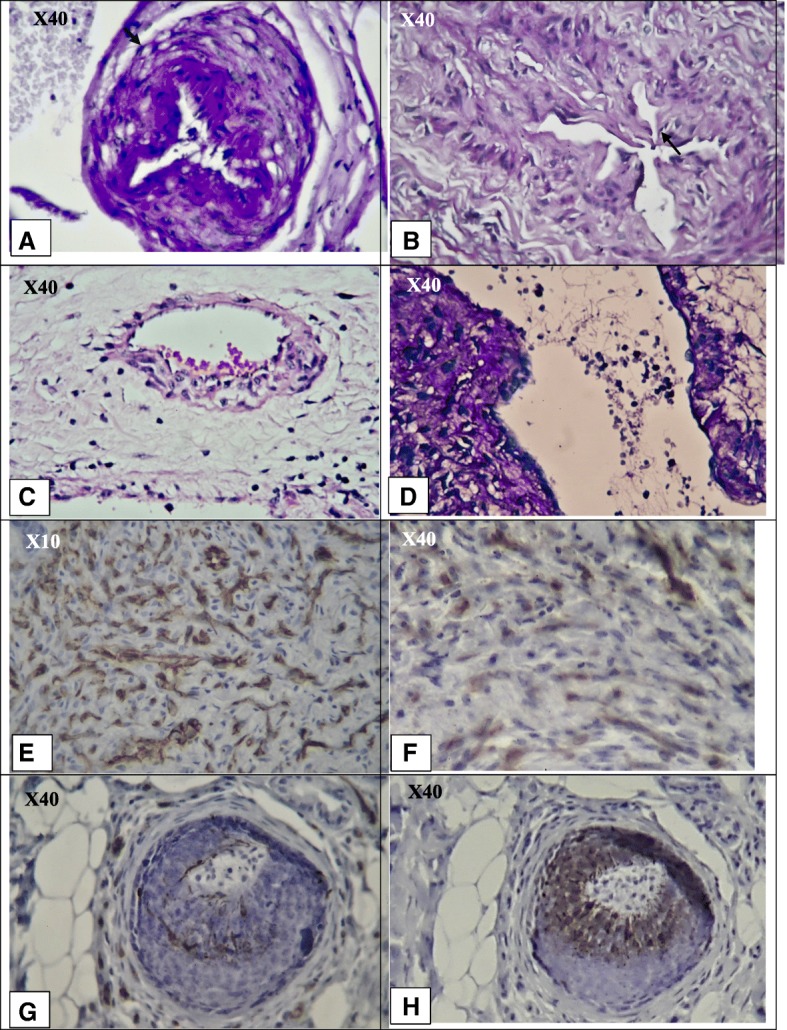
Due to unknown aetiology of Thromboangiitis obliterans (TAO), its effectively treating is challenging. However, angiogenesis induction is one of the acceptable treatments for TAO patients. Recently, we have noticed that TAO patients who were under long-term treatment with angiogenesis-inducing medication showed considerable improvement in terms of healing chronic ulcers over the course of one to 2 years of treatment. However, some of them developed dermal gangrene despite the warming of their feet, with or without palpable pulses in the extremities, and with hair growth on the affected skin. Unfortunately, following the progression of dermal gangrene, some of these patients had to undergo amputation and limb loss.During histopathological evaluation, we detected some changes in the amputee TAO patients under long-term angiogenic medical treatment that were not present in amputee TAO patients who had not received any treatment for many years. The greatest pathological changes were observed in the microvascular of the skin, appearing as a proliferation of endothelial cells, NETosis and thrombus formation inside the vessels with proliferation of endothelial cells. The immunohistochemistry for CD31 and Ki67 as markers of vascular endothelium differentiation and cell mitosis confirmed the proliferation of endothelial cells. However, in the patients who had not received any treatment for years the typical pathology view of BD, including preserved vascular architecture with infiltration of inflammatory cells and inflammatory cells inside the thrombus, organised thrombus with recanalisation and intimal thickening was observed. Further longitudinal cohort studies regarding long-term treatment with angiogenic medications for TAO in different geographic areas are highly recommended.
由于血栓闭塞性脉管炎 (TAO) 的病因不明,其有效治疗具有挑战性。然而,血管生成诱导是 TAO 患者的一种可接受的治疗方法。最近,我们注意到,长期接受血管生成诱导药物治疗的 TAO 患者在 1 至 2 年的治疗过程中,慢性溃疡的愈合情况有了显著改善。然而,其中一些患者尽管足部变暖,四肢有或无可触及的脉搏,受影响皮肤有毛发生长,但仍出现皮肤坏疽。不幸的是,随着皮肤坏疽的进展,这些患者中的一些不得不进行截肢和肢体丧失。在组织病理学评估中,我们在长期接受血管生成药物治疗的截肢 TAO 患者中发现了一些与多年未接受任何治疗的截肢 TAO 患者不同的变化。皮肤微血管的病理变化最大,表现为内皮细胞增殖、NETosis 和血管内血栓形成,同时伴有内皮细胞增殖。CD31 和 Ki67 作为血管内皮细胞分化和细胞有丝分裂的标志物的免疫组化证实了内皮细胞的增殖。然而,在多年未接受任何治疗的患者中,观察到 BD 的典型病理表现,包括保留的血管结构伴炎症细胞浸润和血栓内炎症细胞、血栓组织化伴再通和内膜增厚。强烈建议在不同地理区域对 TAO 进行长期血管生成药物治疗进行进一步的纵向队列研究。