College of Life Sciences, Chongqing Normal University, Shapingba, Chongqing, 401331, P.R. China.
Sci Rep. 2019 Aug 5;9(1):11344. doi: 10.1038/s41598-019-47533-6.
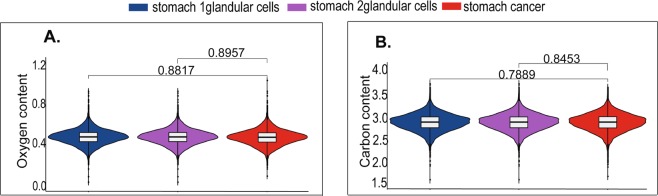
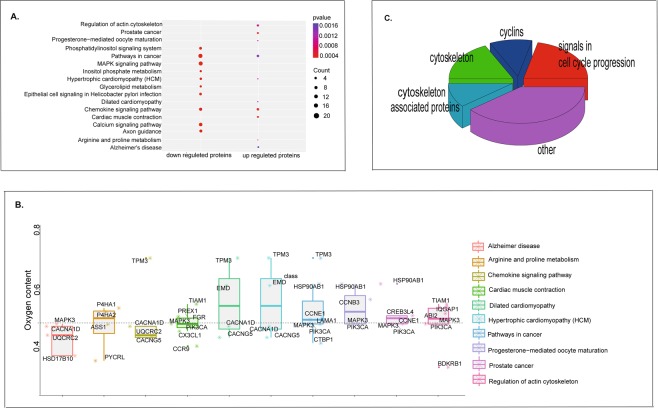
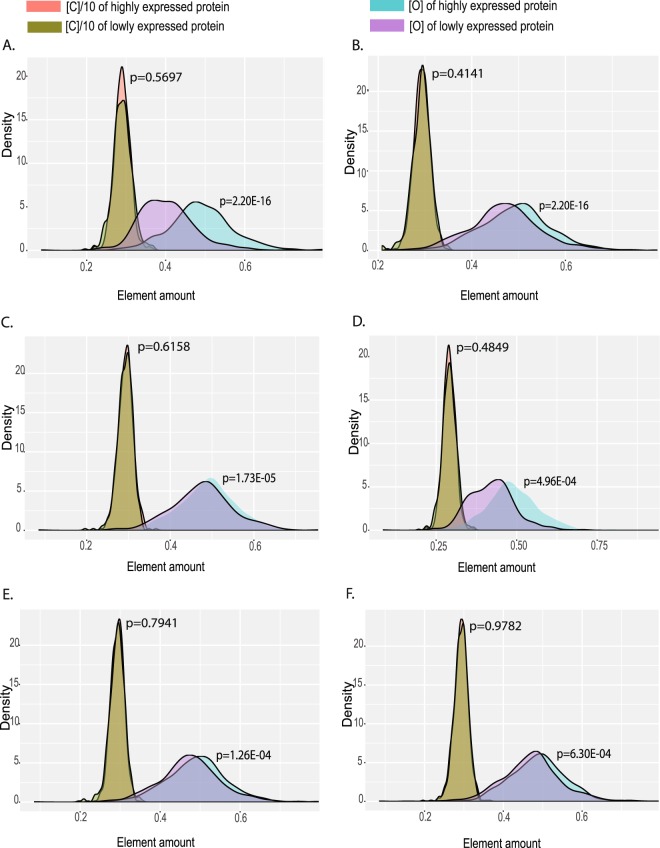
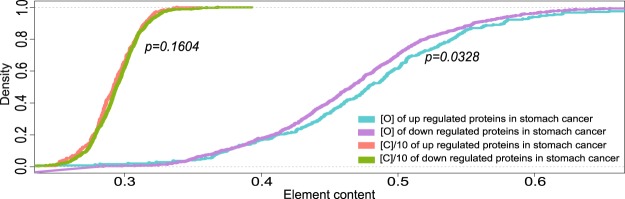
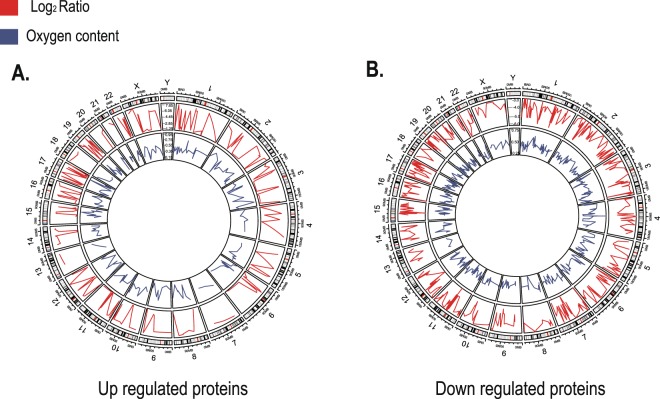
Stomach cancer involves hypoxia-specific microenvironments. Stoichiogenomics explores environmental resource limitation on biological macromolecules in terms of element usages. However, the patterns of oxygen usage by proteins and the ways that proteins adapt to a cancer hypoxia microenvironment are still unknown. Here we compared the oxygen and carbon contents ([C]) between proteomes of stomach cancer (hypoxia) and two stomach glandular cells (normal). Key proteins, genome locations, pathways, and functional dissection associated with stomach cancer were also studied. An association of oxygen content ([O]) and protein expression level was revealed in stomach cancer and stomach glandular cells. For differentially expressed proteins (DEPs), oxygen contents in the up regulated proteins were3.2%higherthan that in the down regulated proteins in stomach cancer. A total of 1,062 DEPs were identified; interestingly none of these proteins were coded on Y chromosome. The up regulated proteins were significantly enriched in pathways including regulation of actin cytoskeleton, cardiac muscle contraction, pathway of progesterone-mediated oocyte maturation, etc. Functional dissection of the up regulated proteins with high oxygen contents showed that most of them were cytoskeleton, cytoskeleton associated proteins, cyclins and signaling proteins in cell cycle progression. Element signature of resource limitation could not be detected in stomach cancer for oxygen, just as what happened in plants and microbes. Unsaved use of oxygen by the highly expressed proteins was adapted to the rapid growth and fast division of the stomach cancer cells. In addition, oxygen usage bias, key proteins and pathways identified in this paper laid a foundation for application of stoichiogenomics in precision medicine.
胃癌涉及缺氧特异性微环境。化学生态学从元素利用的角度探讨环境资源对生物大分子的限制。然而,蛋白质对氧气的利用模式以及蛋白质适应癌症缺氧微环境的方式仍然未知。在这里,我们比较了胃癌(缺氧)和两种胃腺细胞(正常)的蛋白质组中的氧和碳含量([C])。还研究了与胃癌相关的关键蛋白质、基因组位置、途径和功能剖析。在胃癌和胃腺细胞中揭示了氧含量([O])与蛋白质表达水平的关联。对于差异表达蛋白(DEPs),在胃癌中上调蛋白的氧含量比下调蛋白高 3.2%。总共鉴定了 1062 个 DEPs;有趣的是,这些蛋白质中没有一个编码在 Y 染色体上。上调蛋白在包括肌动蛋白细胞骨架调节、心肌收缩、孕激素介导的卵母细胞成熟途径等途径中显著富集。具有高氧含量的上调蛋白的功能剖析表明,它们中的大多数是细胞骨架、细胞骨架相关蛋白、细胞周期进展中的周期蛋白和信号蛋白。在胃癌中,无法检测到氧的资源限制元素特征,就像在植物和微生物中一样。高度表达蛋白的未保存氧气利用被适应于胃癌细胞的快速生长和快速分裂。此外,本文中鉴定的氧利用偏好、关键蛋白和途径为化学生态学在精准医学中的应用奠定了基础。