Krystel Joseph, Shi Qingchun, Shaw Jefferson, Gupta Goutam, Hall David, Stover Ed
Subtropical Insect and Horticulture Research Unit, US Horticultural Research Laboratory, 2001 S. Rock Rd, Ft. Pierce, FL 34945 USA.
2New Mexico Consortium, 100 Entrada Dr, Los Alamos, NM USA.
Plant Methods. 2019 Jul 31;15:85. doi: 10.1186/s13007-019-0465-1. eCollection 2019.
Most bacteria are not culturable, but can be identified through molecular methods such as metagenomics studies. Due to specific metabolic requirements and symbiotic relationships, these bacteria cannot survive on typical laboratory media. Many economically and medically important bacteria are unculturable; including phloem-limited plant pathogens like Liberibacter asiaticus (CLas). CLas is the most impactful pathogen on citrus production, is vectored by the Asian citrus psyllid (ACP, ), and lacks an effective treatment or resistant cultivars. Research into CLas pathogenicity and therapy has been hindered by the lack of persistent pure cultures. Work to date has been mostly limited to studies that are time and resource intensive.
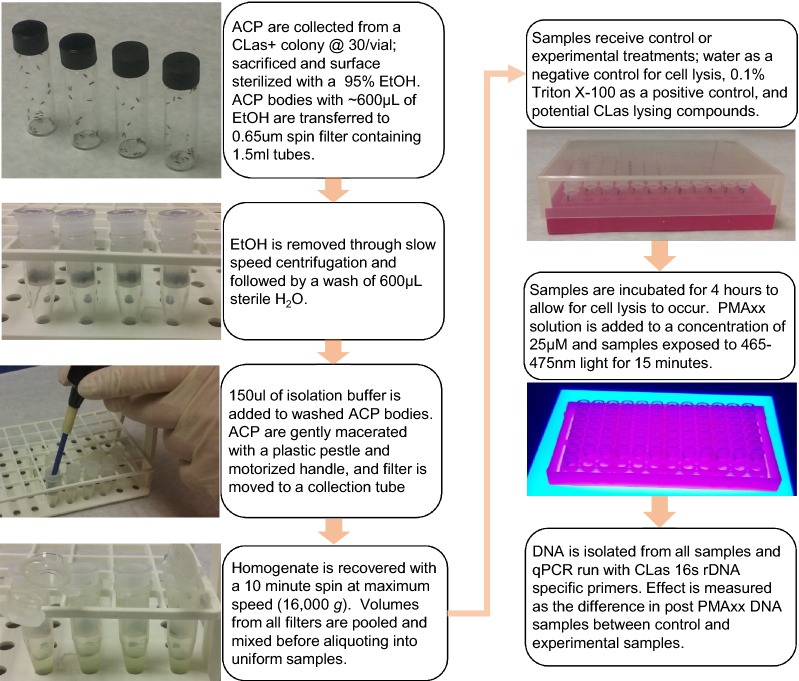
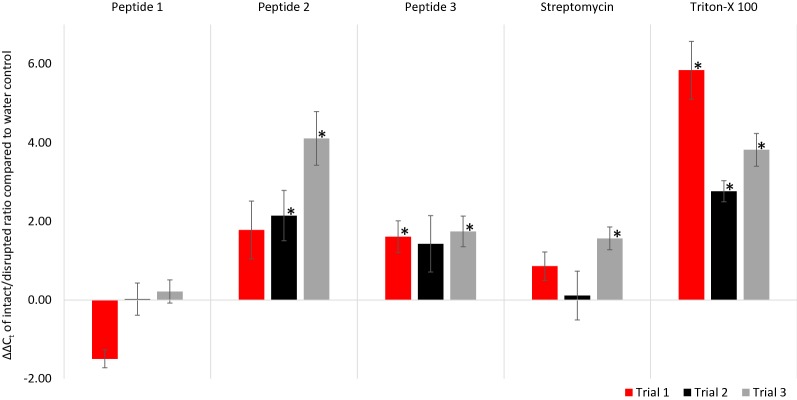
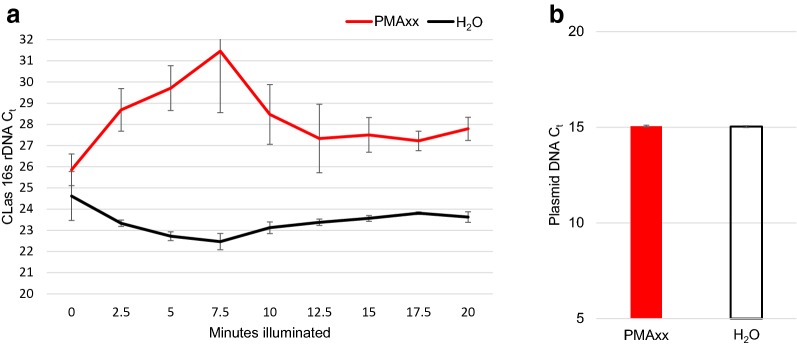
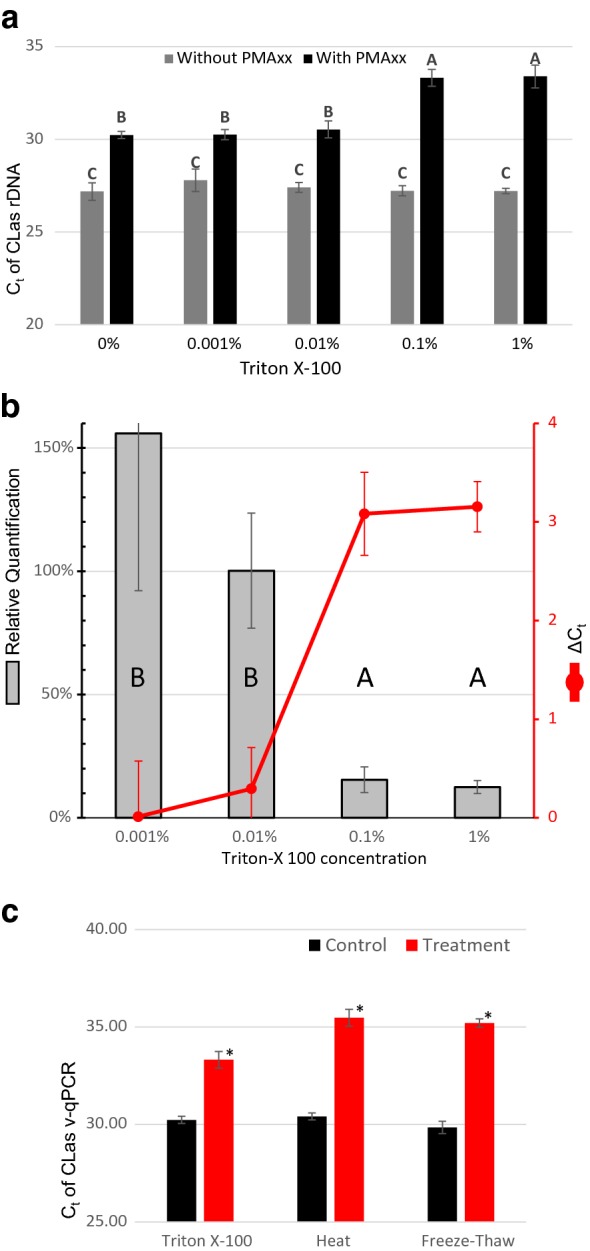
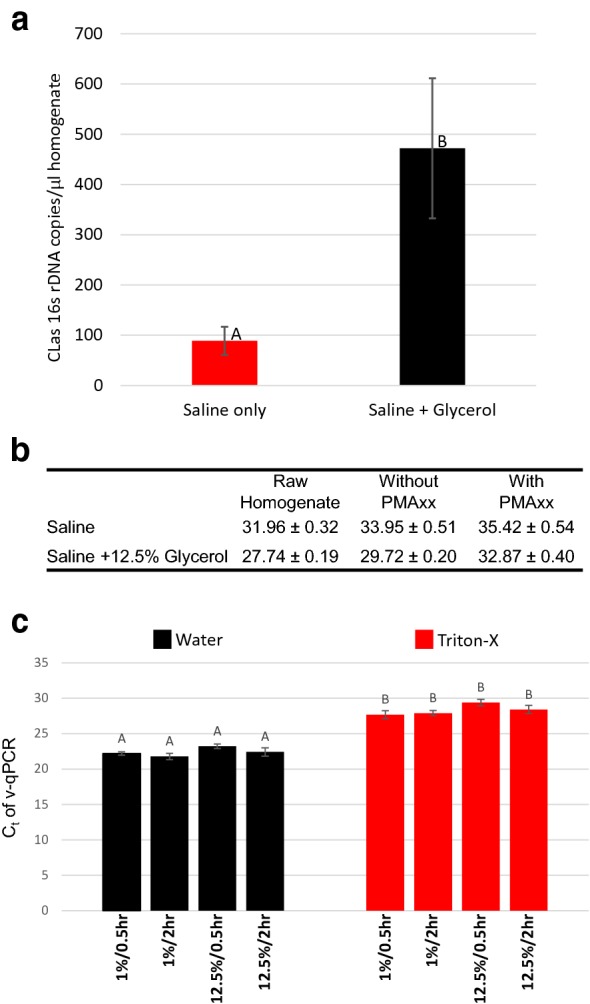
We developed and optimized an in vitro protocol to quickly test the effectiveness of potential therapeutic agents against CLas. The assay uses intact bacterial cells contained in homogenized tissue from CLas-infected ACP and a propidium monoazide (PMA) assay to measure antimicrobial activity. The applicability of PMA was evaluated; with the ability to differentiate between intact and disrupted CLas cells confirmed using multiple bactericidal treatments. We identified light activation conditions to prevent PCR interference and identified a suitable positive control for nearly complete CLas disruption (0.1% Triton-X 100). Isolation buffer components were optimized with 72 mM salt mixture, 1 mM phosphate buffer and 1% glycerol serving to minimize unwanted interactions with treatment and PMA chemistries and to maximize recovery of intact CLas cells. The mature protocol was used to compare a panel of peptides already under study for potential CLas targeting bactericidal activity and identify which were most effective.
This psyllid homogenate assay allows for a quick assessment of potential CLas-disrupting peptides. Comparison within a uniform isolate largely eliminates experimental error arising from variation in CLas titer between and within individual host organisms. Use of an intact vs. disrupted assay permits direct assessment of potential therapeutic compounds without generating pure cultures or conducting extensive or field studies.
大多数细菌无法培养,但可通过宏基因组学研究等分子方法进行鉴定。由于特定的代谢需求和共生关系,这些细菌无法在典型的实验室培养基上存活。许多具有经济和医学重要性的细菌都不可培养,包括韧皮部受限的植物病原体,如亚洲韧皮杆菌(CLas)。CLas是对柑橘生产影响最大的病原体,由亚洲柑橘木虱(ACP)传播,且缺乏有效的治疗方法或抗性品种。由于缺乏持续的纯培养物,对CLas致病性和治疗方法的研究受到了阻碍。迄今为止的工作大多局限于耗时且资源密集的研究。
我们开发并优化了一种体外实验方案,以快速测试潜在治疗剂对CLas的有效性。该实验使用来自感染CLas的ACP匀浆组织中的完整细菌细胞,并采用单叠氮丙锭(PMA)实验来测量抗菌活性。评估了PMA的适用性;通过多种杀菌处理确认了其区分完整和受损CLas细胞的能力。我们确定了防止PCR干扰的光激活条件,并确定了一种适合几乎完全破坏CLas的阳性对照(0.1% Triton-X 100)。用72 mM盐混合物、1 mM磷酸盐缓冲液和1%甘油优化了分离缓冲液成分,以尽量减少与处理和PMA化学物质的不必要相互作用,并最大限度地回收完整的CLas细胞。成熟的实验方案用于比较一组已在研究中的潜在靶向CLas杀菌活性的肽,并确定哪些最有效。
这种木虱匀浆实验能够快速评估潜在的破坏CLas的肽。在统一分离株内进行比较在很大程度上消除了个体宿主生物之间和内部CLas滴度变化引起的实验误差。使用完整与受损实验允许直接评估潜在的治疗化合物,而无需生成纯培养物或进行广泛的实验室或田间研究。