Ihejirika Onyenonachi Charity, Nwaorgu Obioma Chebechi, Ebirim Chikere Ifeanyi, Nwokeji Callistus Muodebe
Department of Parasitology and Entomology, Nnamdi Azikiwe University Awka, Anambra, Nigeria.
Department of Public Health Technology, Federal University of Technology Owerri, Nigeria.
Pan Afr Med J. 2019 May 16;33:34. doi: 10.11604/pamj.2019.33.34.17099. eCollection 2019.
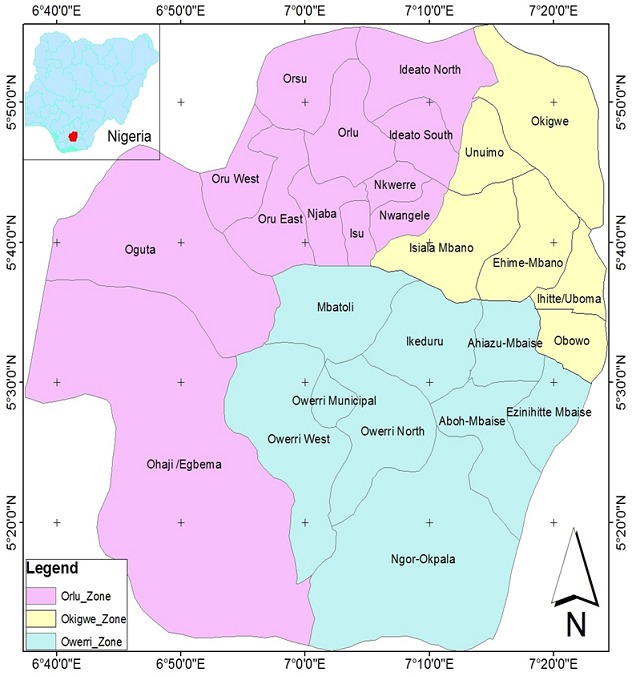
A cross-sectional study was conducted between the months of April to October 2015, to determine the effects of intestinal parasitic infections (IPIs) on nutritional status of school age children in Owerri and Orlu geographical zones, in Imo State, Nigeria.
Faecal samples were examined using Kato Katz method and formol-ether concentration techniques, while blood samples were examined using cyamethahaemoglobin method. Anthropometric indices were used as indicators of nutritional status, children whose Height-for-Age, Weight-for-Age and Weight-for-Height were <-2 standard deviation (SD) were classified as stunted, wasted, and underweight respectively.
Total prevalence rate of 16.6% was recorded in the study areas with (4.0%), (0.6%), Hookworm (1.0%) (0.3%), (5.3%), (2.7%) and (2.7) Majority (73.4%) of the children had light intensity. Anthropometric study results showed that 79(31.3%) of the children were malnourished. The prevalence of stunting, under-weight and wasting were higher in uninfected (86.1%, 90.0% and 10%) respectively than in infected children (13.9%, 10.0% and 0.0%) respectively, although not significant at p = 0.857, 0.587 and 0.368 respectively. Prevalence of anaemia was 17.4%, anaemia was insignificantly (p = 0.09) higher in infected (21.1%) than in uninfected (16.5%) children. Children that had co-infection recorded higher prevalence (2.2%) of severe anaemia. There was an association (p = 0.002) between anaemia and intensity of helminth infection. Malnutrition was insignificantly (p = 0.319) higher in children with heavy (100.0%) and moderate (75.0%) intensity of helminth infection than children that had light intensity (41.7%) of helminth infection.
When compared with previous study, there were decline in the prevalence of intestinal parasitic infections and anaemia among school age children. Low intensity parasitemia with intestinal parasites had no significant effect on the malnutrition and haemoglobin profile of the children in the study areas. Therefore, improved sanitation and more deworming efforts should be intensified to ensure further decline in prevalence of intestinal parasitic infections.
2015年4月至10月期间进行了一项横断面研究,以确定肠道寄生虫感染(IPIs)对尼日利亚伊莫州奥韦里和奥卢地理区域学龄儿童营养状况的影响。
粪便样本采用加藤厚涂片法和甲醛-乙醚浓缩技术进行检测,血液样本采用氰化高铁血红蛋白法进行检测。人体测量指标用作营养状况指标,年龄别身高、年龄别体重和身高别体重低于-2标准差(SD)的儿童分别被归类为发育迟缓、消瘦和体重不足。
研究区域的总患病率为16.6%,其中蛔虫感染率为4.0%,鞭虫感染率为0.6%,钩虫感染率为1.0%,绦虫感染率为0.3%,姜片吸虫感染率为5.3%,肝吸虫感染率为2.7%,肺吸虫感染率为2.7%。大多数(73.4%)儿童感染程度较轻。人体测量研究结果显示,79名(31.3%)儿童营养不良。未感染儿童的发育迟缓、体重不足和消瘦患病率分别为86.1%、90.0%和10%,高于感染儿童(分别为13.9%、10.0%和0.0%),尽管在p = 0.857、0.587和0.368时差异不显著。贫血患病率为17.4%,感染儿童(21.1%)的贫血患病率略高于未感染儿童(16.5%)(p = 0.09)。合并感染的儿童严重贫血患病率较高(2.2%)。贫血与蠕虫感染强度之间存在关联(p = 0.002)。蠕虫感染程度为重度(100.0%)和中度(75.0%)的儿童营养不良患病率略高于感染程度较轻(41.7%)的儿童(p = 0.319)。
与先前的研究相比,学龄儿童肠道寄生虫感染和贫血的患病率有所下降。肠道寄生虫低强度寄生虫血症对研究区域儿童的营养不良和血红蛋白水平没有显著影响。因此,应加强环境卫生改善和驱虫工作,以确保肠道寄生虫感染患病率进一步下降。