Deosthali Ankita, Donches Katherine, DelVecchio Michael, Aronoff Stephen
Temple University, Philadelphia, PA, USA.
Glob Pediatr Health. 2019 Jul 27;6:2333794X19865440. doi: 10.1177/2333794X19865440. eCollection 2019.
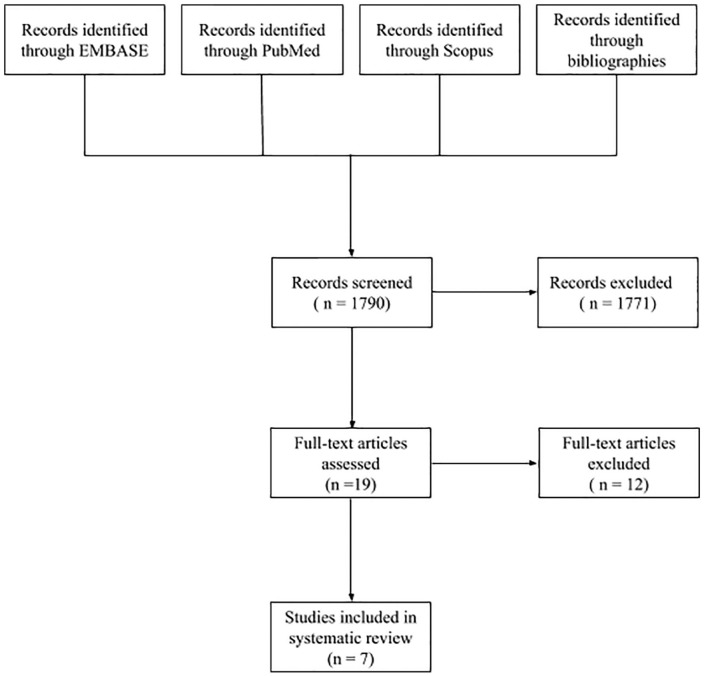
. Cervical lymphadenopathy in children is common and its etiologies diverse. No systematic review of the differential diagnosis of pediatric cervical lymphadenopathy has been conducted. . To determine the prevalence rate of specific etiologies of pediatric cervical lymphadenopathy. . EMBASE, PubMed, and SCOPUS were searched electronically. Bibliographies of select studies were reviewed as well. . (1) Any clinical trial, observational study, or cross-sectional case series with 10 or more subjects that included delineation of etiologies and/or associated conditions with lymphadenopathy; (2) subjects aged 0 to 21 years with enlarged lymphoid tissue on body; (3) lymphadenopathy was confirmed by clinical evaluation; and (4) no specific diagnoses were excluded. . Year and location of publication, definition of lymphadenopathy, percentage of lymphadenopathy that was cervical, total number of subjects, gender distribution of subjects, age range of patients, and specific etiologies. . Of the 1790 studies, 7 studies that were combined resulted in 2687 subjects that were selected. Nonspecific benign etiology was the most common diagnosis occurring at a rate of 67.8%. Epstein-Barr virus was the next most prevalent (8.86%), followed by malignancy (4.69%) and granulomatous disease (4.06%). The most common malignancy etiology was non-Hodgkin's lymphoma (46.0%), and the most common granulomatous disease was tuberculosis (73.4%). . This systematic review and meta-analysis provides a rate-based differential diagnosis of pediatric cervical lymphadenopathy. Although the most common causes of pediatric cervical lymphadenopathy are nonspecific, the etiologies are diverse. Rates and credible intervals are provided to enable a probability-based diagnostic approach to palpable cervical lymphadenopathy in this age group.
儿童颈部淋巴结病很常见,其病因多种多样。目前尚未对儿童颈部淋巴结病的鉴别诊断进行系统综述。
. 确定儿童颈部淋巴结病特定病因的患病率。
. 对EMBASE、PubMed和SCOPUS进行了电子检索。还对所选研究的参考文献进行了审查。
. (1)任何涉及10名或更多受试者的临床试验、观察性研究或横断面病例系列,包括对淋巴结病病因和/或相关病症的描述;(2)年龄在0至21岁、身体上有肿大淋巴组织的受试者;(3)通过临床评估确诊为淋巴结病;(4)不排除任何特定诊断。
. 发表年份和地点、淋巴结病的定义、颈部淋巴结病的百分比、受试者总数、受试者的性别分布、患者年龄范围以及特定病因。
. 在1790项研究中,7项合并研究共纳入了2687名受试者。非特异性良性病因是最常见的诊断,发生率为67.8%。爱泼斯坦-巴尔病毒是第二常见的病因(8.86%),其次是恶性肿瘤(4.69%)和肉芽肿性疾病(4.06%)。最常见的恶性肿瘤病因是非霍奇金淋巴瘤(46.0%),最常见的肉芽肿性疾病是结核病(73.4%)。
. 本系统综述和荟萃分析提供了基于患病率的儿童颈部淋巴结病鉴别诊断。虽然儿童颈部淋巴结病最常见的病因是非特异性的,但其病因多种多样。提供了患病率和可信区间,以便对该年龄组可触及的颈部淋巴结病采用基于概率的诊断方法。