Keck Graduate Institute School of Pharmacy, 535 Watson Dr, Claremont, CA, 91711, USA.
BMC Mol Cell Biol. 2019 Aug 6;20(1):30. doi: 10.1186/s12860-019-0214-3.
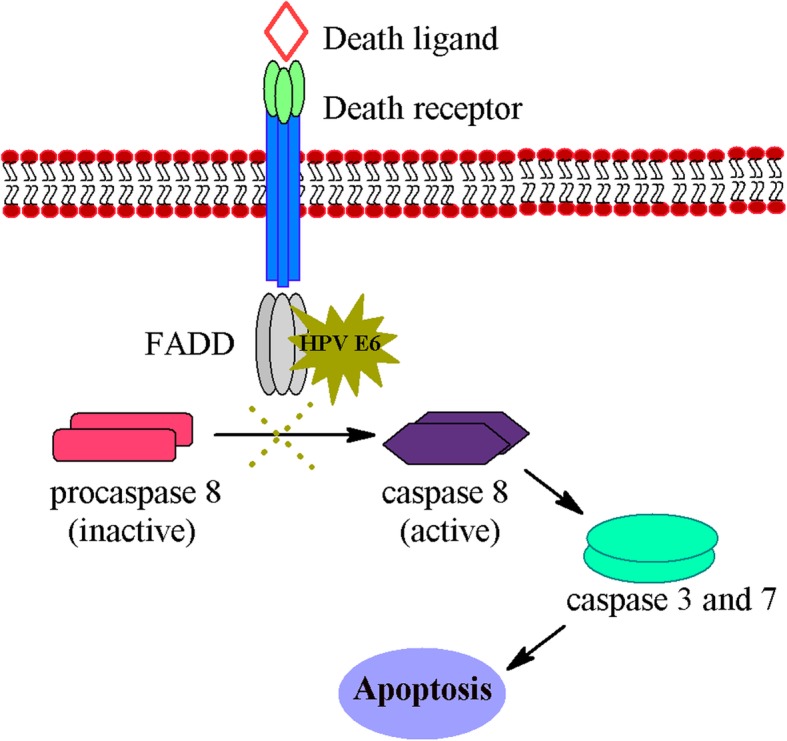
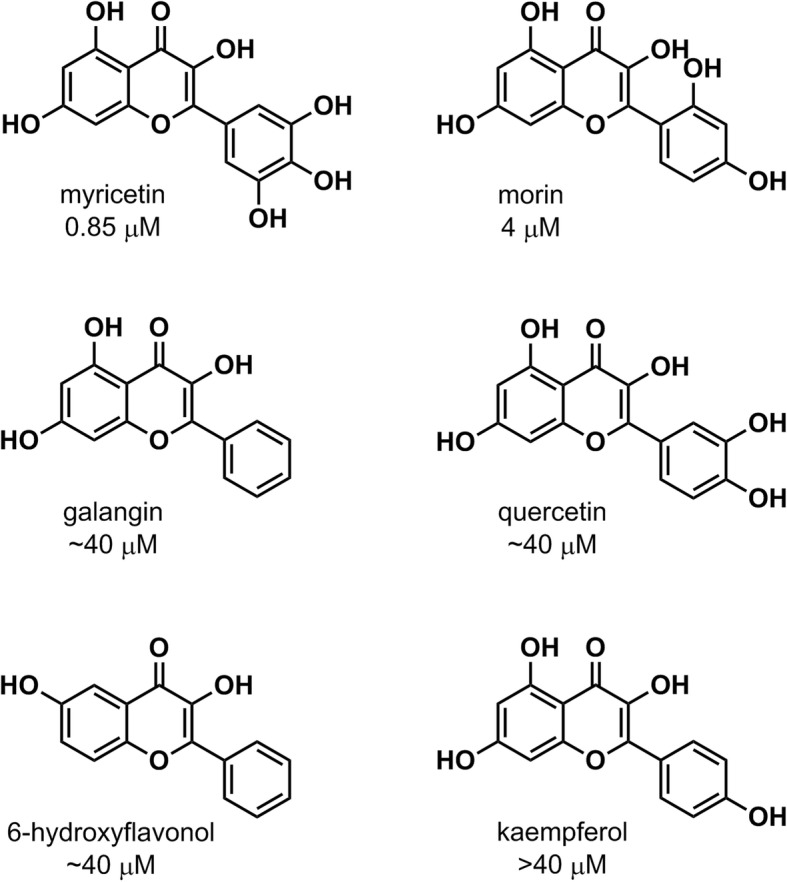
Several human cancers, especially cervical cancer are caused by the infection of high risk strains of human papillomaviruses (HPV), notably HPV16. It is implicated that the oncoprotein E6 expressed from HPV, is inhibiting the apoptotic pathway by binding to adaptor molecule FADD (Fas-associated death domain). Inhibiting E6 interactions with FADD could provide a promising treatment for cervical cancer. There are few small molecules reported to inhibit such interactions. However, the FADD binding site information on the HPV E6 is not currently available. This binding site information may provide an opportunity to design new small molecule inhibitors to treat E6 mediated cancers. In this study we report the possible binding pocket on HPV16 E6 oncoprotein by using activity data of reported inhibitors through a stepwise molecular modeling approach.
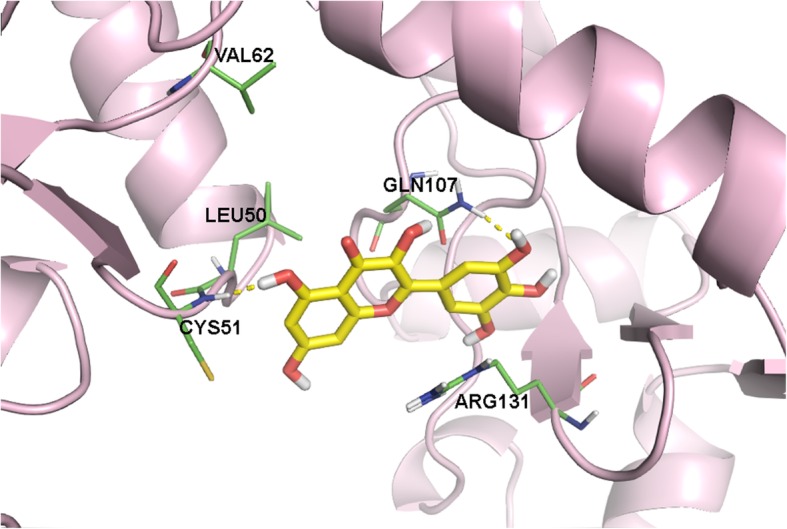
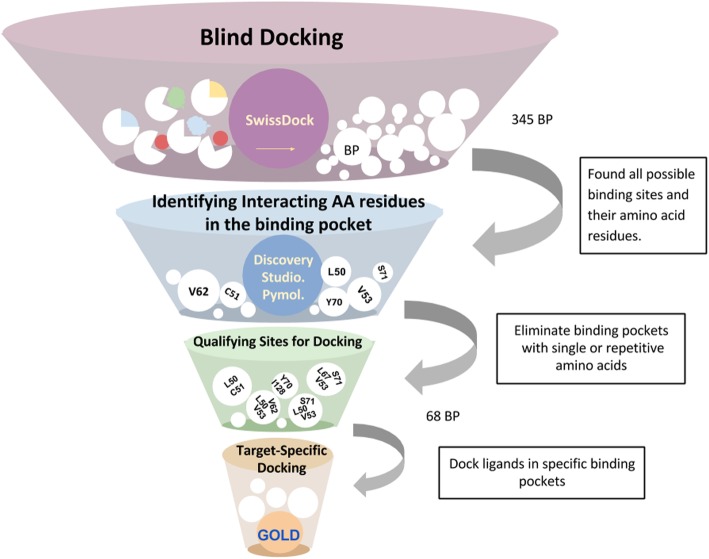
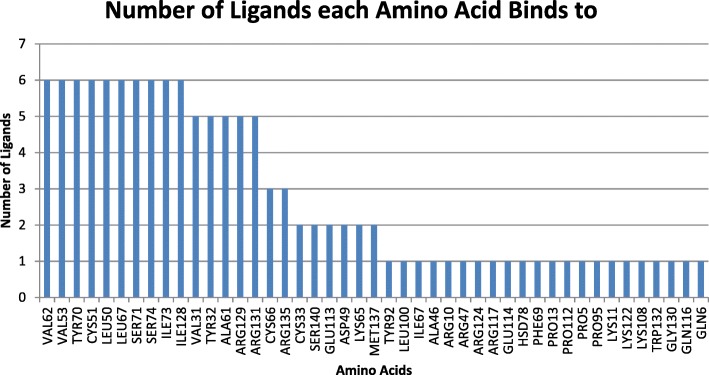
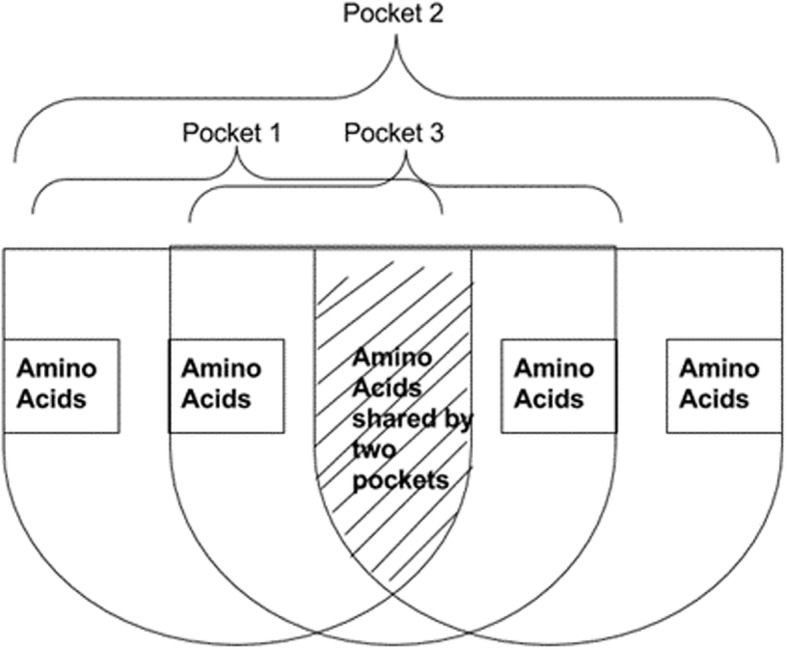
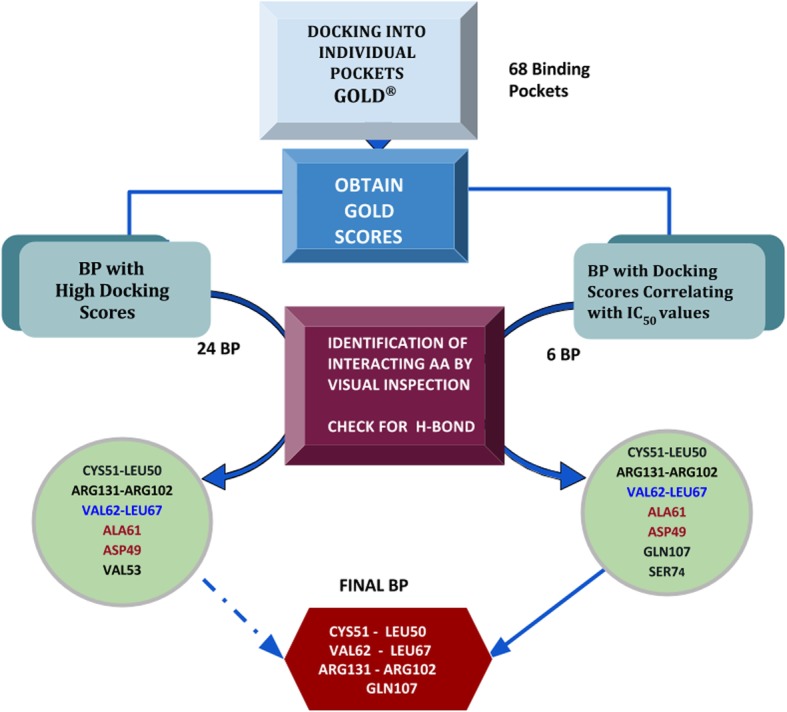
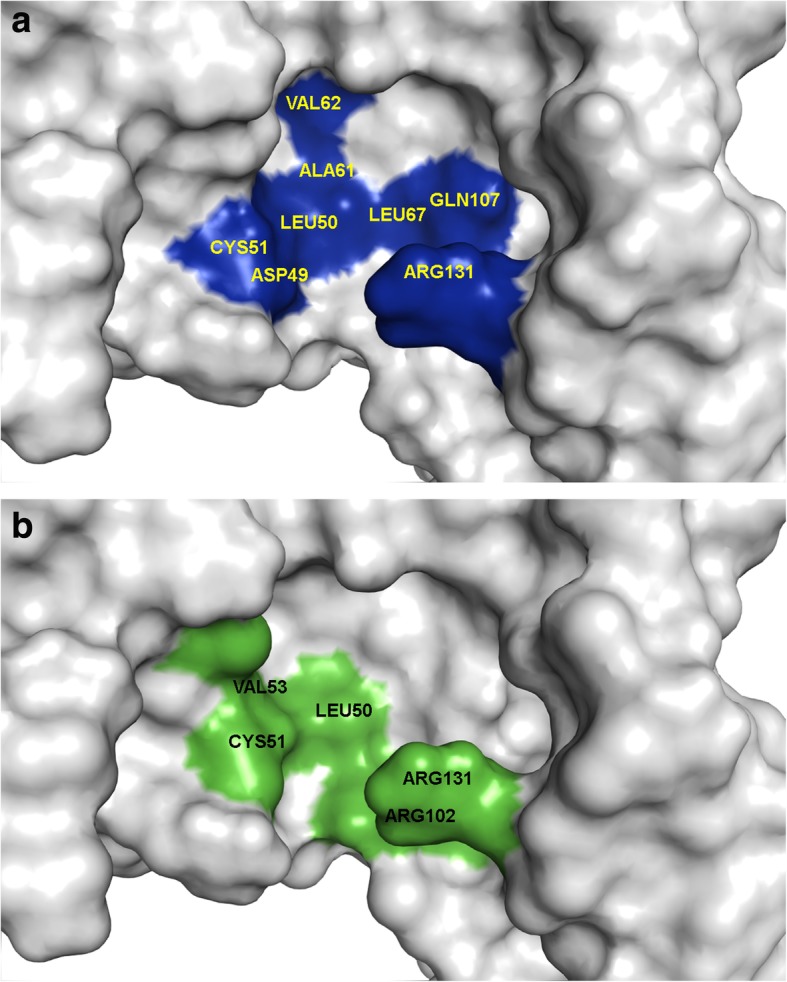
Blind docking and removing duplicates followed by visual inspection to determine ligand-receptor interactions provided 68 possible binding sites on the E6 protein. Individual docking of all known inhibitors lead to the identification of 28 pockets having some kind of correlation with their activity data. It was also observed that several of these pockets overlapped with each other, having some amino acids in common. Amino acids Leu50 and Cys51 were identified as key E6 residues for high affinity ligand binding which are seen in most of these pockets. In most cases, ligands demonstrated a hydrogen bond interaction with Cys51. Ala61, Arg131 and Gln107 were also frequently observed showing interactions among these pockets. A few amino acids unique to each ligand were also identified representing additional interactions at the receptor site.
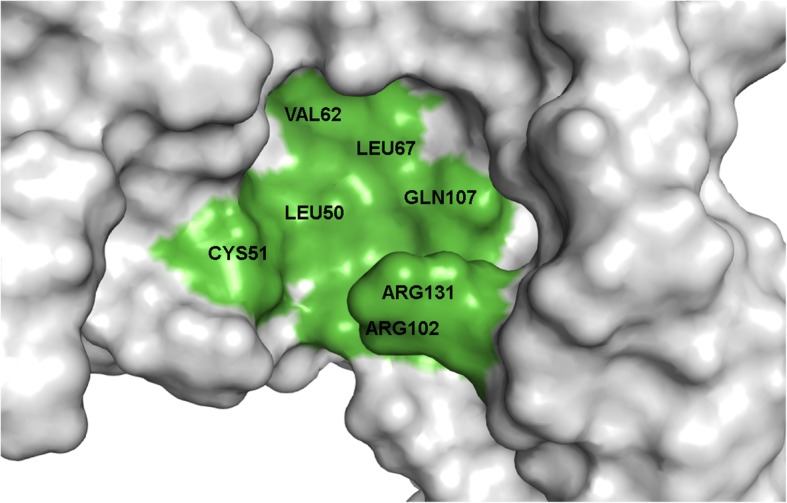
After determining receptor-ligand interactions between E6 oncoprotein and the six known inhibitors, the amino acids Cys51, Leu50, Arg102, Arg131, Leu67, Val62, and Gln107 were identified to have importance in E6 inhibition. It was generally observed that Leu50 and Cys51 are necessary for high binding affinity with Cys51 being essential for hydrogen bonding. This study identified a potential binding pocket for the E6 inhibitors. Identification of the ligand binding pocket helps to design novel inhibitors of HPV16 E6 oncoprotein as a promising treatment for cervical cancer.
几种人类癌症,尤其是宫颈癌,是由高危型人乳头瘤病毒(HPV)感染引起的,特别是 HPV16 型。据推测,HPV 表达的癌蛋白 E6 通过与衔接分子 FADD(Fas 相关死亡结构域)结合,抑制细胞凋亡途径。抑制 E6 与 FADD 的相互作用可能为宫颈癌的治疗提供一种有前途的方法。目前报道的能够抑制这种相互作用的小分子药物很少。然而,目前尚不清楚 HPV E6 的 FADD 结合位点信息。这种结合位点信息可能为设计治疗 E6 介导的癌症的新型小分子抑制剂提供机会。在这项研究中,我们通过逐步分子建模方法,利用报道的抑制剂的活性数据,报告了 HPV16 E6 癌蛋白上可能的结合口袋。
盲目对接和删除重复项,然后进行目视检查以确定配体-受体相互作用,为 E6 蛋白提供了 68 个可能的结合位点。对所有已知抑制剂进行单独对接,确定了 28 个口袋与它们的活性数据有某种相关性。还观察到,这些口袋中的几个相互重叠,具有一些共同的氨基酸。鉴定出氨基酸 Leu50 和 Cys51 是与高亲和力配体结合的关键 E6 残基,这些残基在大多数口袋中都可见。在大多数情况下,配体与 Cys51 形成氢键相互作用。Ala61、Arg131 和 Gln107 也经常观察到在这些口袋之间相互作用。还确定了每个配体特有的少数氨基酸,代表受体部位的额外相互作用。
在确定 E6 癌蛋白与六种已知抑制剂之间的受体-配体相互作用后,鉴定出 Cys51、Leu50、Arg102、Arg131、Leu67、Val62 和 Gln107 氨基酸对 E6 抑制具有重要性。通常观察到 Leu50 和 Cys51 对于高结合亲和力是必需的,Cys51 对于氢键形成是必需的。这项研究确定了 E6 抑制剂的潜在结合口袋。鉴定配体结合口袋有助于设计新型 HPV16 E6 癌蛋白抑制剂,为宫颈癌的治疗提供一种有前途的方法。