Department of Oncology, The Second Affiliated Hospital of Nanchang University, No. 1, Minde Road, Donghu District, Nanchang, 330006, Jiangxi Province, People's Republic of China.
Stem Cell Res Ther. 2019 Aug 6;10(1):237. doi: 10.1186/s13287-019-1301-2.
Hepatocellular carcinoma (HCC) is one of the most common tumors globally, with varying prevalence based on endemic risk factors. Bone morphogenetic protein (BMP) exhibits a broad spectrum of biological activities in various tissues including angiogenesis. Here, this study aimed to investigate the mechanism of BMP2 in HCC by mediating the mitogen-activated protein kinase (MAPK)/p38 signaling pathway.
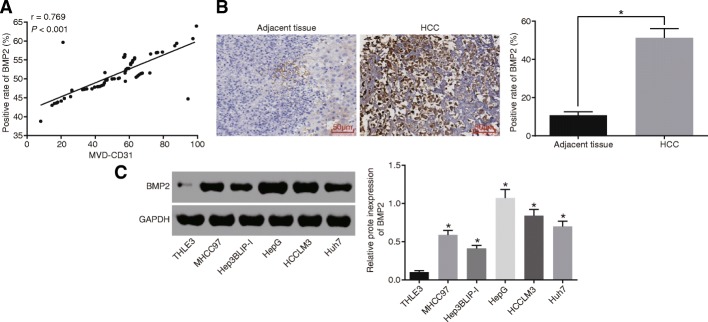
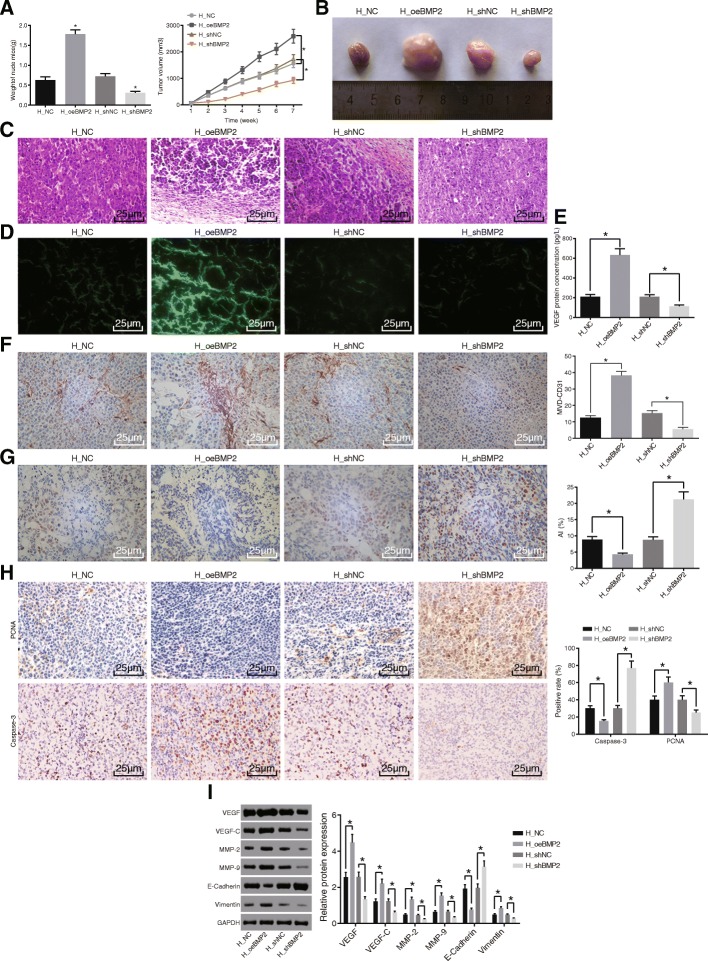
BMP2 expression was quantified in HCC and adjacent tissues. BMP2 gain- and loss-of-function experiments were conducted by infection with lentivirus over-expressing BMP2 or expressing shRNA against BMP2. The angiogenesis was evaluated with HepG2 cells co-cultured with ECV304 cells. SB-239063 was applied to inhibit the activation of the MAPK/p38 signaling pathway so as to identify the significance of this pathway in HCC progression. Finally, in vivo experiments were conducted to identify the role of BMP2 and the MAPK/p38 signaling pathway in tumor growth and angiogenesis.
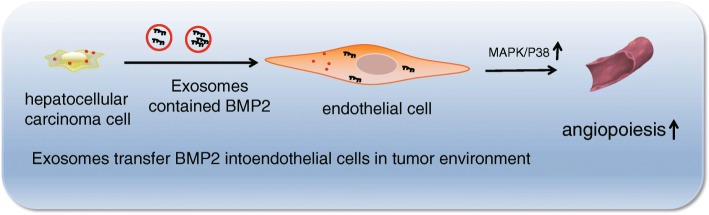
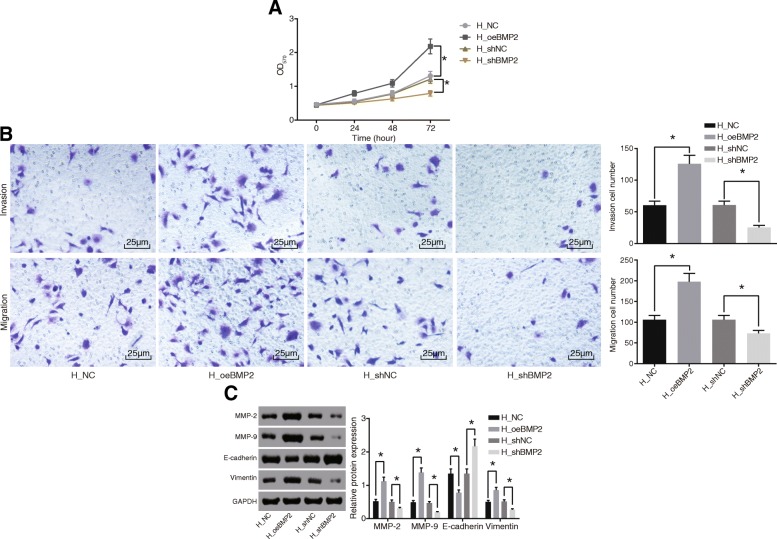
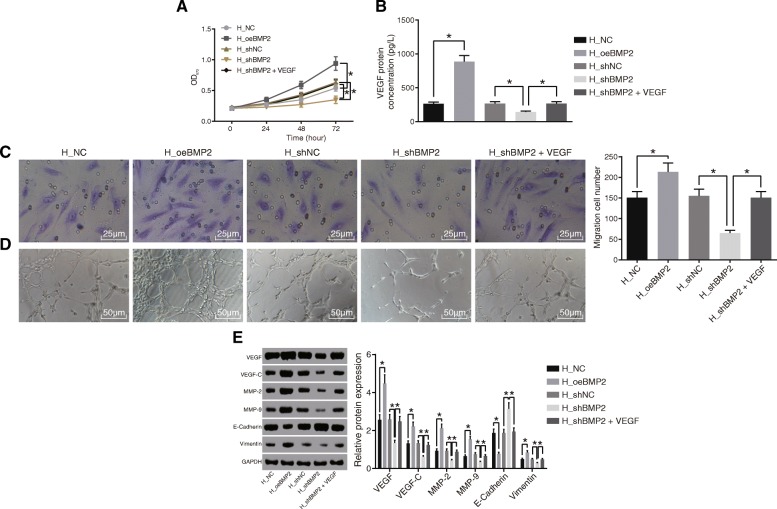
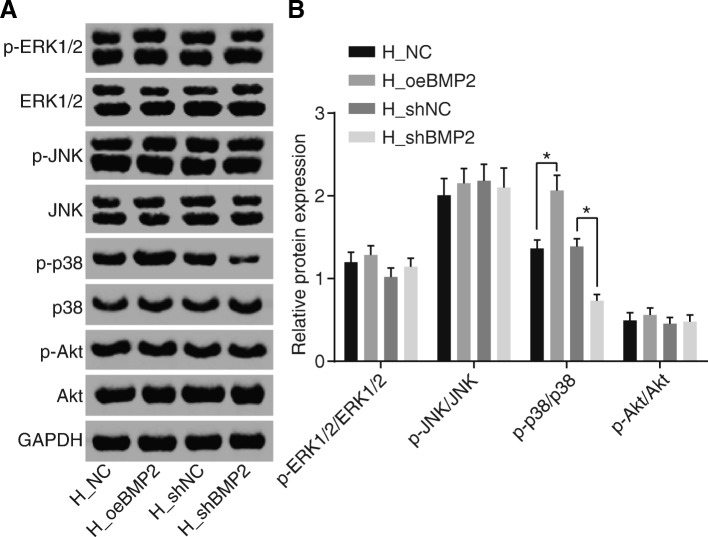
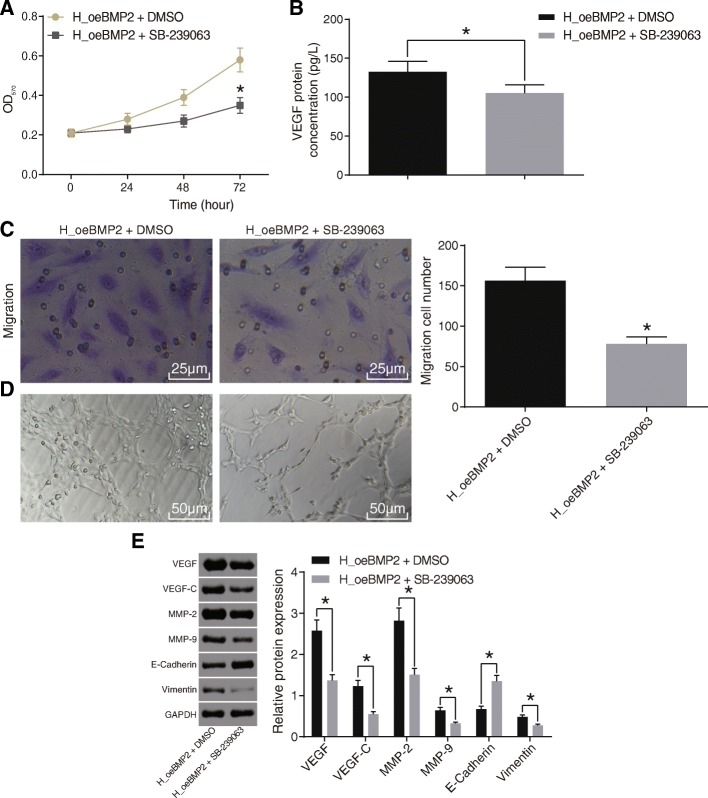
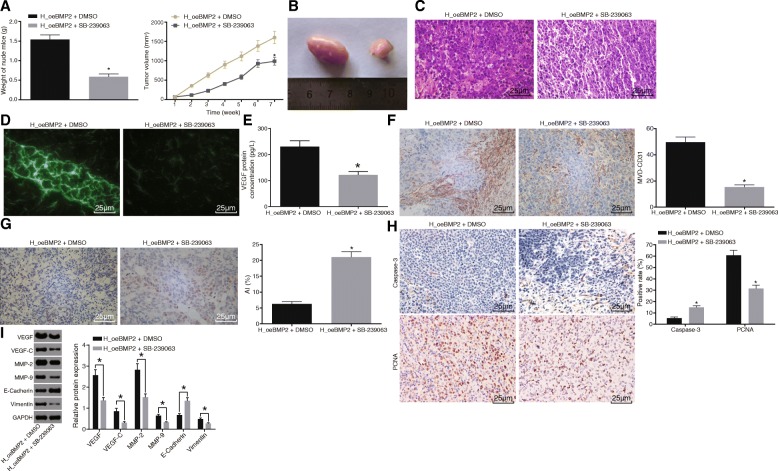
BMP2 was highly expressed in HCC. Over-expression of BMP2 was found to accelerate cell proliferation, migration, invasion, microvascular density, and angiogenesis and decrease cell apoptosis in vitro and in vivo. BMP2 silencing exhibited inhibitory effects on HCC cell invasion and angiogenesis. The co-culture system illustrated that HepG2 cells secreted BMP2 in ECV304, and silenced BMP2 in HepG2 cells resulted in the inactivation of the MAPK/p38 signaling pathway, thus suppressing cancer progression, tumor growth, and angiogenesis in HCC.
Taken together, the key findings of this study propose that silencing of BMP2 inhibits angiogenesis and tumor growth in HCC, highlighting BMP2 silencing as a potential strategy for the treatment of HCC.
肝细胞癌(HCC)是全球最常见的肿瘤之一,其流行率因地方性风险因素而异。骨形态发生蛋白(BMP)在包括血管生成在内的各种组织中表现出广泛的生物学活性。在这里,本研究旨在通过介导丝裂原活化蛋白激酶(MAPK)/p38 信号通路来研究 BMP2 在 HCC 中的作用机制。
定量检测 HCC 及相邻组织中的 BMP2 表达。通过感染过表达 BMP2 的慢病毒或表达针对 BMP2 的 shRNA 进行 BMP2 的增益和缺失功能实验。用 HepG2 细胞与 ECV304 细胞共培养来评估血管生成。应用 SB-239063 抑制 MAPK/p38 信号通路的激活,以确定该通路在 HCC 进展中的意义。最后,进行体内实验以确定 BMP2 和 MAPK/p38 信号通路在肿瘤生长和血管生成中的作用。
BMP2 在 HCC 中高表达。BMP2 的过表达被发现可加速细胞增殖、迁移、侵袭、微血管密度和血管生成,并降低体内外细胞凋亡。BMP2 沉默对 HCC 细胞侵袭和血管生成具有抑制作用。共培养系统表明 HepG2 细胞在 ECV304 中分泌 BMP2,沉默 HepG2 细胞中的 BMP2 导致 MAPK/p38 信号通路失活,从而抑制 HCC 中的肿瘤进展、肿瘤生长和血管生成。
综上所述,本研究的主要发现表明,沉默 BMP2 可抑制 HCC 中的血管生成和肿瘤生长,提示 BMP2 沉默可能是治疗 HCC 的一种潜在策略。