Markova Irena, Hüttl Martina, Oliyarnyk Olena, Kacerova Tereza, Haluzik Martin, Kacer Petr, Seda Ondrej, Malinska Hana
1Centre for Experimental Medicine, Institute for Clinical and Experimental Medicine, Prague, Czech Republic.
2Department of Chemistry, University College London, London, UK.
Nutr Metab (Lond). 2019 Aug 1;16:51. doi: 10.1186/s12986-019-0376-1. eCollection 2019.
Dicarbonyl stress plays an important role in the pathogenesis of microvascular complications that precede the formation of advanced glycation end products, and contributes to the development of renal dysfunction. In renal cells, toxic metabolites like methylglyoxal lead to mitochondrial dysfunction and protein structure modifications.In our study, we investigated the effect of methylglyoxal on metabolic, transcriptomic, metabolomic and proteomic profiles in the context of the development of kidney impairment in the model of metabolic syndrome.
Dicarbonyl stress was induced by intragastric administration of methylglyoxal (0.5 mg/kg bw for 4 weeks) in a strain of hereditary hypertriglyceridaemic rats with insulin resistance and fatty liver.
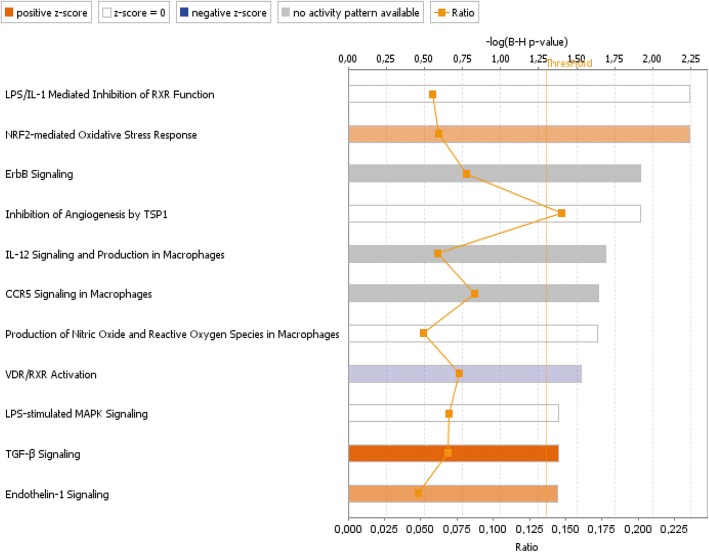
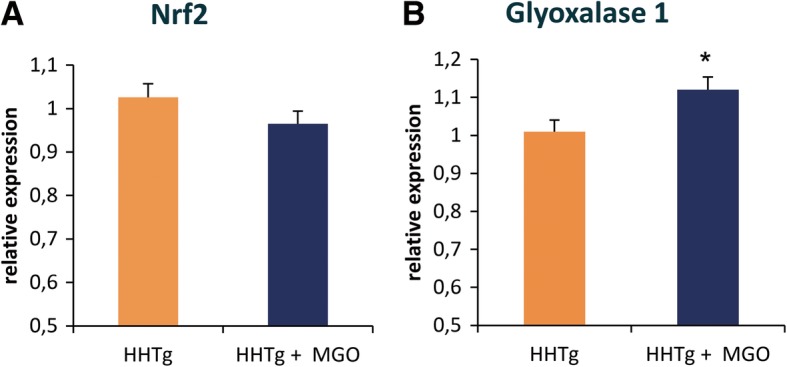
Methylglyoxal administration aggravated glucose intolerance (AUC < 0.05), and increased plasma glucose ( < 0.01) and insulin ( < 0.05). Compared to controls, methylglyoxal-treated rats exhibited microalbuminuria ( < 0.01). Targeted proteomic analysis revealed increases in urinary secretion of pro-inflammatory parameters (MCP-1, IL-6, IL-8), specific collagen IV fragments and extracellular matrix proteins. Urine metabolomic biomarkers in methylglyoxal-treated rats were mainly associated with impairment of membrane phospholipids (8-isoprostane, 4-hydroxynonenal).Decreased levels of glutathione ( < 0.01) together with diminished activity of glutathione-dependent antioxidant enzymes contributed to oxidative and dicarbonyl stress. Methylglyoxal administration elevated glyoxalase 1 expression ( < 0.05), involved in methylglyoxal degradation. Based on comparative transcriptomic analysis of the kidney cortex, 96 genes were identified as differentially expressed (FDR < 0.05). Network analysis revealed an over-representation of genes related to oxidative stress and pro-inflammatory signalling pathways as well as an inhibition of angiogenesis suggesting its contribution to renal fibrosis.
Our results support the hypothesis that dicarbonyl stress plays a key role in renal microvascular complications. At the transcriptome level, methylglyoxal activated oxidative and pro-inflammatory pathways and inhibited angiogenesis. These effects were further supported by the results of urinary proteomic and metabolomic analyses.
二羰基应激在晚期糖基化终产物形成之前的微血管并发症发病机制中起重要作用,并促进肾功能障碍的发展。在肾细胞中,像甲基乙二醛这样的有毒代谢产物会导致线粒体功能障碍和蛋白质结构改变。在本研究中,我们在代谢综合征模型的肾损伤发展背景下,研究了甲基乙二醛对代谢、转录组学、代谢组学和蛋白质组学谱的影响。
通过对患有胰岛素抵抗和脂肪肝的遗传性高甘油三酯血症大鼠品系进行胃内给予甲基乙二醛(0.5mg/kg体重,持续4周)来诱导二羰基应激。
给予甲基乙二醛会加重葡萄糖不耐受(曲线下面积<0.05),并增加血糖(<0.01)和胰岛素(<0.05)。与对照组相比,经甲基乙二醛处理的大鼠出现微量白蛋白尿(<0.01)。靶向蛋白质组学分析显示促炎参数(单核细胞趋化蛋白-1、白细胞介素-6、白细胞介素-8)、特定的IV型胶原片段和细胞外基质蛋白的尿分泌增加。经甲基乙二醛处理的大鼠的尿液代谢组学生物标志物主要与膜磷脂损伤(8-异前列腺素、4-羟基壬烯醛)有关。谷胱甘肽水平降低(<0.01)以及谷胱甘肽依赖性抗氧化酶活性降低导致氧化应激和二羰基应激。给予甲基乙二醛会提高参与甲基乙二醛降解的乙二醛酶1的表达(<0.05)。基于对肾皮质的比较转录组学分析,鉴定出96个差异表达基因(错误发现率<0.05)。网络分析显示与氧化应激和促炎信号通路相关的基因过度表达,以及血管生成受到抑制,表明其对肾纤维化有影响。
我们的结果支持二羰基应激在肾微血管并发症中起关键作用这一假说。在转录组水平上,甲基乙二醛激活了氧化和促炎途径并抑制了血管生成。尿液蛋白质组学和代谢组学分析结果进一步支持了这些效应。