Comprehensive Cancer Center-Central Nervous System Tumors Unit, Medical University of Vienna, Spitalgasse 23, BT86/E 01, 1090, Vienna, Austria.
Institute of Cancer Research, Department of Medicine I, Medical University of Vienna, Borschkegasse 8A, 1090, Vienna, Austria.
Acta Neuropathol Commun. 2019 Aug 7;7(1):128. doi: 10.1186/s40478-019-0775-6.
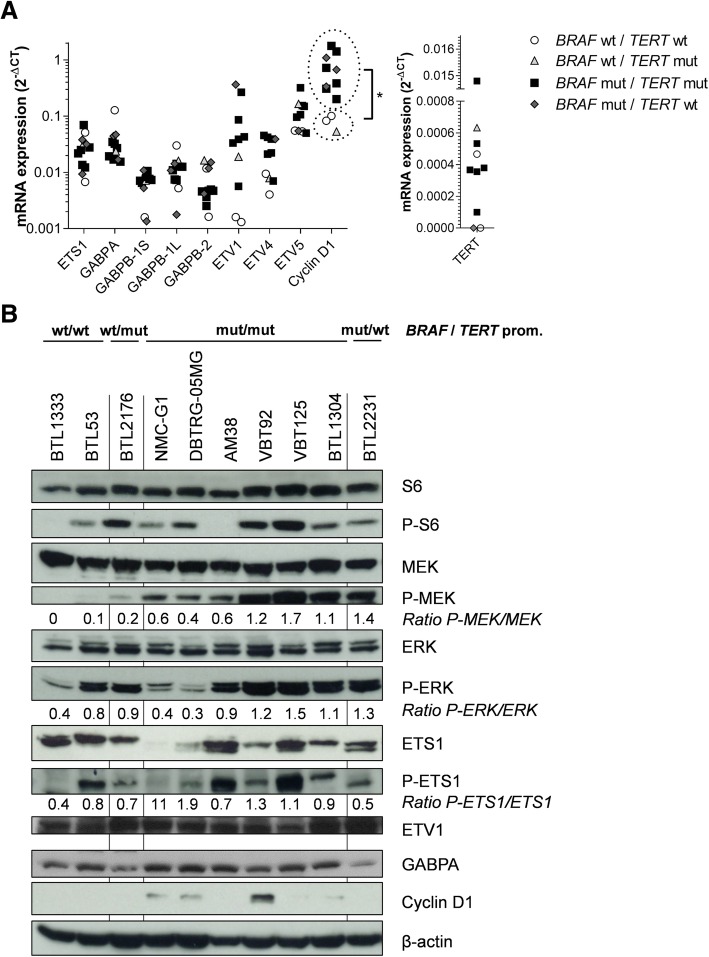
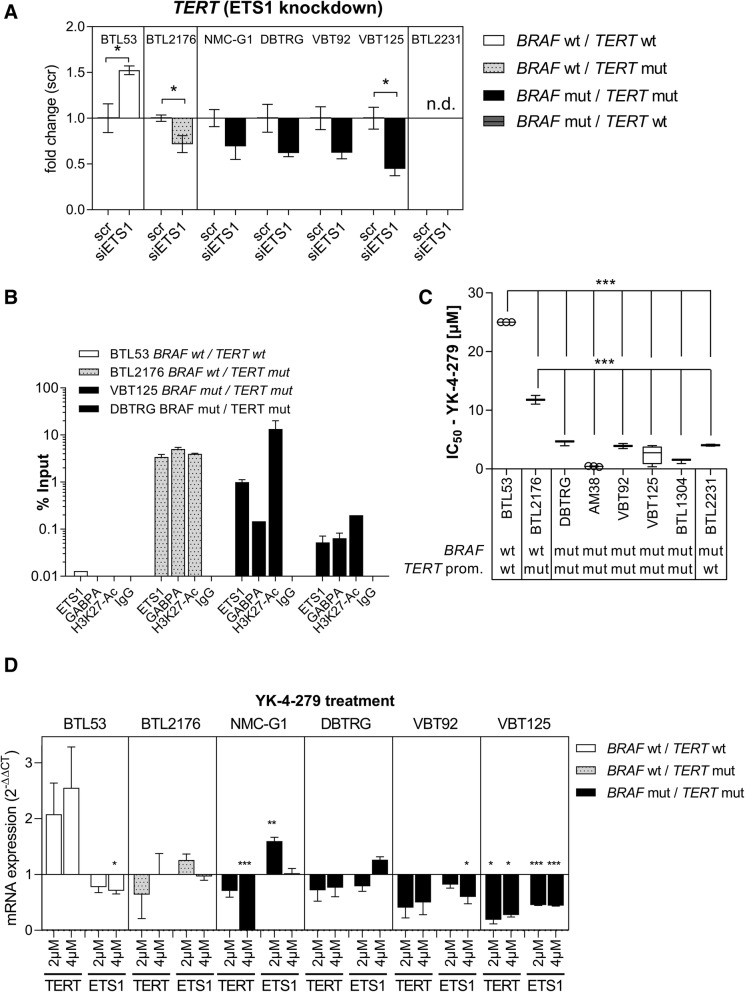
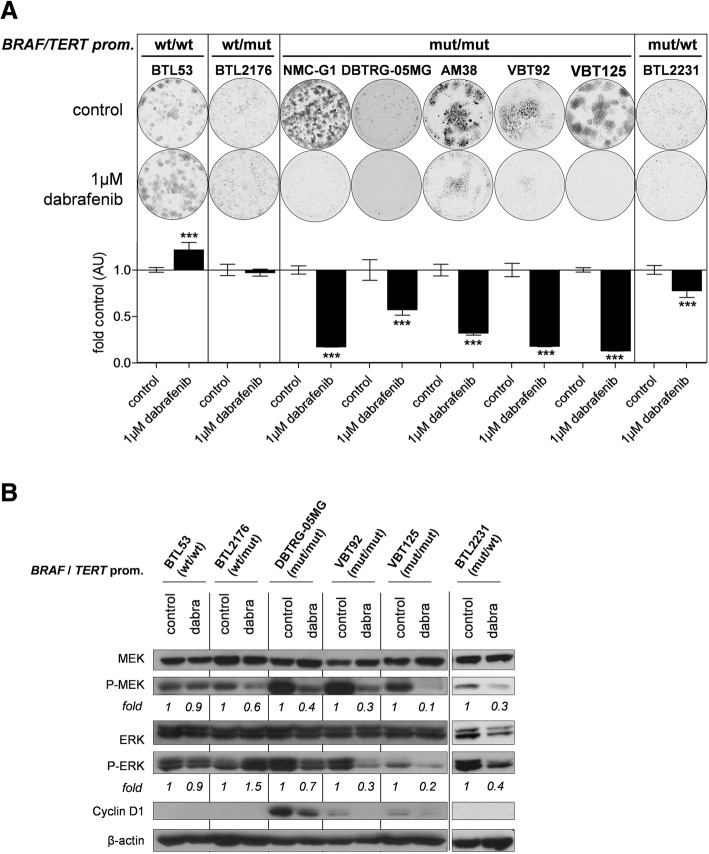
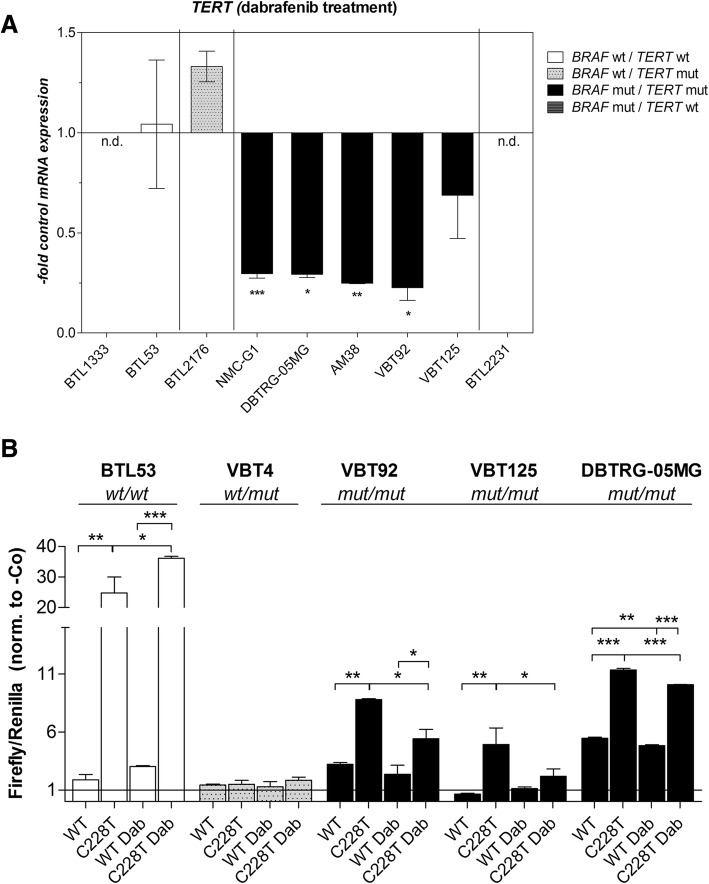
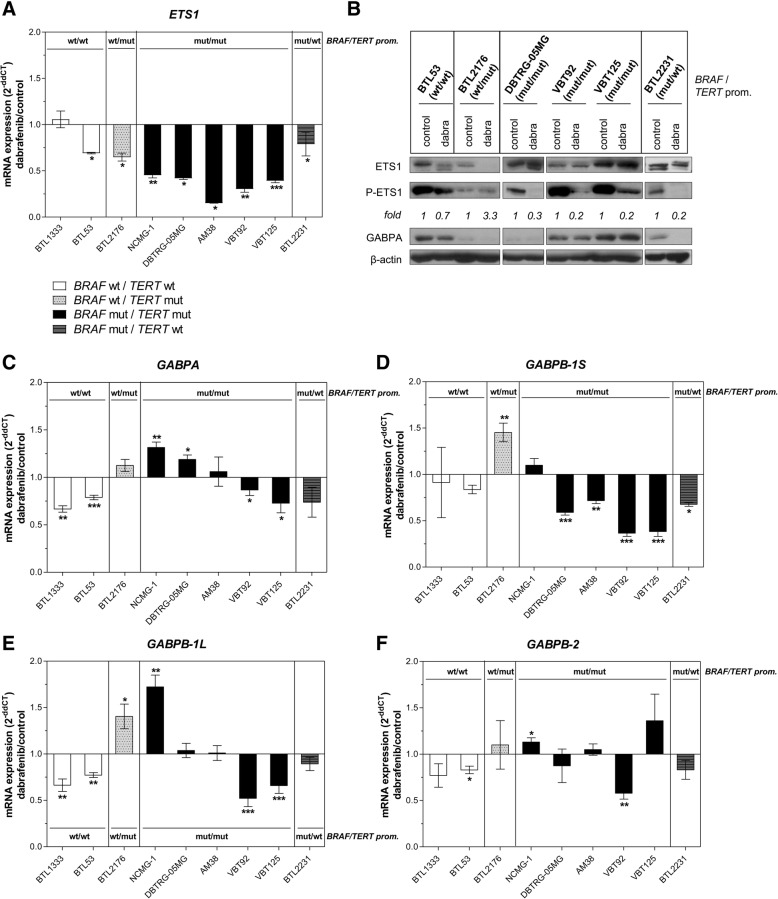
The BRAF gene and the TERT promoter are among the most frequently altered genomic loci in low-grade (LGG) and high-grade-glioma (HGG), respectively. The coexistence of BRAF and TERT promoter aberrations characterizes a subset of aggressive glioma. Therefore, we investigated interactions between those alterations in malignant glioma. We analyzed co-occurrence of BRAF and TERT promoter mutations in our clinical data (n = 8) in addition to published datasets (n = 103) and established a BRAF-positive glioma cell panel (n = 9) for in vitro analyses. We investigated altered gene expression, signaling events and TERT promoter activity upon BRAF- and E-twenty-six (ETS)-factor inhibition by qRT-PCR, chromatin immunoprecipitation (ChIP), Western blots and luciferase reporter assays. TERT promoter mutations were significantly enriched in BRAF-mutated HGG as compared to BRAF-mutated LGG. In vitro, BRAF/TERT promoter double-mutant glioma cells showed exceptional sensitivity towards BRAF-targeting agents. Remarkably, BRAF-inhibition attenuated TERT expression and TERT promoter activity exclusively in double-mutant models, while TERT expression was undetectable in BRAF-only cells. Various ETS-factors were broadly expressed, however, only ETS1 expression and phosphorylation were consistently downregulated following BRAF-inhibition. Knock-down experiments and ChIP corroborated the notion of a functional role for ETS1 and, accordingly, all double-mutant tumor cells were highly sensitive towards the ETS-factor inhibitor YK-4-279. In conclusion, our data suggest that concomitant BRAF and TERT promoter mutations synergistically support cancer cell proliferation and immortalization. ETS1 links these two driver alterations functionally and may represent a promising therapeutic target in this aggressive glioma subgroup.
BRAF 基因和 TERT 启动子分别是低级别胶质瘤(LGG)和高级别胶质瘤(HGG)中最常发生改变的基因组位点之一。BRAF 和 TERT 启动子异常的共存特征是侵袭性神经胶质瘤的一个亚群。因此,我们研究了恶性胶质瘤中这些改变之间的相互作用。我们分析了 BRAF 和 TERT 启动子突变在我们的临床数据(n=8)中的共发生,以及已发表的数据(n=103),并建立了 BRAF 阳性神经胶质瘤细胞面板(n=9)进行体外分析。我们通过 qRT-PCR、染色质免疫沉淀(ChIP)、Western blot 和荧光素酶报告基因检测,研究了 BRAF 和 E-二十六(ETS)因子抑制后基因表达、信号事件和 TERT 启动子活性的改变。与 BRAF 突变的 LGG 相比,BRAF 突变的 HGG 中 TERT 启动子突变明显富集。在体外,BRAF/TERT 启动子双突变神经胶质瘤细胞对 BRAF 靶向药物表现出异常敏感性。值得注意的是,BRAF 抑制仅在双突变模型中减弱 TERT 表达和 TERT 启动子活性,而 BRAF 单突变细胞中 TERT 表达不可检测。各种 ETS 因子广泛表达,但只有 ETS1 表达和磷酸化在 BRAF 抑制后被一致下调。敲低实验和 ChIP 证实了 ETS1 的功能作用,相应地,所有双突变肿瘤细胞对 ETS 因子抑制剂 YK-4-279 高度敏感。总之,我们的数据表明,同时存在 BRAF 和 TERT 启动子突变协同支持癌细胞增殖和永生化。ETS1 从功能上连接这两种驱动改变,并且可能是该侵袭性神经胶质瘤亚群的一个有前途的治疗靶点。