Davison Andrew S, Norman Brendan P, Ross Gordon A, Hughes Andrew T, Khedr Milad, Milan Anna M, Gallagher James A, Ranganath Lakshminarayan R
Department of Clinical Biochemistry and Metabolic Medicine, Liverpool Clinical Laboratories Royal Liverpool University Hospitals Trust Liverpool UK.
Musculoskeletal Biology I, Institute of Ageing and Chronic Disease University of Liverpool, Liverpool Health Partners Liverpool UK.
JIMD Rep. 2019 May 31;48(1):67-74. doi: 10.1002/jmd2.12042. eCollection 2019 Jul.
The homogentisic acid-lowering therapy nitisinone is being evaluated for the treatment of alkaptonuria (AKU) at the National Centre for AKU. Beyond hypertyrosinemia, the wider metabolic consequences of its use are largely unknown. The aim of this work was to evaluate the impact of nitisinone on the serum metabolome of patients with AKU after 12 and 24 months of treatment.
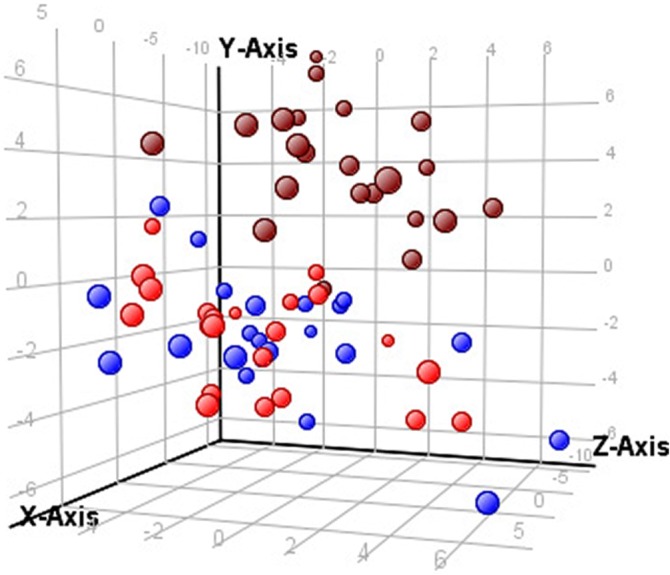
Deproteinized serum from 25 patients with AKU (mean age[±SD] 51.1 ± 14.9 years, 12 male) was analyzed using the 1290 Infinity II liquid chromatography system coupled to a 6550 quadrupole time-of-flight mass spectrometry (Agilent, UK). Raw data were processed using a batch targeted feature extraction algorithm and an accurate mass retention time database containing 469 intermediary metabolites (MW 72-785). Matched entities (±10 ppm theoretical accurate mass and ±0.3 minutes retention time window) were filtered based on their frequency and variability (<25% CV) in group quality control samples, and repeated measures statistical significance analysis with Benjamini-Hochberg false discovery rate adjustment was used to assess changes in metabolite abundance.
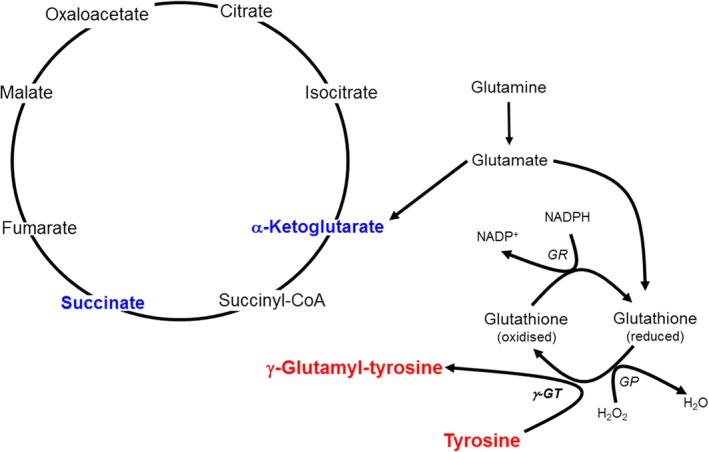
Eight metabolites increased in abundance (log fold change [FC] 2.1-15.2, < .05); 7 of 8 entities were related to tyrosine metabolism, and 13 decreased in abundance (log FC 1.5-15.5, < .05); including entities related to tyrosine (n = 2), tryptophan (n = 3), xanthine (n = 2), and citric acid cycle metabolism (n = 2).
Evaluation of the serum metabolome of patients with AKU showed a significant difference in the abundance of several metabolites following treatment with nitisinone, including a number that have not been previously reported; several of these were not related to the tyrosine metabolic pathway.
Nitisinone therapy has a significant impact on several metabolites beyond the tyrosine metabolic pathway, several of which appear to be related to the redox state of the cell.
在国家尿黑酸尿症(AKU)中心,正在评估降尿黑酸疗法尼替西农对尿黑酸尿症(AKU)的治疗效果。除高酪氨酸血症外,其使用带来的更广泛代谢后果在很大程度上尚不清楚。这项工作的目的是评估尼替西农治疗12个月和24个月后对AKU患者血清代谢组的影响。
使用1290 Infinity II液相色谱系统与6550四极杆飞行时间质谱仪(英国安捷伦公司)对25例AKU患者(平均年龄[±标准差]51.1±14.9岁,12例男性)的脱蛋白血清进行分析。原始数据使用批量靶向特征提取算法和包含469种中间代谢物(分子量72 - 785)的精确质量保留时间数据库进行处理。匹配的实体(理论精确质量±10 ppm和保留时间窗口±0.3分钟)根据其在组质量控制样品中的频率和变异性(<25% CV)进行筛选,并使用经Benjamini - Hochberg错误发现率调整的重复测量统计显著性分析来评估代谢物丰度的变化。
8种代谢物丰度增加(对数变化倍数[FC] 2.1 - 15.2,< .05);8个实体中的7个与酪氨酸代谢有关,13种代谢物丰度降低(对数FC 1.5 - 15.5),< .05);包括与酪氨酸(n = 2)、色氨酸(n = 3)、黄嘌呤(n = 2)和柠檬酸循环代谢(n = 2)相关的实体。
对AKU患者血清代谢组的评估显示,用尼替西农治疗后几种代谢物的丰度有显著差异,包括一些以前未报道过的代谢物;其中几种与酪氨酸代谢途径无关。
尼替西农疗法对酪氨酸代谢途径以外的几种代谢物有显著影响,其中几种似乎与细胞的氧化还原状态有关。