Faculty of Science and Medicine, Department of Neuroscience, Anatomy, University of Fribourg, 1700 Fribourg, Switzerland.
Department of Neurosurgery, University Hospital, University of Basel, 4031 Basel, Switzerland.
Soc Cogn Affect Neurosci. 2019 Aug 31;14(8):837-847. doi: 10.1093/scan/nsz056.
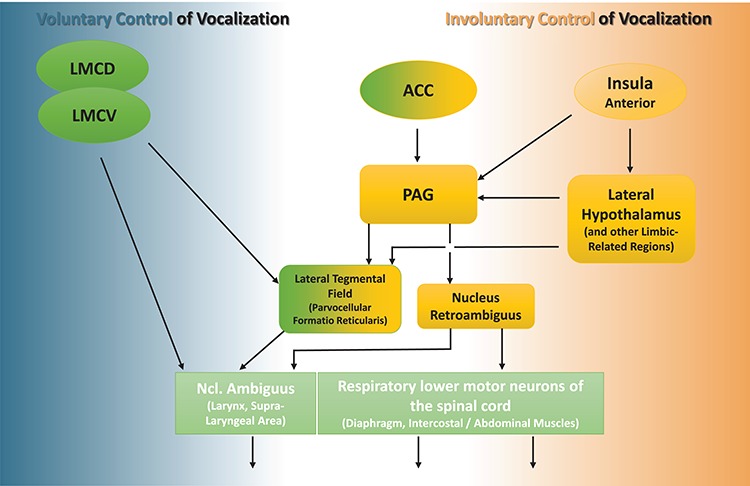
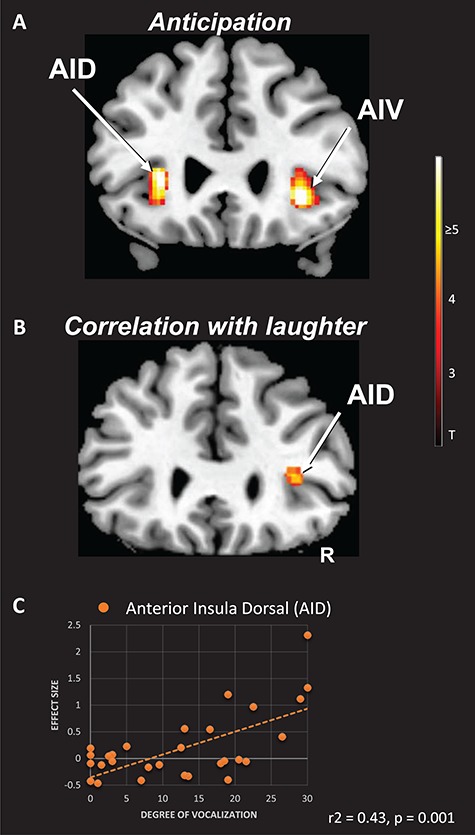
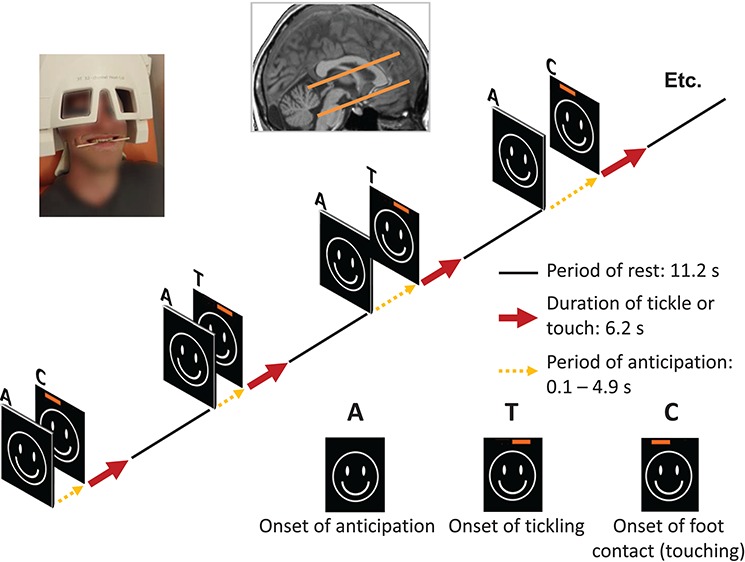
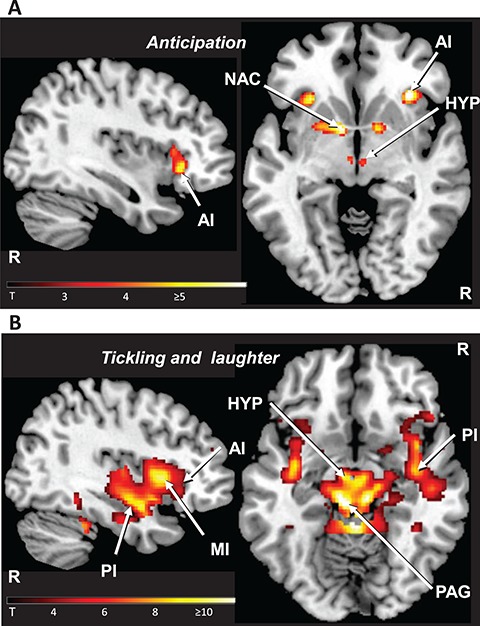
In analogy to the appreciation of humor, that of tickling is based upon the re-interpretation of an anticipated emotional situation. Hence, the anticipation of tickling contributes to the final outburst of ticklish laughter. To localize the neuronal substrates of this process, functional magnetic resonance imaging (fMRI) was conducted on 31 healthy volunteers. The state of anticipation was simulated by generating an uncertainty respecting the onset of manual foot tickling. Anticipation was characterized by an augmented fMRI signal in the anterior insula, the hypothalamus, the nucleus accumbens and the ventral tegmental area, as well as by an attenuated one in the internal globus pallidus. Furthermore, anticipatory activity in the anterior insula correlated positively with the degree of laughter that was produced during tickling. These findings are consistent with an encoding of the expected emotional consequences of tickling and suggest that early regulatory mechanisms influence, automatically, the laughter circuitry at the level of affective and sensory processing. Tickling activated not only those regions of the brain that were involved during anticipation, but also the posterior insula, the anterior cingulate cortex and the periaqueductal gray matter. Sequential or combined anticipatory and tickling-related neuronal activities may adjust emotional and sensorimotor pathways in preparation for the impending laughter response.
类似于对幽默的欣赏,挠痒的愉悦感建立在对预期情绪情境的重新解释之上。因此,对挠痒的预期有助于最终爆发笑声。为了定位这个过程的神经元基础,对 31 名健康志愿者进行了功能磁共振成像(fMRI)。通过产生对手动足部挠痒开始的不确定性来模拟预期状态。预期的特征是在前脑岛、下丘脑、伏隔核和腹侧被盖区的 fMRI 信号增强,而在内侧苍白球的 fMRI 信号减弱。此外,前脑岛的预期活动与挠痒时产生的笑声程度呈正相关。这些发现与对挠痒预期情绪后果的编码一致,并表明早期调节机制会自动影响情感和感官处理层面的笑声回路。挠痒不仅激活了预期过程中涉及的大脑区域,还激活了后脑岛、前扣带皮层和导水管周围灰质。连续或联合的预期和挠痒相关的神经元活动可能会调整情绪和感觉运动通路,为即将到来的笑声反应做准备。