Department of Structural Infection Biology, Center for Structural Systems Biology (CSSB), Helmholtz-Center for Infection Research (HZI), Hamburg, Germany.
Heinrich Pette Institute, Leibniz Institute for Experimental Virology, Hamburg, Germany.
Protein Sci. 2019 Oct;28(10):1888-1901. doi: 10.1002/pro.3704. Epub 2019 Aug 24.
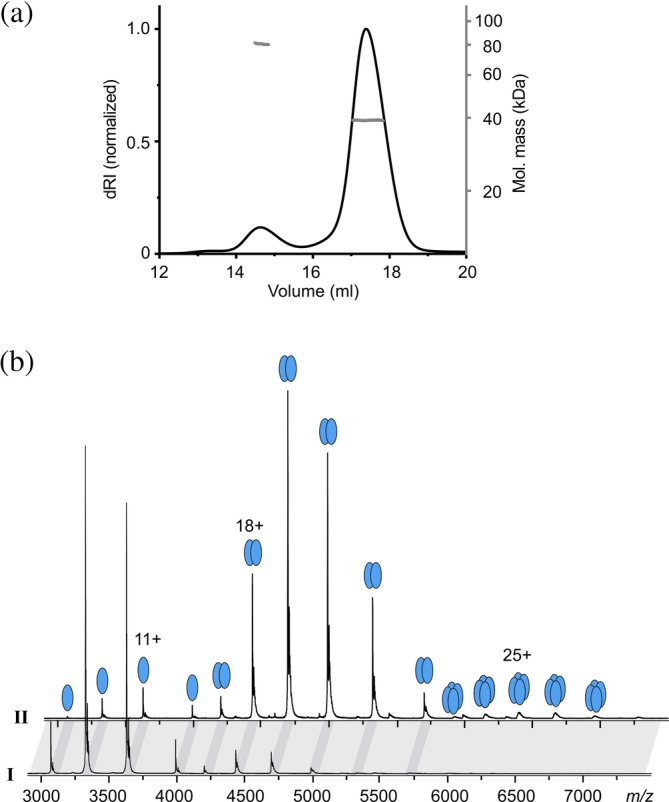
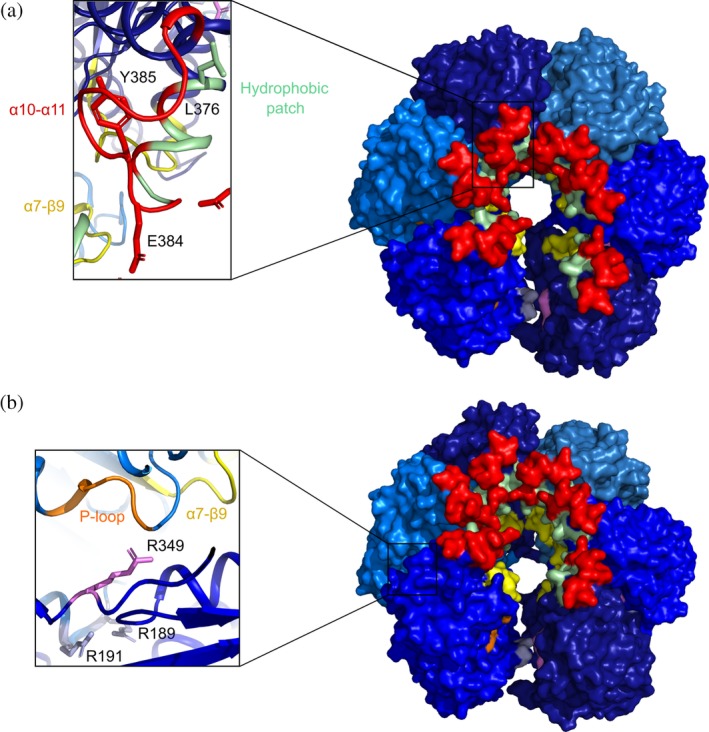
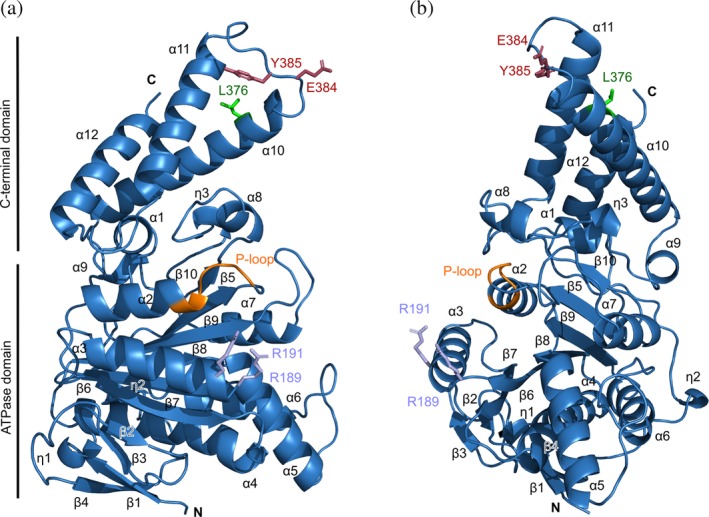
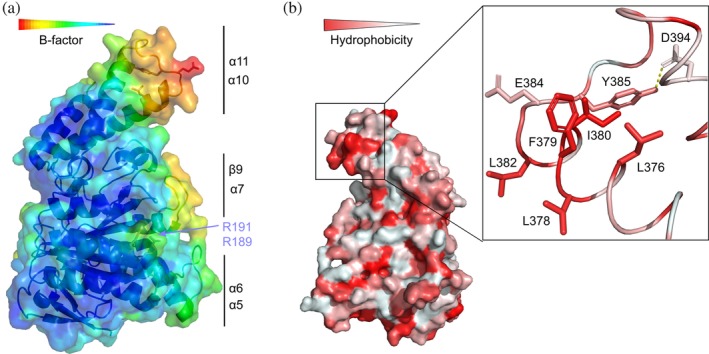
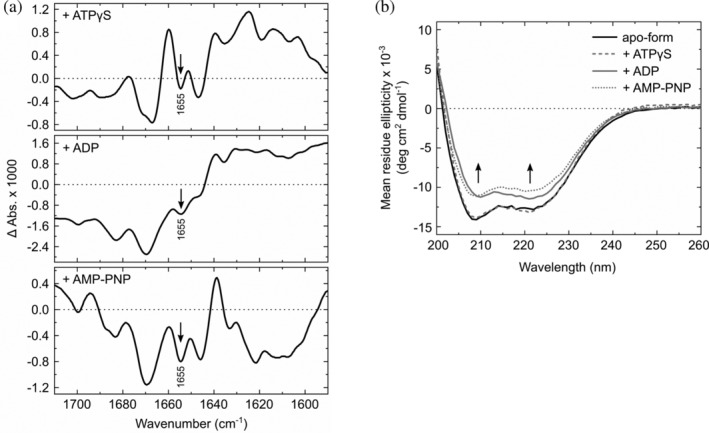
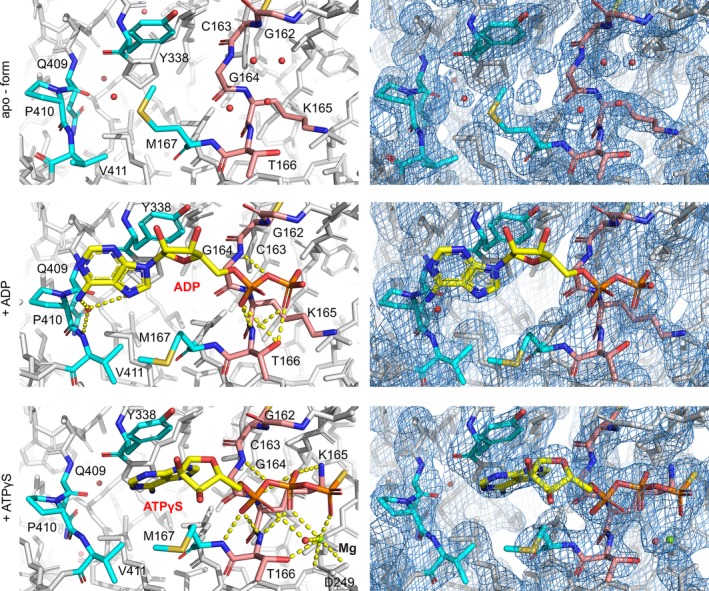
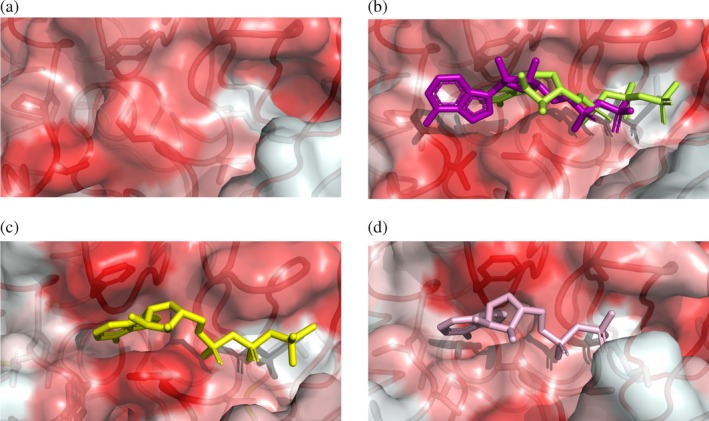
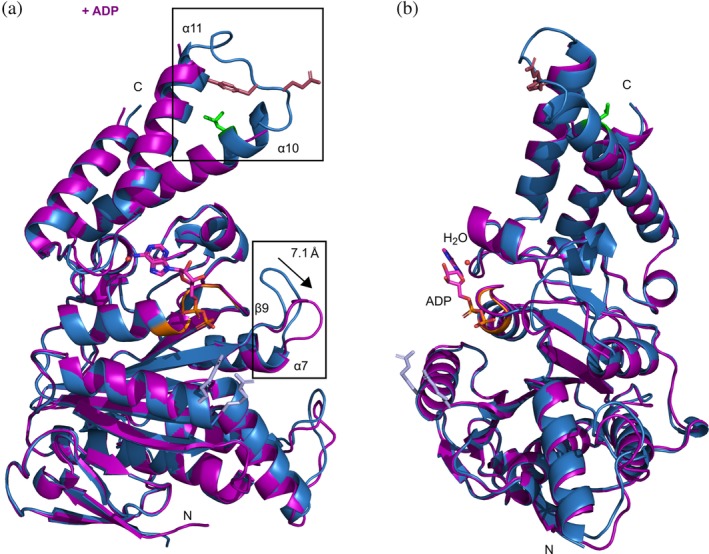
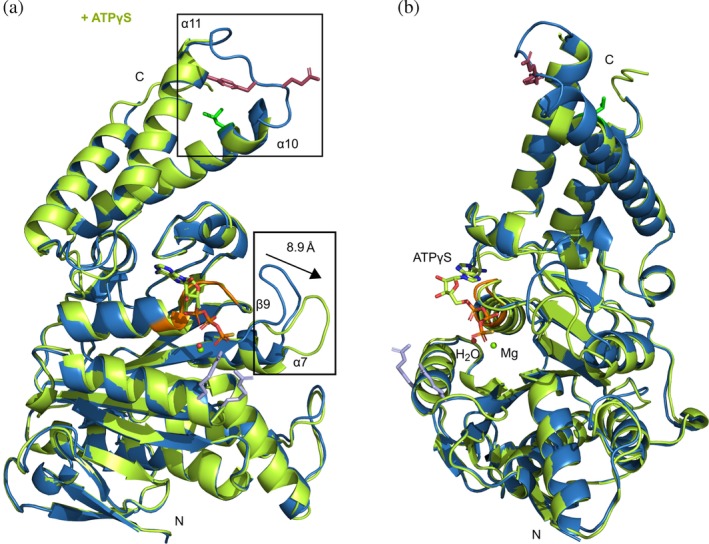
Translocation of virulence effector proteins through the type III secretion system (T3SS) is essential for the virulence of many medically relevant Gram-negative bacteria. The T3SS ATPases are conserved components that specifically recognize chaperone-effector complexes and energize effector secretion through the system. It is thought that functional T3SS ATPases assemble into a cylindrical structure maintained by their N-terminal domains. Using size-exclusion chromatography coupled to multi-angle light scattering and native mass spectrometry, we show that in the absence of the N-terminal oligomerization domain the Salmonella T3SS ATPase InvC can form monomers and dimers in solution. We also present for the first time a 2.05 å resolution crystal structure of InvC lacking the oligomerization domain (InvCΔ79) and map the amino acids suggested for ATPase intersubunit interaction, binding to other T3SS proteins and chaperone-effector recognition. Furthermore, we validate the InvC ATP-binding site by co-crystallization of InvCΔ79 with ATPγS (2.65 å) and ADP (2.80 å). Upon ATP-analogue recognition, these structures reveal remodeling of the ATP-binding site and conformational changes of two loops located outside of the catalytic site. Both loops face the central pore of the predicted InvC cylinder and are essential for the function of the T3SS ATPase. Our results present a fine functional and structural correlation of InvC and provide further details of the homo-oligomerization process and ATP-dependent conformational changes underlying the T3SS ATPase activity.
毒力效应蛋白通过 III 型分泌系统(T3SS)的易位对于许多与医学相关的革兰氏阴性细菌的毒力至关重要。T3SS ATP 酶是保守的组成部分,它们特异性地识别伴侣-效应复合物,并通过该系统为效应物分泌提供能量。人们认为功能正常的 T3SS ATP 酶组装成一个由其 N 端结构域维持的圆柱形结构。通过大小排阻色谱法与多角度光散射和天然质谱法联用,我们表明,在没有 N 端寡聚化结构域的情况下,沙门氏菌 T3SS ATP 酶 InvC 可以在溶液中形成单体和二聚体。我们还首次呈现了缺乏寡聚化结构域的 InvC(InvCΔ79)的 2.05 Å分辨率晶体结构,并绘制了氨基酸用于 ATP 酶亚基间相互作用、与其他 T3SS 蛋白结合和伴侣-效应物识别的图谱。此外,我们通过与 InvCΔ79 共结晶 ATPγS(2.65 Å)和 ADP(2.80 Å)验证了 InvC 的 ATP 结合位点。在与 ATP 类似物识别后,这些结构揭示了 ATP 结合位点的重塑以及位于催化位点之外的两个环的构象变化。这两个环都面向预测的 InvC 圆柱的中央孔,对于 T3SS ATP 酶的功能至关重要。我们的结果提供了 InvC 的精细功能和结构相关性,并进一步详细说明了 T3SS ATP 酶活性的同源寡聚化过程和 ATP 依赖性构象变化。