Facultad de Odontología, Universidad de Antioquia, Medellín 050010, Colombia.
Laboratorio de Inmunología de la Reproducción, Facultad de Química y Biología, Universidad de Santiago de Chile, Santiago 9160000, Chile.
Int J Mol Sci. 2019 Aug 7;20(16):3850. doi: 10.3390/ijms20163850.
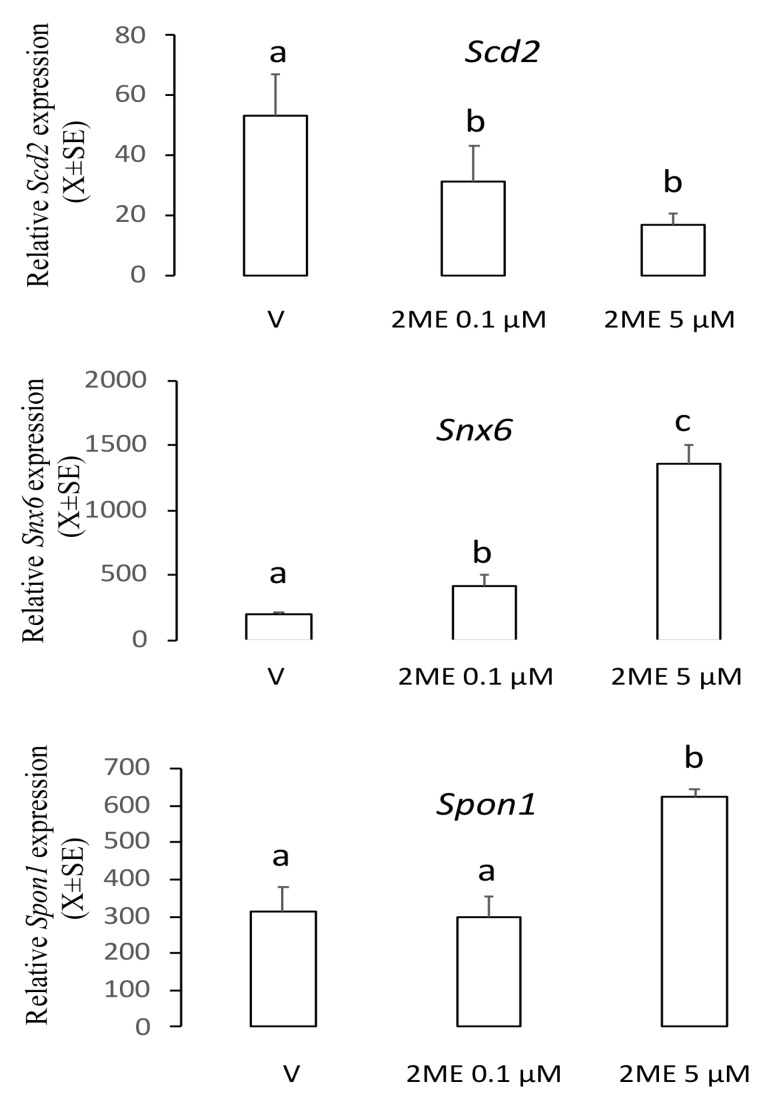
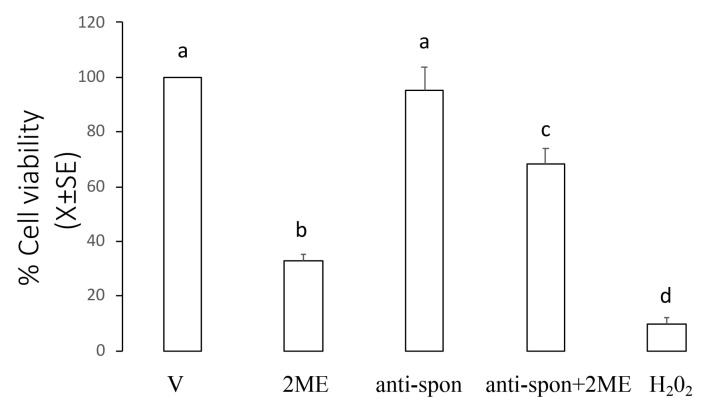
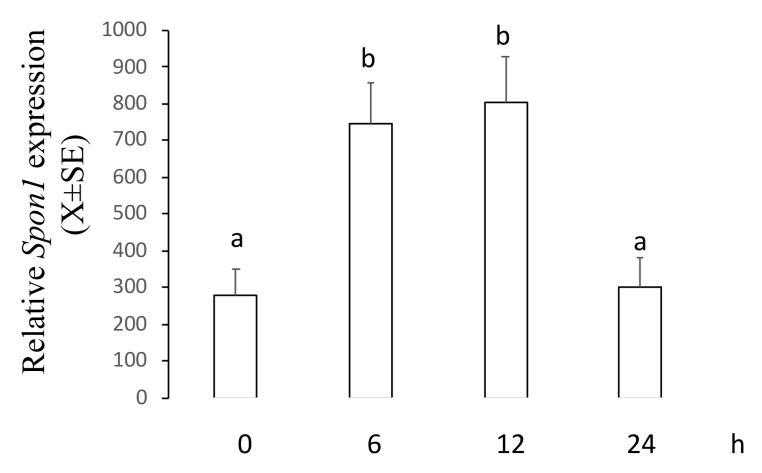
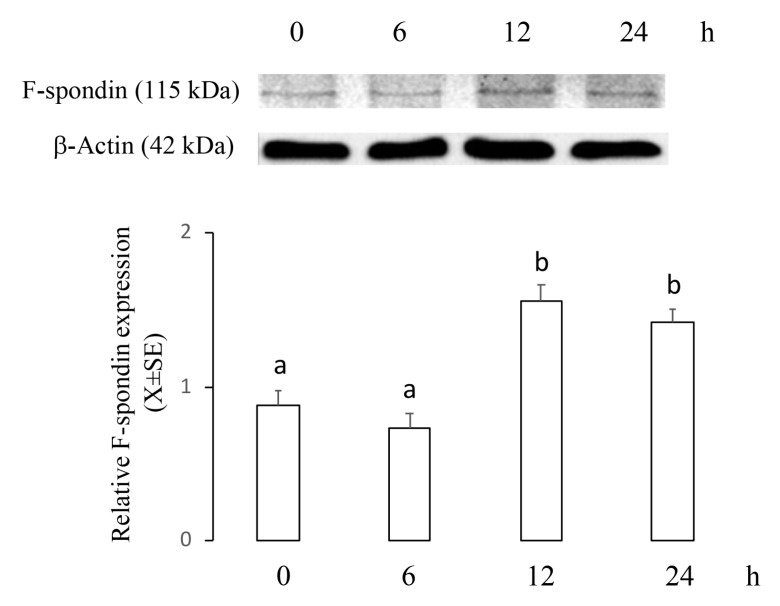
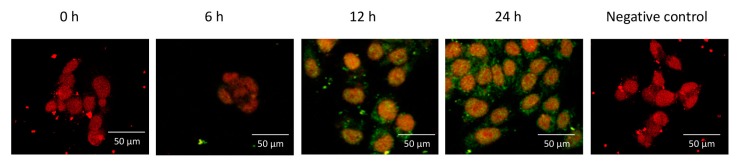
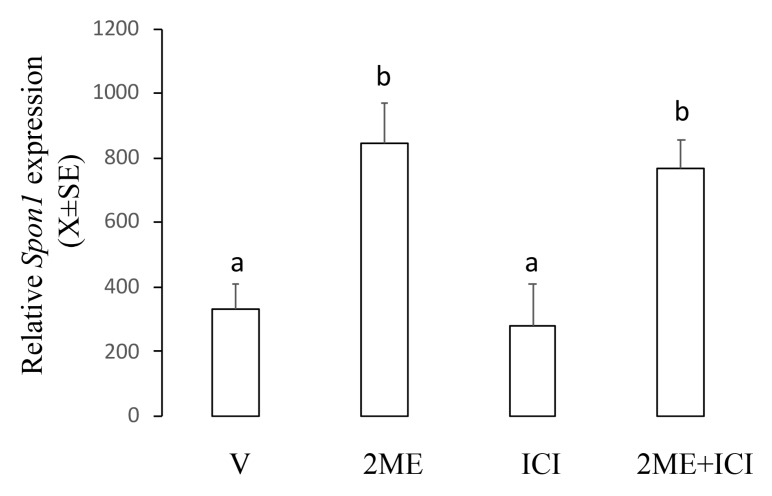
The metabolite 2-methoxyestradiol (2ME) is an endogenous estrogen metabolite with potential therapeutic properties in reproductive cancers. However, the molecular mechanisms by which 2ME exerts its anticancer activity are not well elucidated. The purpose of this study was to determine the molecular signals associated with the apoptotic effects of 2ME in a human endometrial cancer cell line. Ishikawa cells were treated with non-apoptotic (0.1 µM) or apoptotic concentrations (5 µM) of 2ME, and 12 hours later mRNA levels for , , and were determined by real-time PCR. We then investigated by immunofluorescence and Western blot the expression and distribution of F-spondin, encoded by , in Ishikawa cells treated with 2ME 5 µM at 6, 12, or 24 h after treatment. The role of estrogen receptors (ER) in the effect of 2ME on the level was also investigated. Finally, we examined whether 2ME 5 µM induces cell death in Ishikawa cells pre-incubated with a neutralizing F-spondin antibody. Non-apoptotic or apoptotic concentrations of 2ME decreased and increased . However, was only increased with the 2ME apoptotic concentration. F-spondin protein was also increased at 12 and 24 h after 2ME treatment, while 2ME-induced increase was independent of ER. Neutralization of F-spondin blocked the effect of 2ME on the cell viability. These results show that F-spondin signaling is one of the components in the apoptotic effects of 2ME on Ishikawa cells and provide experimental evidence underlying the mechanism of action of this estrogen metabolite on cancer cells.
代谢产物 2-甲氧基雌二醇(2ME)是一种内源性雌激素代谢产物,在生殖系统癌症中具有潜在的治疗特性。然而,2ME 发挥抗癌活性的分子机制尚未完全阐明。本研究旨在确定与 2ME 在人子宫内膜癌细胞系中诱导细胞凋亡相关的分子信号。用非凋亡(0.1µM)或凋亡浓度(5µM)的 2ME 处理 Ishikawa 细胞,12 小时后用实时 PCR 测定 、 、 和 的 mRNA 水平。然后,我们通过免疫荧光和 Western blot 检测用 2ME 处理后 6、12 或 24 小时的 Ishikawa 细胞中 F-spondin 的表达和分布,F-spondin 由 编码。还研究了 2ME 对 水平的影响是否与雌激素受体(ER)有关。最后,我们研究了在预先用中和 F-spondin 抗体孵育的 Ishikawa 细胞中,2ME 5µM 是否诱导细胞死亡。非凋亡或凋亡浓度的 2ME 降低了 ,增加了 。然而,只有凋亡浓度的 2ME 增加了 。在用 2ME 处理 12 和 24 小时后,F-spondin 蛋白也增加,而 2ME 诱导的 增加与 ER 无关。中和 F-spondin 阻断了 2ME 对细胞活力的影响。这些结果表明,F-spondin 信号是 2ME 诱导 Ishikawa 细胞凋亡的作用机制之一,并为这种雌激素代谢产物对癌细胞作用机制提供了实验依据。