Laboratoire d'Hépatologie Pédiatrique et Thérapie Cellulaire, Unité PEDI, Institut de Recherche Expérimentale et Clinique, Université catholique de Louvain (UCLouvain), 1200 Brussels, Belgium.
Promethera Biosciences, 1435 Mont-Saint-Guibert, Belgium.
Cells. 2019 Aug 7;8(8):846. doi: 10.3390/cells8080846.
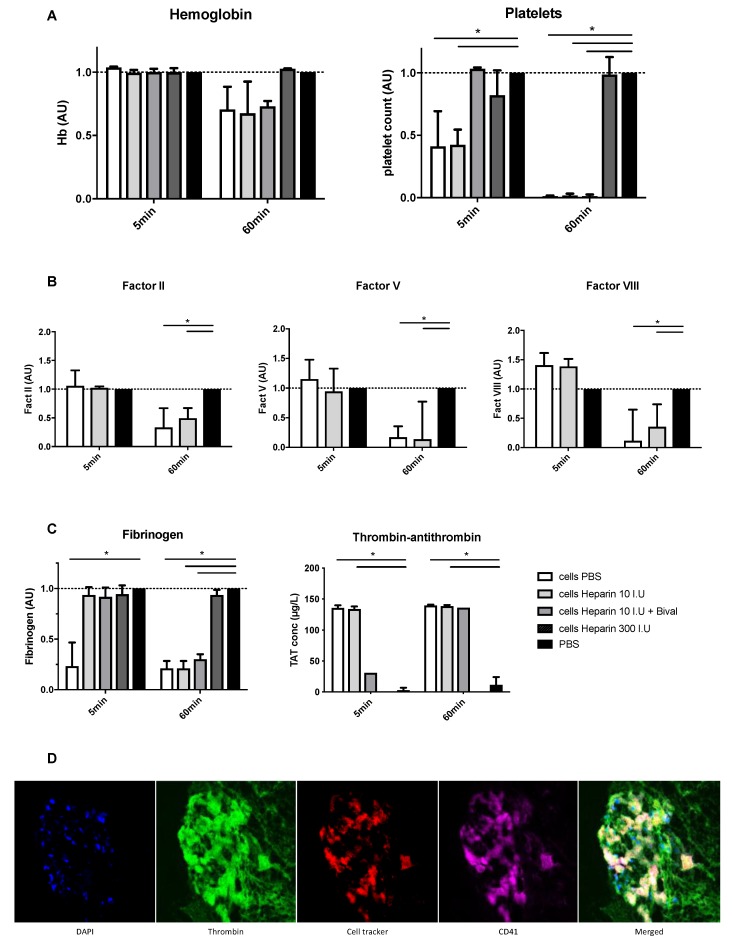
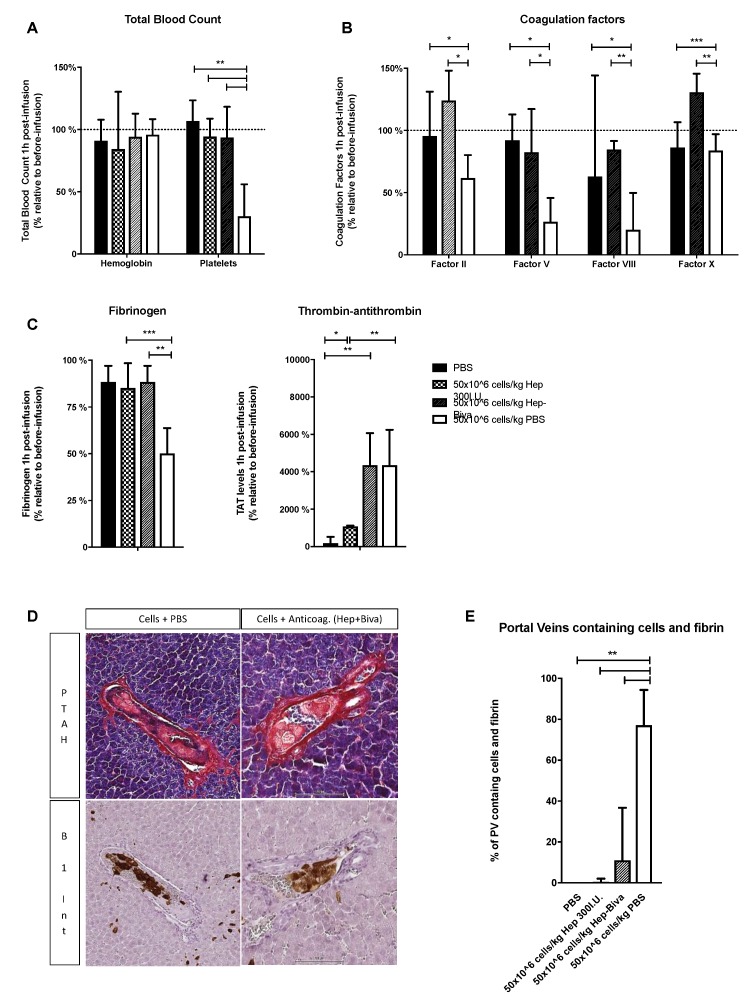
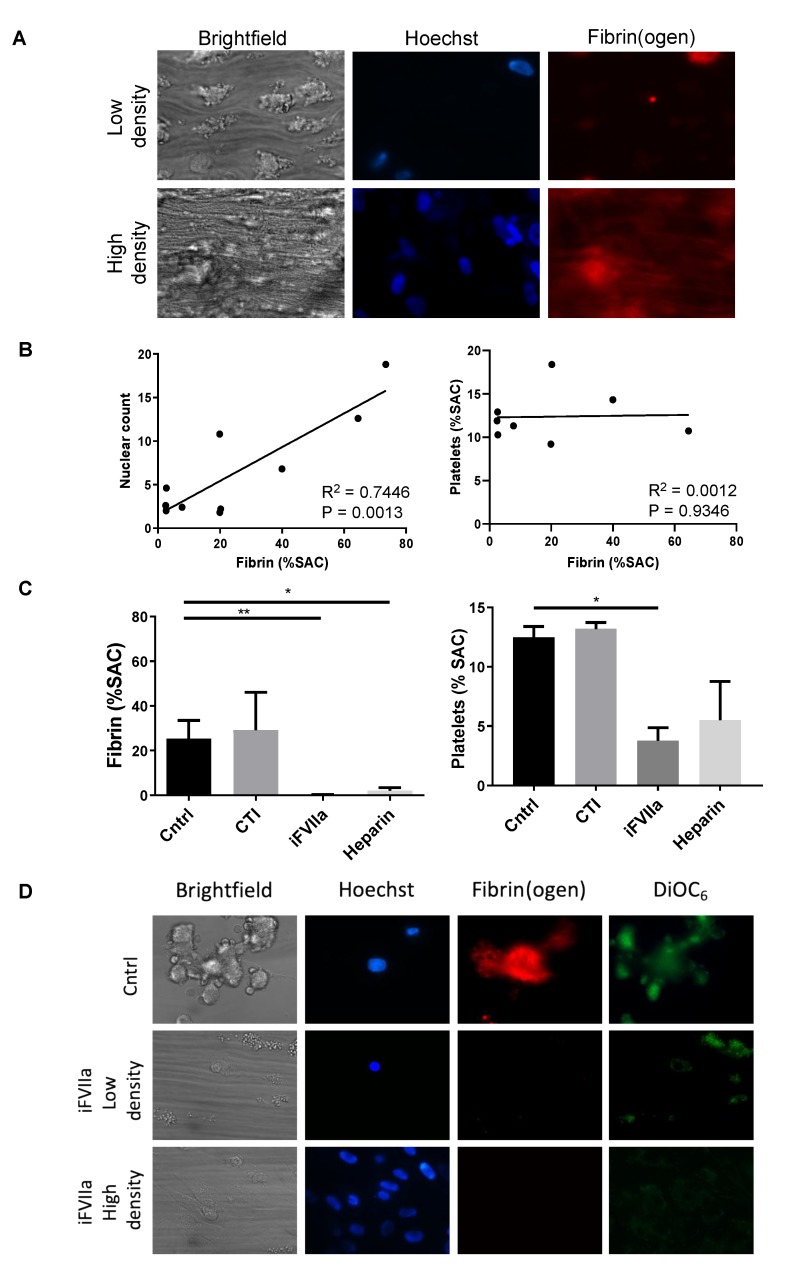
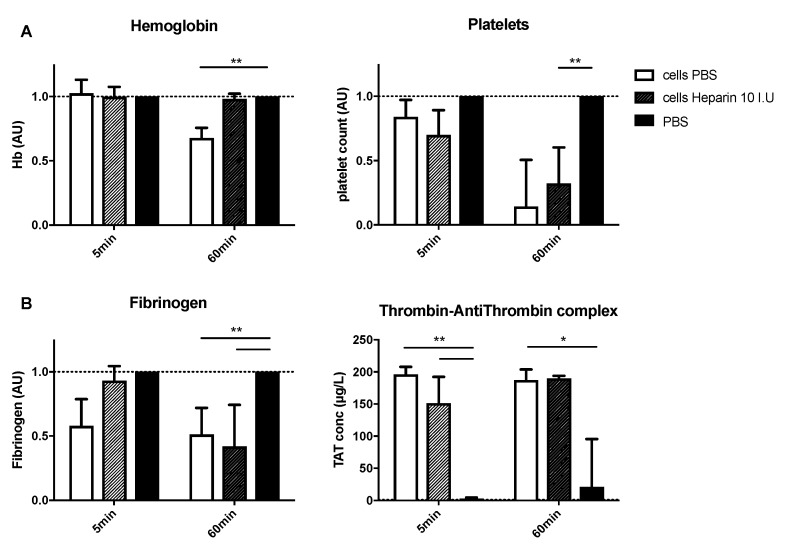
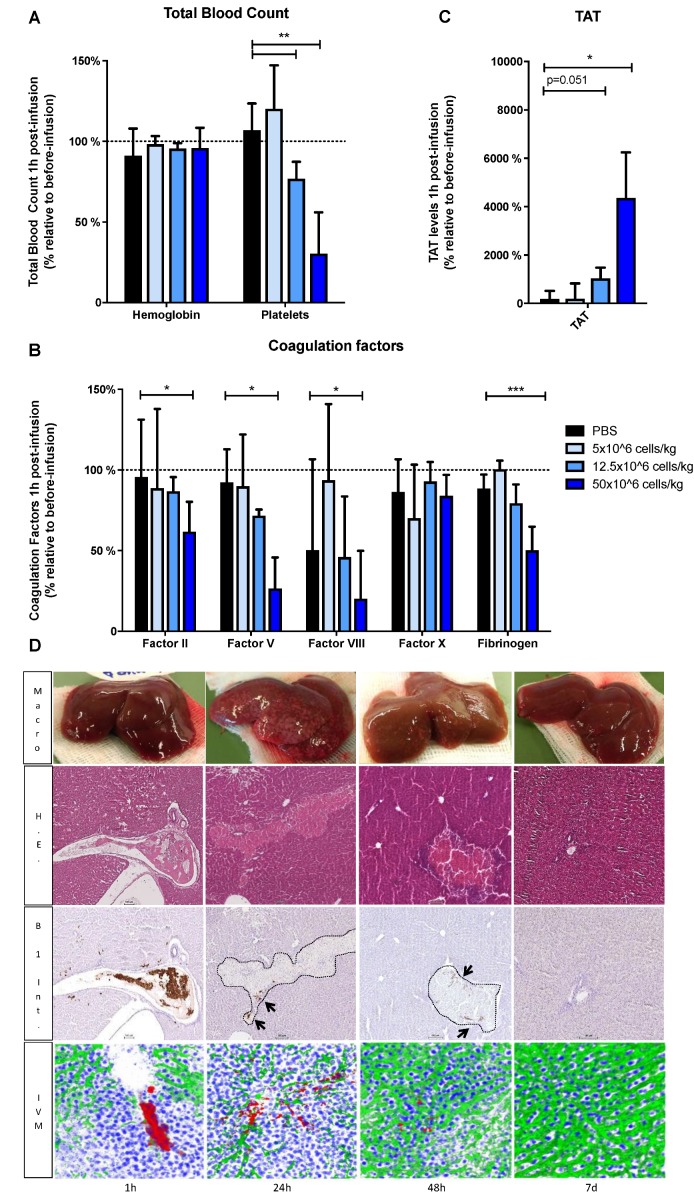
The efficacy of mesenchymal stem cell infusion is currently tested in numerous clinical trials. However, therapy-induced thrombotic consequences have been reported in several patients. The aim of this study was to optimize protocols for heterologous human adult liver-derived progenitor cell (HHALPC) infusion, in order to eliminate acute thrombogenesis in liver-based metabolic or acute decompensated cirrhotic (ADC) patients. In rats, thrombotic effects were absent when HHALPCs were infused at low cell dose (5 × 10 cells/kg), or at high cell dose (5 × 10 cells/kg) when combined with anticoagulants. When HHALPCs were exposed to human blood in a whole blood perfusion assay, blocking of the tissue factor (TF) coagulation pathway suppressed fibrin generation and platelet activation. In a Chandler tubing loop model, HHALPCs induced less explosive activation of coagulation with blood from ADC patients, when compared to blood from healthy controls, without alterations in coagulation factor levels other than fibrinogen. These studies confirm a link between TF and thrombogenesis, when TF-expressing cells are exposed to human blood. This phenomenon however, could be controlled using either a low, or a high cell dose combined with anticoagulants. In clinical practice, this points to the suitability of a low HHALPC dose infusion to cirrhotic patients, provided that platelet and fibrinogen levels are monitored.
间充质干细胞输注的疗效目前正在多项临床试验中进行测试。然而,在一些患者中已经报道了治疗引起的血栓形成后果。本研究的目的是优化异体人成年肝源性祖细胞(HHALPC)输注的方案,以消除基于肝脏的代谢或急性失代偿性肝硬化(ADC)患者的急性血栓形成。在大鼠中,当以低细胞剂量(5×10^5 个细胞/kg)输注 HHALPC 时,或当与抗凝剂联合使用时以高细胞剂量(5×10^5 个细胞/kg)输注时,没有观察到血栓形成作用。当 HHALPC 在全血灌注测定中暴露于人血中时,组织因子(TF)凝血途径的阻断抑制了纤维蛋白生成和血小板激活。在 Chandler 管环模型中,与来自健康对照者的血液相比,HHALPC 诱导来自 ADC 患者的血液中凝血的爆发性激活减少,而除纤维蛋白原以外的凝血因子水平没有改变。这些研究证实了当 TF 表达细胞暴露于人血中时,TF 与血栓形成之间存在联系。然而,该现象可以通过使用低细胞剂量或高细胞剂量联合抗凝剂来控制。在临床实践中,这表明对于肝硬化患者,低剂量 HHALPC 输注是合适的,前提是监测血小板和纤维蛋白原水平。