Department of Public Health, University of Otago, Wellington, Wellington, New Zealand.
Department of Public Health, University of Otago, Wellington, Wellington, New Zealand.
Lancet Oncol. 2019 Sep;20(9):e535-e548. doi: 10.1016/S1470-2045(19)30511-X. Epub 2019 Aug 5.
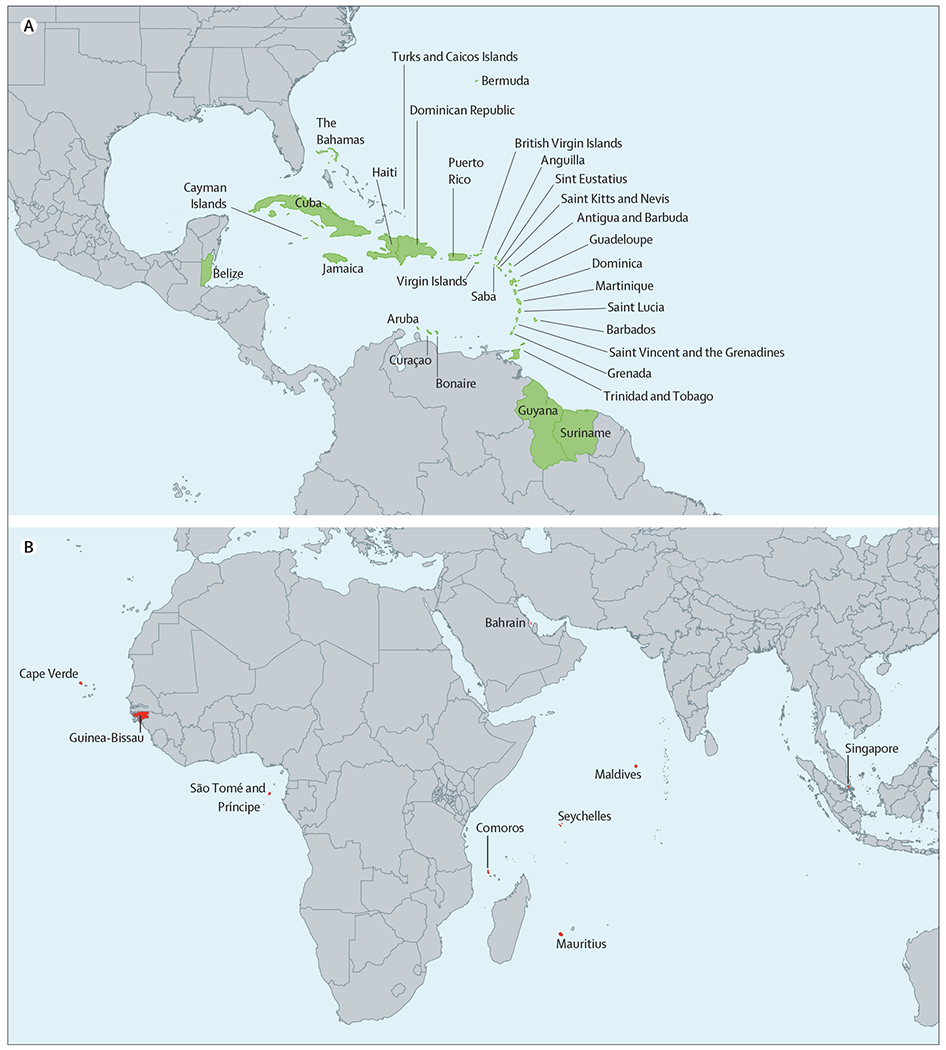
Cancer is a leading cause of death in small island nations and is forecast to increase substantially over the coming years. Governments, regional agencies, and health services of these nations face daunting challenges, including small and fragile economies, unequal distribution of resources, weak or fragmented health services, small population sizes that make sustainable workforce and service development problematic, and the unavailability of specialised cancer services to large parts of the population. Action is required to prevent large human and economic costs relating to cancer. This final Series paper highlights the challenges and opportunities for small island nations, and identifies ways in which the international community can support efforts to improve cancer control in these settings. Our recommendations focus on funding and investment opportunities to strengthen cancer-related health systems to improve sharing of technical assistance for research, surveillance, workforce, and service development, and to support small island nations with policy changes to reduce the consumption of commodities (eg, tobacco and unhealthy food products) that increase cancer risk.
癌症是小岛屿国家的主要死亡原因,预计在未来几年内会大幅增加。这些国家的政府、地区机构和卫生服务机构面临着严峻的挑战,包括规模较小且脆弱的经济、资源分配不均、卫生服务薄弱或分散、人口规模小,使得可持续的劳动力和服务发展成为问题,以及大部分人口无法获得专门的癌症服务。需要采取行动来预防与癌症相关的巨大人力和经济成本。本系列最后一篇论文强调了小岛屿国家所面临的挑战和机遇,并确定了国际社会可以支持这些国家努力改善癌症控制的方式。我们的建议侧重于为加强癌症相关卫生系统提供资金和投资机会,以改善研究、监测、劳动力和服务发展方面的技术援助共享,并支持小岛屿国家进行政策调整以减少增加癌症风险的商品(如烟草和不健康食品)的消费。