Dept. of Experimental Biomedicine, Chair I, University Hospital Würzburg, Würzburg, Germany.
PLoS One. 2019 Aug 9;14(8):e0216839. doi: 10.1371/journal.pone.0216839. eCollection 2019.
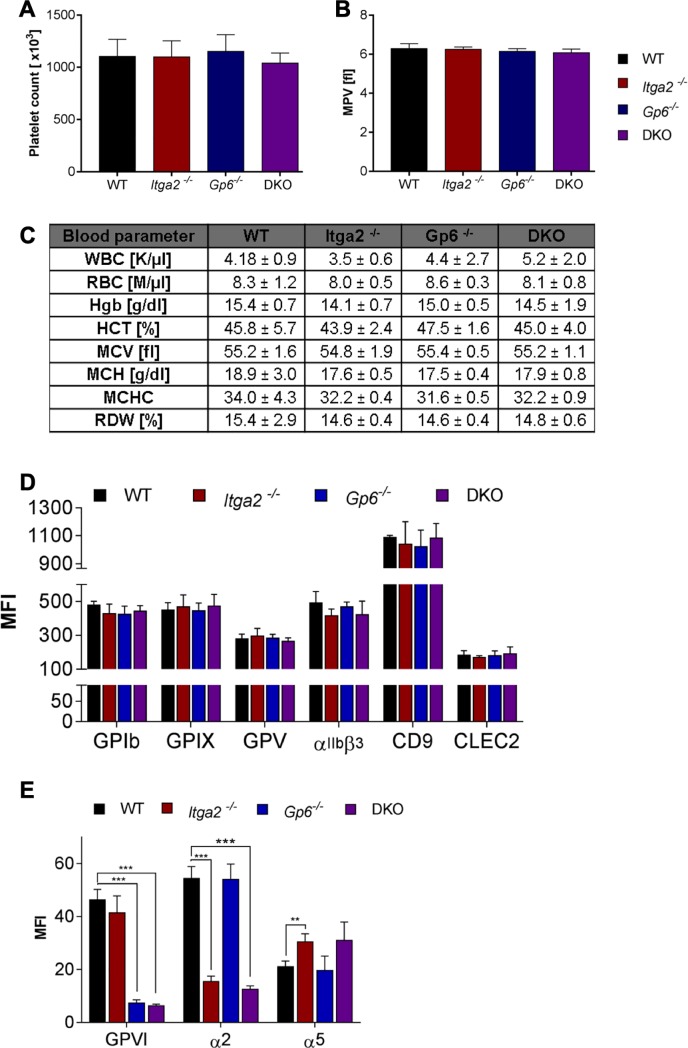
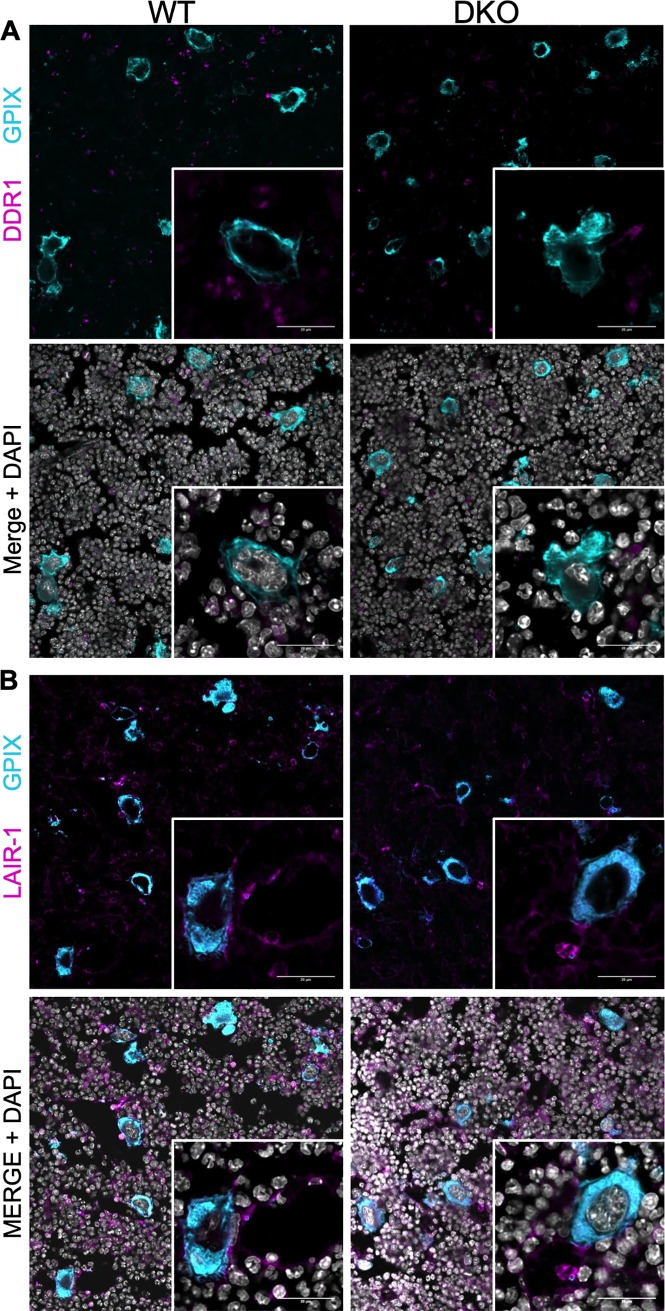
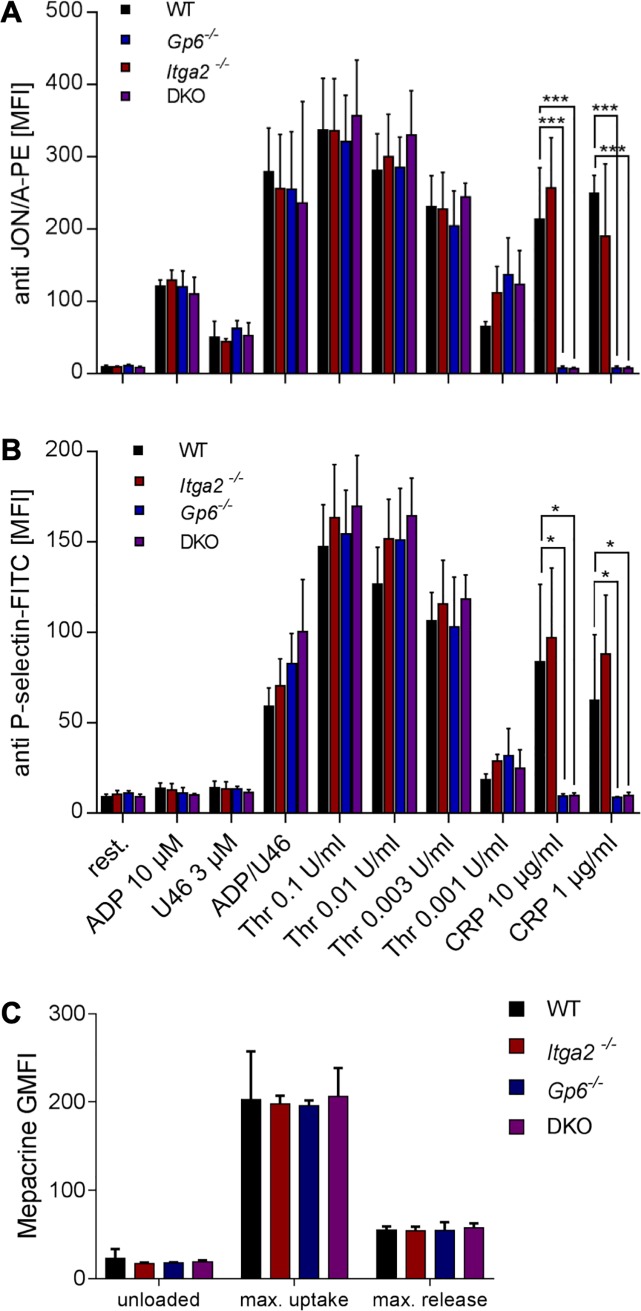
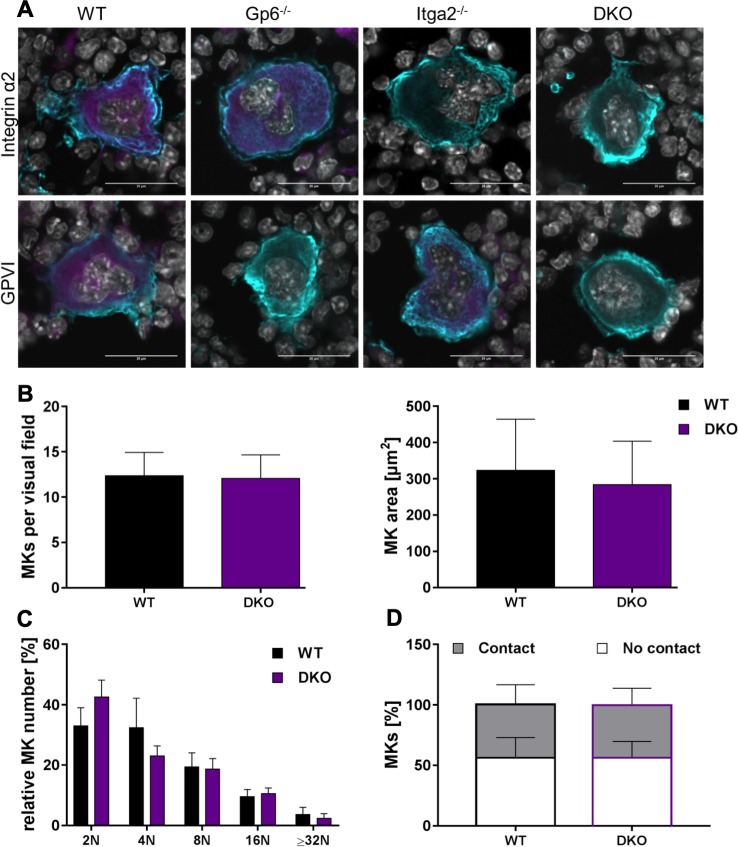
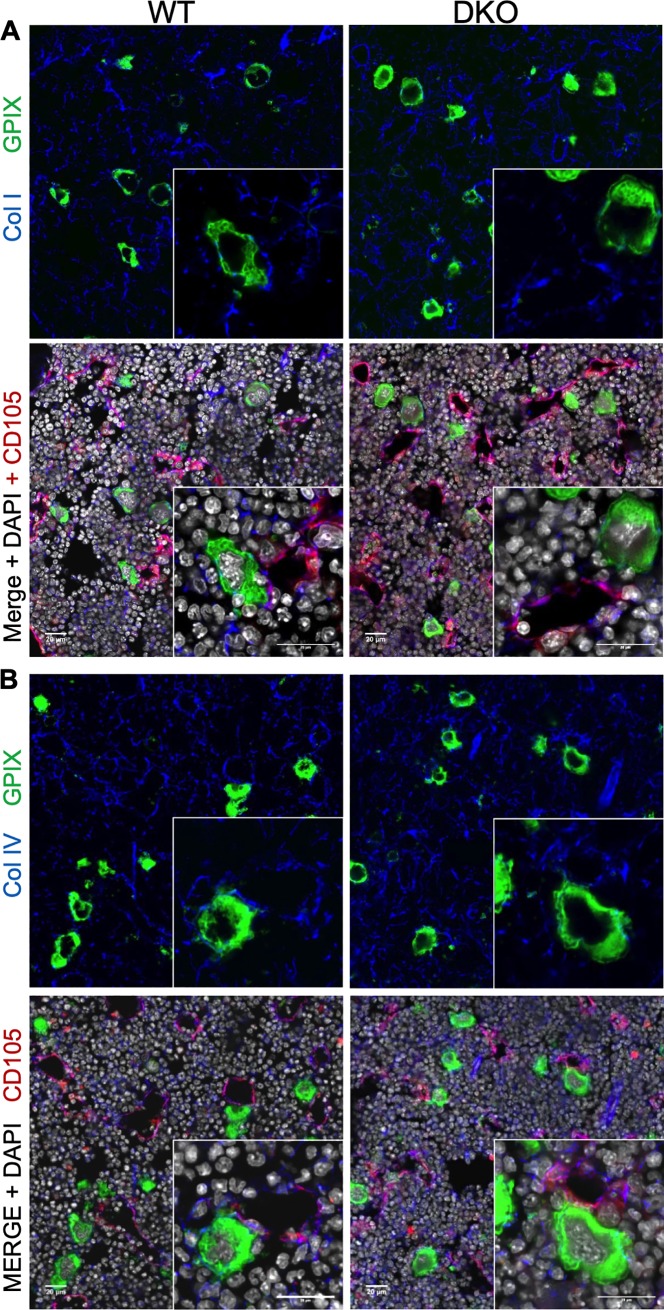
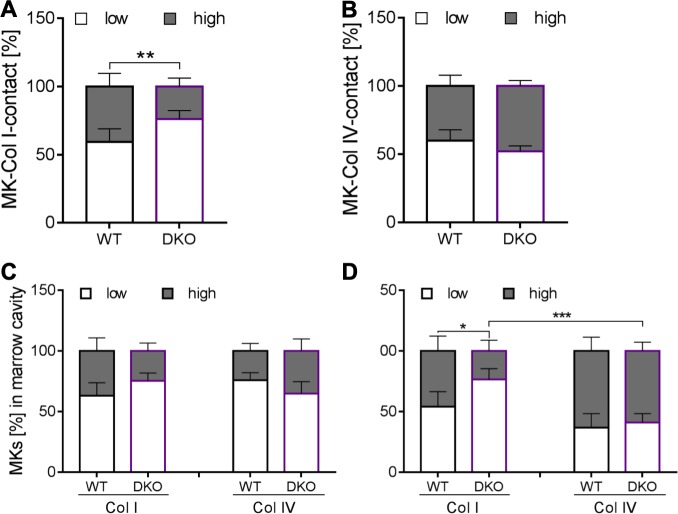
The two main collagen receptors on platelets, GPVI and integrin α2β1, play an important role for the recognition of exposed collagen at sites of vessel injury, which leads to platelet activation and subsequently stable thrombus formation. Both receptors are already expressed on megakaryocytes, the platelet forming cells within the bone marrow. Megakaryocytes are in permanent contact with collagen filaments in the marrow cavity and at the basal lamina of sinusoids without obvious preactivation. The role of both collagen receptors for megakaryocyte maturation and thrombopoiesis is still poorly understood. To investigate the function of both collagen receptors, we generated mice that are double deficient for Gp6 and Itga2. Flow cytometric analyses revealed that the deficiency of both receptors had no impact on platelet number and led to the expected lack in GPVI responsiveness. Integrin activation and degranulation ability was comparable to wildtype mice. By immunofluorescence microscopy, we could demonstrate that both wildtype and double-deficient megakaryocytes were overall normally distributed within the bone marrow. We found megakaryocyte count and size to be normal, the localization within the bone marrow, the degree of maturation, as well as their association to sinusoids were also unaltered. However, the contact of megakaryocytes to collagen type I filaments was decreased at sinusoids compared to wildtype mice, while the interaction to type IV collagen was unaffected. Our results imply that GPVI and α2β1 have no influence on the localization of megakaryocytes within the bone marrow, their association to the sinusoids or their maturation. The decreased contact of megakaryocytes to collagen type I might at least partially explain the unaltered platelet phenotype in these mice, since proplatelet formation is mediated by these receptors and their interaction to collagen. It is rather likely that other compensatory signaling pathways and receptors play a role that needs to be elucidated.
血小板上的两个主要胶原受体,即 GPVI 和整合素 α2β1,在识别血管损伤部位暴露的胶原方面发挥着重要作用,这导致血小板活化,随后形成稳定的血栓。这两个受体已经在巨核细胞上表达,巨核细胞是骨髓中形成血小板的细胞。巨核细胞与骨髓腔中的胶原纤维和窦状基底膜保持永久接触,而没有明显的预激活。这两个胶原受体在巨核细胞成熟和血小板生成中的作用仍知之甚少。为了研究这两个胶原受体的功能,我们生成了 Gp6 和 Itga2 双缺失的小鼠。流式细胞术分析表明,两个受体的缺失对血小板数量没有影响,并导致预期的 GPVI 反应缺失。整合素的激活和脱颗粒能力与野生型小鼠相当。通过免疫荧光显微镜,我们可以证明,野生型和双缺失的巨核细胞在骨髓中总体上分布正常。我们发现巨核细胞计数和大小正常,在骨髓中的定位、成熟程度以及与窦状隙的关联也没有改变。然而,与野生型小鼠相比,巨核细胞与窦状隙的 I 型胶原纤维的接触减少,而与 IV 型胶原的相互作用不受影响。我们的结果表明,GPVI 和 α2β1 对巨核细胞在骨髓中的定位、与窦状隙的关联或其成熟没有影响。巨核细胞与 I 型胶原的接触减少至少部分解释了这些小鼠中血小板表型没有改变,因为前血小板的形成是由这些受体及其与胶原的相互作用介导的。很可能有其他代偿性信号通路和受体发挥作用,这需要进一步阐明。