Department of Ophthalmology, Jingzhou Central Hospital, Jingzhou, Hubei, China.
Department of Cataract, Wuhan Aier Eye Hospital, Wuhan, China.
BMC Ophthalmol. 2019 Aug 9;19(1):177. doi: 10.1186/s12886-019-1190-2.
In this analysis, we aimed to systematically compare the complications which were associated with femtosecond laser-assisted cataract surgery (FLACS) versus the conventional phacoemulsification surgery (CPE).
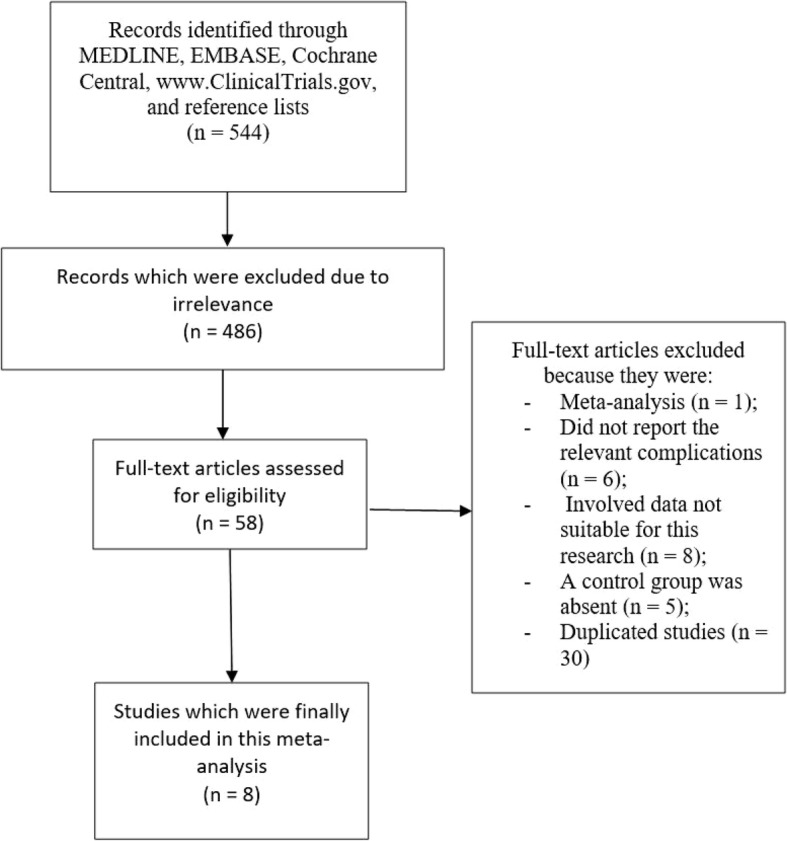
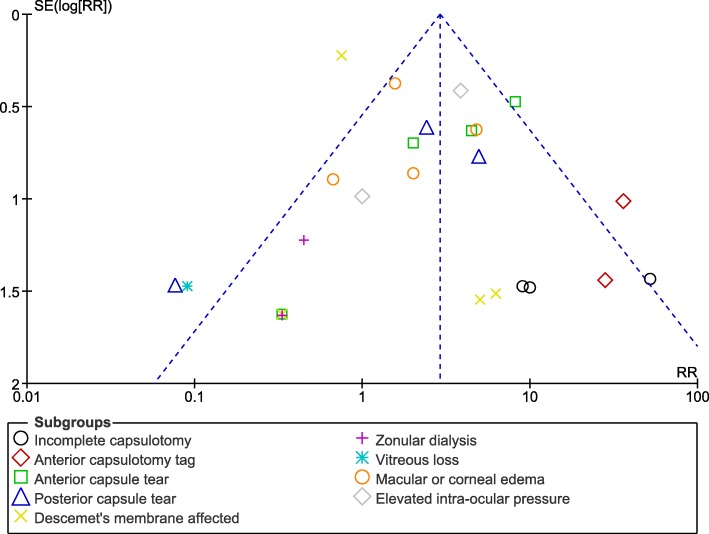
Commonly used search databases, specifically MEDLINE, Cochrane Central, EMBASE, and http://www.clinicaltrials.gov were carefully searched for English publications comparing FLACS versus CPE. The selected endpoints which were assessed included incomplete capsulotomy, anterior capsulotomy tag, anterior capsule tear, posterior capsule tear, injury to the descemet's membrane, zonular dialysis, vitreous loss, macular or corneal edema, and elevated intra-ocular pressure. Statistical analysis was carried out by the latest version of the RevMan software (version 5.3) and represented by risk ratios (RR) with 95% confidence intervals (CI).
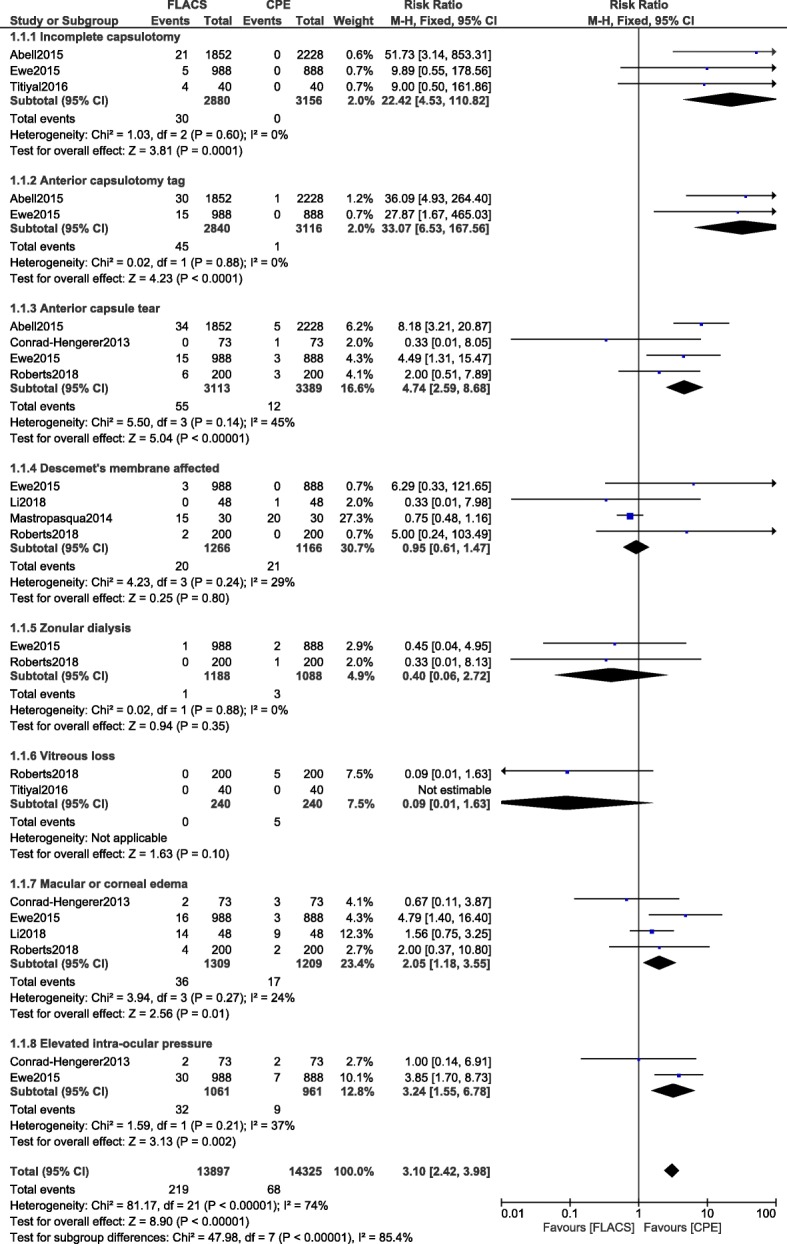
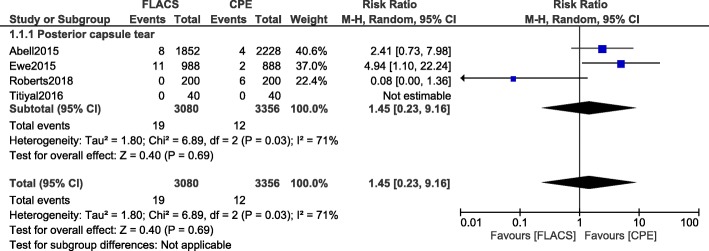
A total number of 7156 participants were included. Three thousand five hundred and fifty four (3554) participants were assigned to the FLACS group. The risks for incomplete capsulotomy, anterior capsulotomy tag, and anterior capsular tear were significantly higher with FLACS (RR: 22.42, 95% CI: 4.53-110.82; P = 0.0001), (RR: 33.07, 95% CI: 6.53-167.56; P = 0.0001) and (RR: 4.74, 95% CI: 2.59-8.68; P = 0.00001) respectively. The risks for macular/corneal edema (RR: 2.05, 95% CI: 1.18-3.55; P = 0.01) and elevated intra-ocular pressure (RR: 3.24, 95% CI: 1.55-6.78; P = 0.002) were also significantly higher with FLACS. However, the risks for impaired descemet's membrane (RR: 0.95, 95% CI: 0.61-1.47; P = 0.80), zonular dialysis (RR: 0.40, 95% CI: 0.06-2.72; P = 0.35), vitreous loss (RR: 0.09, 95% CI: 0.01-1.63; P = 0.10) and posterior capsular tear (RR: 1.45, 95% CI: 0.23-9.16; P = 0.69) were not significantly different.
The current results showed that FLACS did not improve intra/post-operative complications in comparison to CPE. Further larger studies should confirm this hypothesis.
在这项分析中,我们旨在系统地比较飞秒激光辅助白内障手术(FLACS)与传统超声乳化白内障吸除术(CPE)相关的并发症。
我们仔细检索了常用的搜索数据库,包括 MEDLINE、Cochrane 中央、EMBASE 和 http://www.clinicaltrials.gov,以查找比较 FLACS 与 CPE 的英文出版物。评估的选定终点包括不完全撕囊、前囊切口标签、前囊撕裂、后囊撕裂、撕囊膜损伤、悬韧带离断、玻璃体液丢失、黄斑或角膜水肿以及眼内压升高。使用最新版本的 RevMan 软件(版本 5.3)进行统计分析,并用风险比(RR)和 95%置信区间(CI)表示。
共有 7156 名参与者被纳入。3554 名参与者被分配到 FLACS 组。FLACS 组不完全撕囊、前囊切口标签和前囊撕裂的风险显著更高(RR:22.42,95%CI:4.53-110.82;P=0.0001),(RR:33.07,95%CI:6.53-167.56;P=0.0001)和(RR:4.74,95%CI:2.59-8.68;P=0.00001)。FLACS 组黄斑/角膜水肿(RR:2.05,95%CI:1.18-3.55;P=0.01)和眼内压升高(RR:3.24,95%CI:1.55-6.78;P=0.002)的风险也显著更高。然而,FLACS 组对撕囊膜损伤(RR:0.95,95%CI:0.61-1.47;P=0.80)、悬韧带离断(RR:0.40,95%CI:0.06-2.72;P=0.35)、玻璃体液丢失(RR:0.09,95%CI:0.01-1.63;P=0.10)和后囊撕裂(RR:1.45,95%CI:0.23-9.16;P=0.69)的风险无显著差异。
目前的结果表明,FLACS 并不能改善与 CPE 相比的围手术期并发症。需要进一步更大规模的研究来证实这一假设。