Department of Genetic Medicine, Weill Cornell Medical College, 1300 York Avenue, Box 164, New York, NY, 10065, USA.
Pulmonary, Critical Care & Sleep Medicine, Department of Medicine, University of Oklahoma Health Sciences Center, Oklahoma City, OK, USA.
Respir Res. 2019 Aug 9;20(1):181. doi: 10.1186/s12931-019-1129-4.
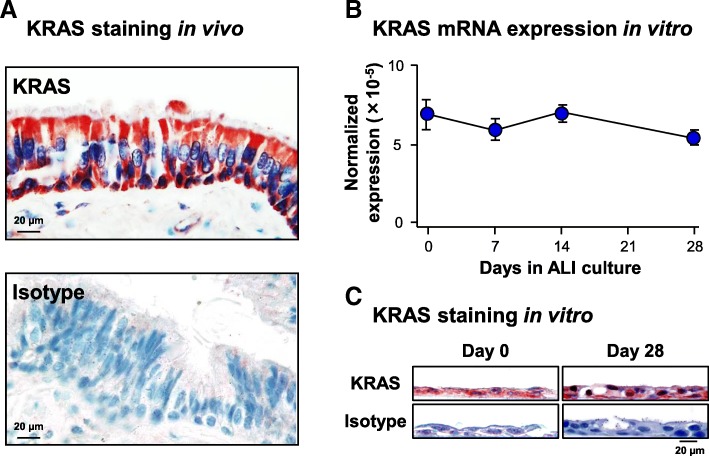
KRAS is a GTPase that activates pathways involved in cell growth, differentiation and survival. In normal cells, KRAS-activity is tightly controlled, but with specific mutations, the KRAS protein is persistently activated, giving cells a growth advantage resulting in cancer. While a great deal of attention has been focused on the role of mutated KRAS as a common driver mutation for lung adenocarcinoma, little is known about the role of KRAS in regulating normal human airway differentiation.
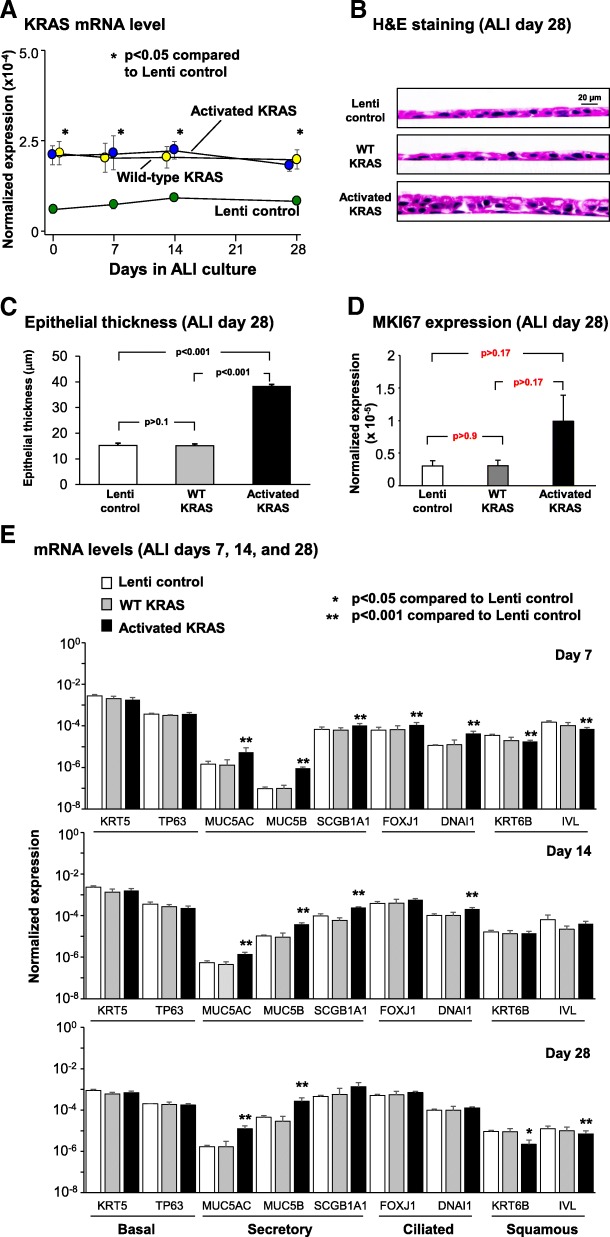
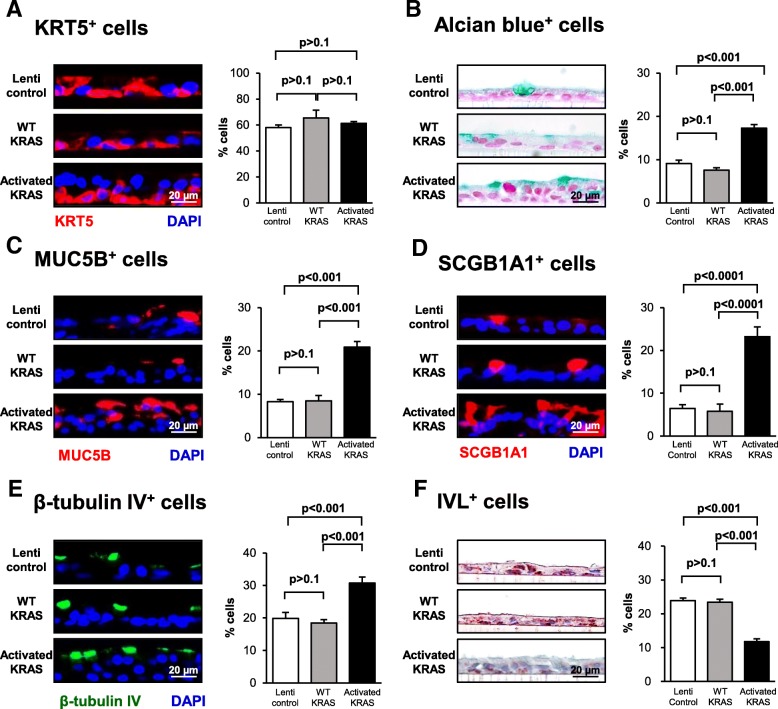
To assess the role of KRAS signaling in regulating differentiation of the human airway epithelium, primary human airway basal stem/progenitor cells (BC) from nonsmokers were cultured on air-liquid interface (ALI) cultures to mimic the airway epithelium in vitro. Modulation of KRAS signaling was achieved using siRNA-mediated knockdown of KRAS or lentivirus-mediated over-expression of wild-type KRAS or the constitutively active G12 V mutant. The impact on differentiation was quantified using TaqMan quantitative PCR, immunofluorescent and immunohistochemical staining analysis for cell type specific markers. Finally, the impact of cigarette smoke exposure on KRAS and RAS protein family activity in the airway epithelium was assessed in vitro and in vivo.
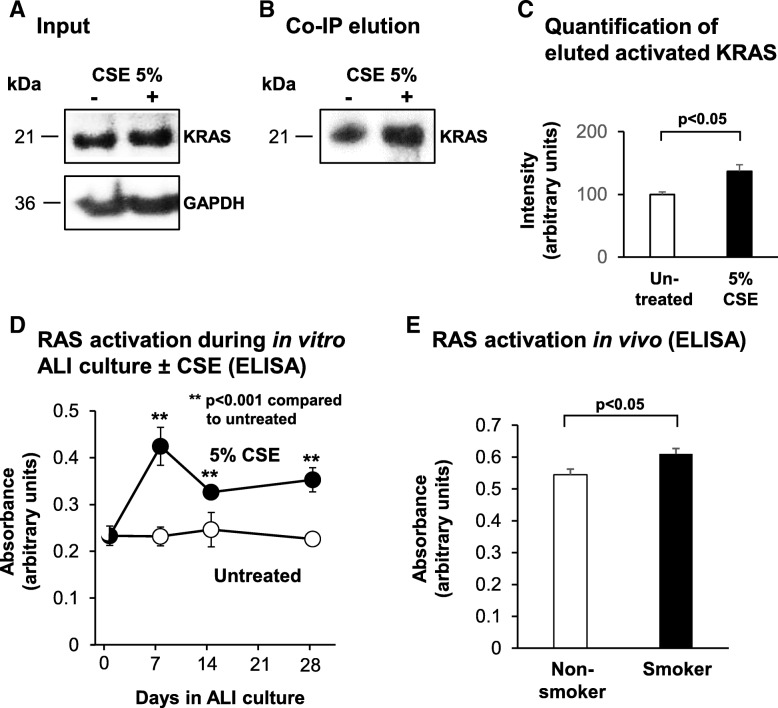
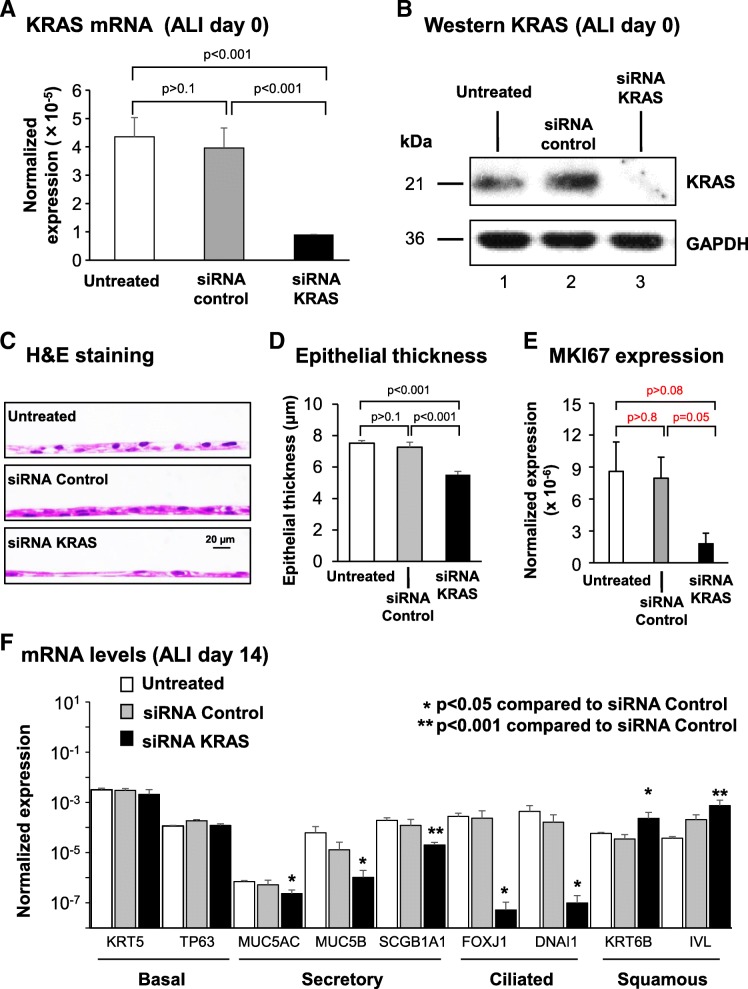
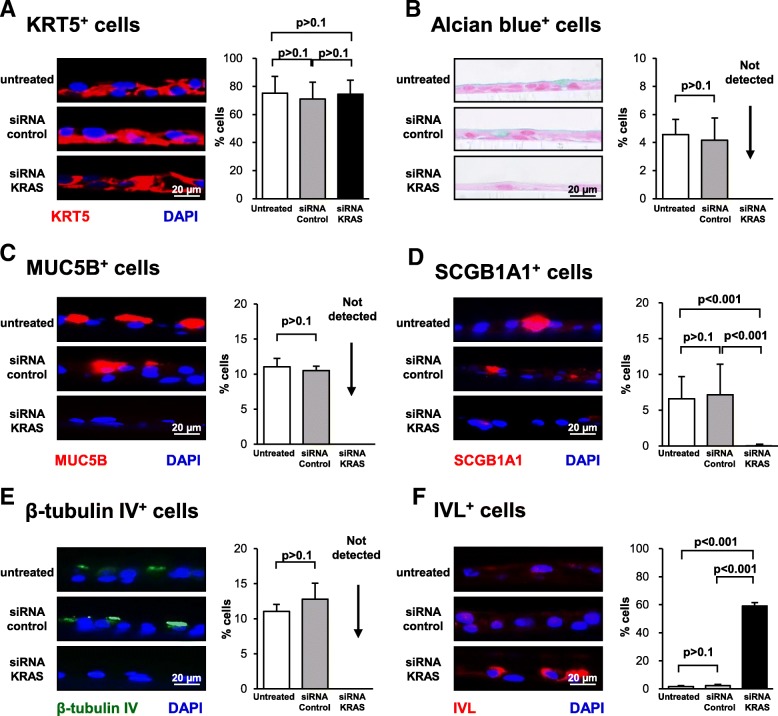
siRNA-mediated knockdown of KRAS decreased differentiation of BC into secretory and ciliated cells with a corresponding shift toward squamous cell differentiation. Conversely, activation of KRAS signaling via lentivirus mediated over-expression of the constitutively active G12 V KRAS mutant had the opposite effect, resulting in increased secretory and ciliated cell differentiation and decreased squamous cell differentiation. Exposure of BC to cigarette smoke extract increased KRAS and RAS protein family activation in vitro. Consistent with these observations, airway epithelium brushed from healthy smokers had elevated RAS activation compared to nonsmokers.
Together, these data suggest that KRAS-dependent signaling plays an important role in regulating the balance of secretory, ciliated and squamous cell differentiation of the human airway epithelium and that cigarette smoking-induced airway epithelial remodeling is mediated in part by abnormal activation of KRAS-dependent signaling mechanisms.
KRAS 是一种 GTP 酶,可激活涉及细胞生长、分化和存活的途径。在正常细胞中,KRAS 活性受到严格控制,但特定突变会使 KRAS 蛋白持续激活,赋予细胞生长优势,从而导致癌症。尽管人们对突变 KRAS 作为肺腺癌的常见驱动突变的作用给予了极大关注,但对 KRAS 在调节正常人类气道分化中的作用知之甚少。
为了评估 KRAS 信号在调节人呼吸道上皮细胞分化中的作用,从非吸烟者中分离培养非小细胞气道基底干细胞/祖细胞(BC),并在气液界面(ALI)培养物上培养,以模拟体外气道上皮。通过 siRNA 介导的 KRAS 敲低或慢病毒介导的野生型 KRAS 或组成型激活 G12V 突变体的过表达来调节 KRAS 信号。使用 TaqMan 定量 PCR、细胞类型特异性标志物的免疫荧光和免疫组织化学染色分析来量化分化的影响。最后,在体外和体内评估香烟烟雾暴露对气道上皮中 KRAS 和 RAS 蛋白家族活性的影响。
siRNA 介导的 KRAS 敲低减少了 BC 向分泌细胞和纤毛细胞分化,并相应地向鳞状细胞分化转移。相反,通过慢病毒介导的组成型激活 G12V KRAS 突变体的 KRAS 信号激活具有相反的效果,导致分泌细胞和纤毛细胞分化增加,鳞状细胞分化减少。BC 暴露于香烟烟雾提取物可增加体外 KRAS 和 RAS 蛋白家族的激活。与这些观察结果一致,与非吸烟者相比,从健康吸烟者气道刷取的气道上皮细胞具有更高的 RAS 激活。
综上所述,这些数据表明,KRAS 依赖性信号在调节人呼吸道上皮的分泌细胞、纤毛细胞和鳞状细胞分化平衡中起着重要作用,香烟烟雾引起的气道上皮重塑部分是由异常激活 KRAS 依赖性信号机制介导的。