Programa de Doctorado en Ciencias e Innovación en Medicina, Facultad de Medicina, Clínica Alemana Universidad del Desarrollo, Avda Las Condes, 12461, Santiago, Chile.
Centro de Genética y Genómica, Facultad de Medicina, Clínica Alemana Universidad del Desarrollo, Avda Las Condes, 12438, Santiago, Chile.
Orphanet J Rare Dis. 2019 Aug 9;14(1):195. doi: 10.1186/s13023-019-1170-x.
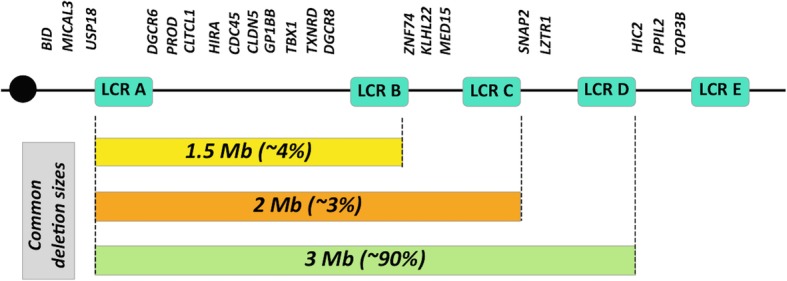
Chromosome 22q11.2 microdeletion syndrome, a disorder caused by heterozygous loss of genetic material in chromosome region 22q11.2, has a broad range of clinical symptoms. The most common congenital anomalies involve the palate in 80% of patients, and the heart in 50-60% of them. The cause of the phenotypic variability is unknown. Patients usually harbor one of three common deletions sizes: 3, 2 and 1.5 Mb, between low copy repeats (LCR) designated A-D, A-C and A-B, respectively. This study aimed to analyze the association between these 3 deletion sizes and the presence of congenital cardiac and/or palatal malformations in individuals with this condition. A systematic review and meta-analysis were conducted, merging relevant published studies with data from Chilean patients to increase statistical power.
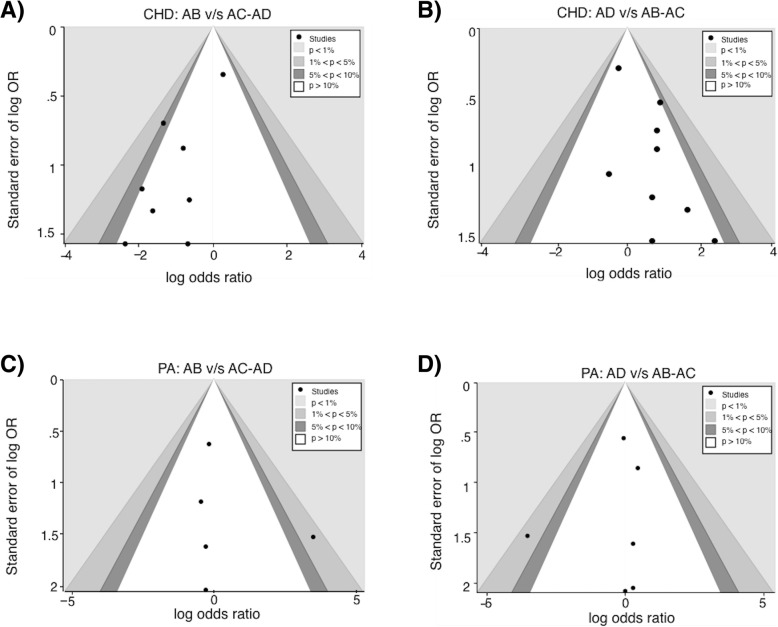
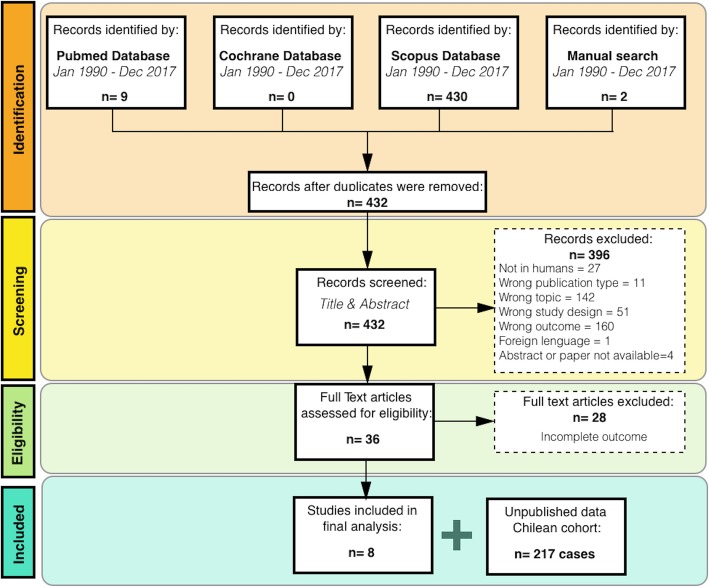
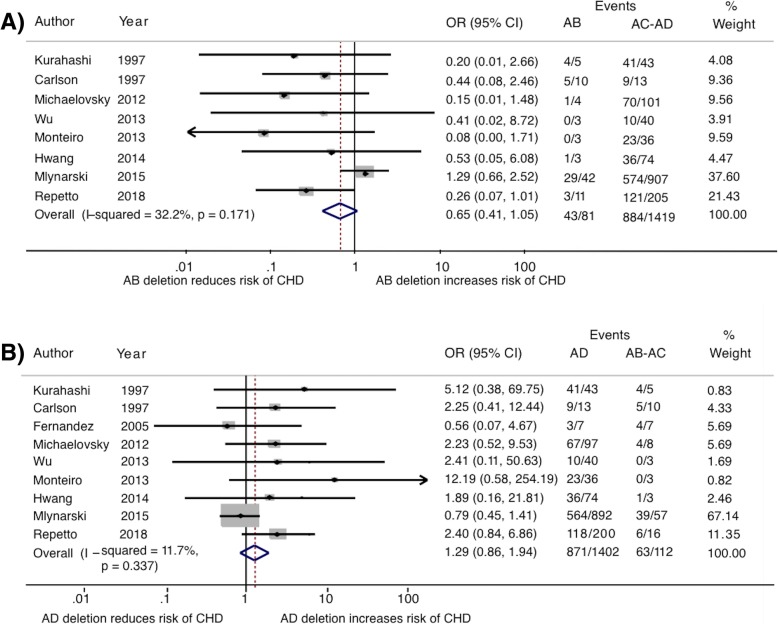
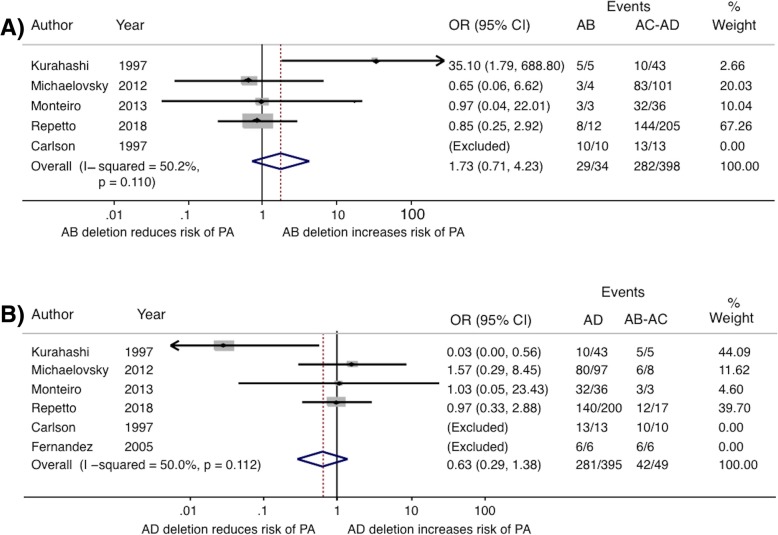
Eight articles out of 432 were included; the data from these studies was merged with our own, achieving a total of 1514 and 487 patients to evaluate cardiac and palate malformations, respectively. None of the compared deleted chromosomal segments were statistically associated with cardiac defects (OR: 0.654 [0.408-1.046]; OR : 1.291 [0.860-1.939]) or palate anomalies (OR: 1.731 [0.708-4.234]; OR : 0.628 [0.286-1.382]).
The lack of association between deletion size and CHD or PA found in this meta-analysis suggests that deletion size does not explain the incomplete penetrance of these 2 major manifestations, and that the critical region for the development of heart and palatal abnormalities is within LCR A-B, the smallest region of overlap among the three deletion sizes.
染色体 22q11.2 微缺失综合征是一种由染色体 22q11.2 区域内的杂合性遗传物质缺失引起的疾病,具有广泛的临床症状。最常见的先天性异常包括 80%患者的腭裂,50-60%患者的心脏异常。表型变异的原因尚不清楚。患者通常携带三种常见缺失大小之一:3、2 和 1.5Mb,分别位于低拷贝重复(LCR)A-D、A-C 和 A-B 之间。本研究旨在分析这三种缺失大小与该疾病患者存在先天性心脏和/或腭裂畸形之间的关系。进行了系统评价和荟萃分析,合并了相关的已发表研究和智利患者的数据,以增加统计效力。
从 432 篇文章中筛选出 8 篇,合并这些研究的数据和我们自己的数据,总共评估了 1514 例和 487 例患者的心脏和腭裂畸形。比较的缺失染色体片段均与心脏缺陷(OR:0.654 [0.408-1.046];OR:1.291 [0.860-1.939])或腭裂异常(OR:1.731 [0.708-4.234];OR:0.628 [0.286-1.382])无关。
本荟萃分析发现缺失大小与 CHD 或 PA 之间缺乏关联表明,缺失大小并不能解释这两种主要表现的不完全外显率,并且心脏和腭部异常发育的关键区域位于 LCR A-B 内,这是三种缺失大小中重叠最小的区域。