School of Health and Related Research, University of Sheffield, Regent Court, Regent Street, Sheffield, S1 4DA, UK.
Trials. 2019 Aug 9;20(1):493. doi: 10.1186/s13063-019-3578-y.
With millions of pounds spent annually on medical research in the UK, it is important that studies are spending funds wisely. Internal pilots offer the chance to stop a trial early if it becomes apparent that the study will not be able to recruit enough patients to show whether an intervention is clinically effective. This study aims to assess the use of internal pilots in individually randomised controlled trials funded by the Health Technology Assessment (HTA) programme and to summarise the progression criteria chosen in these trials.
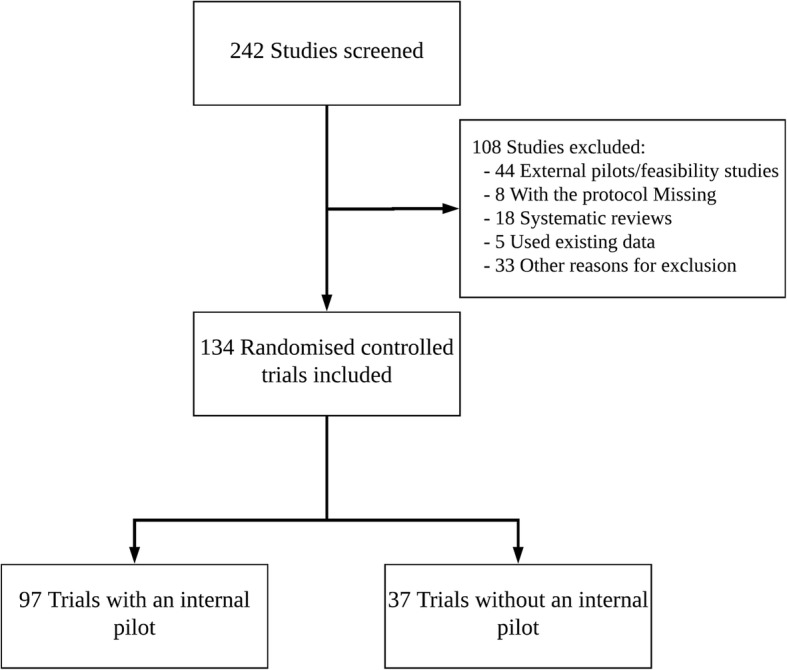
Studies were identified from reports of the HTA committees' funding decisions from 2012 to 2016. In total, 242 trials were identified of which 134 were eligible to be included in the audit. Protocols for the eligible studies were located on the NIHR Journals website, and if protocols were not available online then study managers were contacted to provide information.
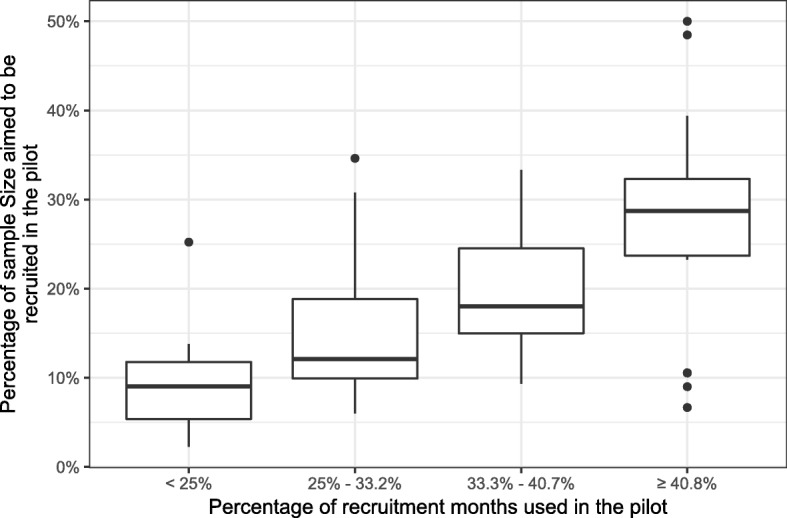
Over two-thirds (72.4%) of studies said in their protocol that they would include an internal pilot phase for their study and 37.8% of studies without an internal pilot had done an external pilot study to assess the feasibility of the full study. A typical study with an internal pilot has a target sample size of 510 over 24 months and aims to recruit one-fifth of their total target sample size within the first one-third of their recruitment time. There has been an increase in studies adopting a three-tiered structure for their progression rules in recent years, with 61.5% (16/26) of studies using the system in 2016 compared to just 11.8% (2/17) in 2015. There was also a rise in the number of studies giving a target recruitment rate in their progression criteria: 42.3% (11/26) in 2016 compared to 35.3% (6/17) in 2015.
Progression criteria for an internal pilot are usually well specified but targets vary widely. For the actual criteria, red/amber/green systems have increased in popularity in recent years. Trials should justify the targets they have set, especially where targets are low.
英国每年在医学研究上花费数百万英镑,因此确保研究合理使用资金非常重要。内部试验为早期停止试验提供了机会,如果研究明显无法招募足够的患者来证明干预措施在临床上是否有效。本研究旨在评估英国健康技术评估(HTA)计划资助的个体随机对照试验中内部试验的使用情况,并总结这些试验中选择的进展标准。
从 2012 年至 2016 年 HTA 委员会资助决策报告中确定了研究。共确定了 242 项试验,其中 134 项符合纳入审计标准。合格研究的方案在 NIHR 期刊网站上找到,如果在线上找不到方案,则联系研究经理提供信息。
超过三分之二(72.4%)的研究在其方案中表示将为研究纳入内部试验阶段,而 37.8%的无内部试验的研究进行了外部试验以评估全研究的可行性。典型的内部试验研究的目标样本量为 24 个月内 510 例,目标是在招募时间的三分之一内招募总目标样本量的五分之一。近年来,研究采用三阶段结构来制定其进展规则的情况有所增加,2016 年有 61.5%(16/26)的研究使用该系统,而 2015 年仅有 11.8%(2/17)。在进展标准中给出目标招募率的研究数量也有所增加:2016 年为 42.3%(11/26),而 2015 年为 35.3%(6/17)。
内部试验的进展标准通常规定得很好,但目标差异很大。对于实际标准,近年来红色/黄色/绿色系统的使用越来越普及。试验应证明他们设定的目标是合理的,特别是在目标较低的情况下。