Institute of Integrative Biology, ETH Zürich, Zürich, Switzerland.
Department of Biosystems Science and Engineering, ETH Zürich, Basel, Switzerland.
PLoS Comput Biol. 2019 Aug 12;15(8):e1007223. doi: 10.1371/journal.pcbi.1007223. eCollection 2019 Aug.
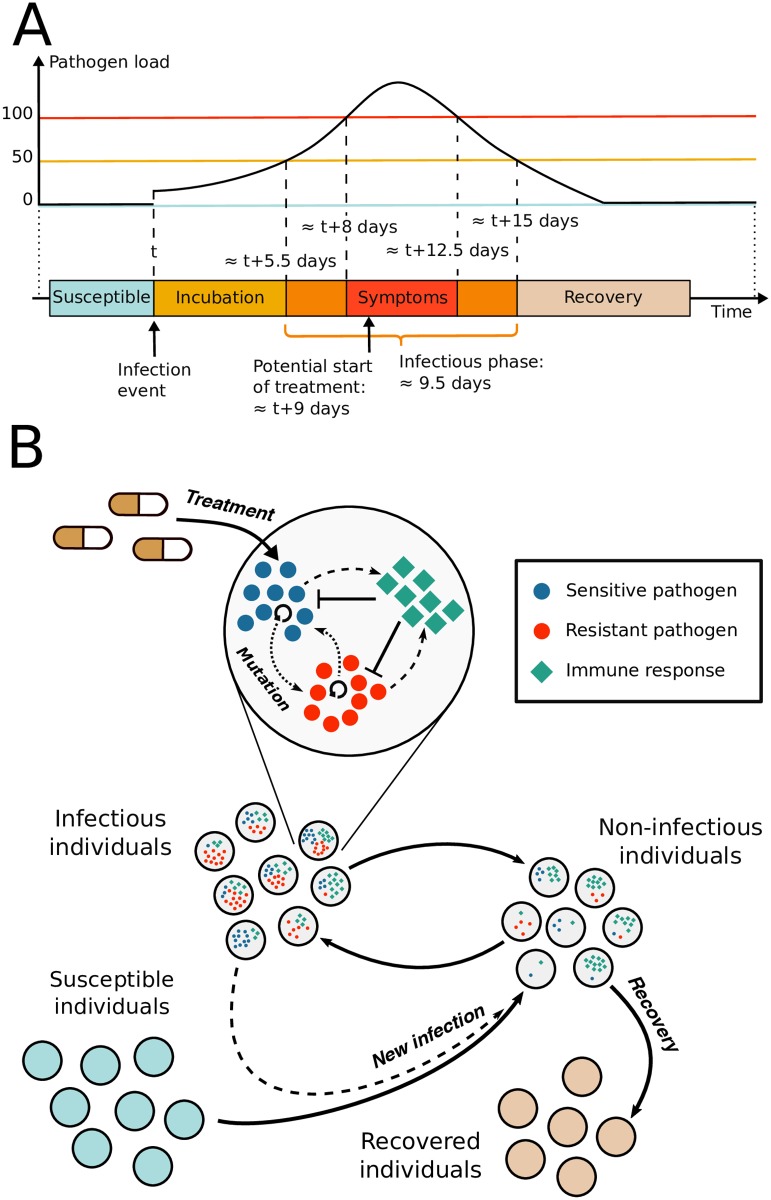
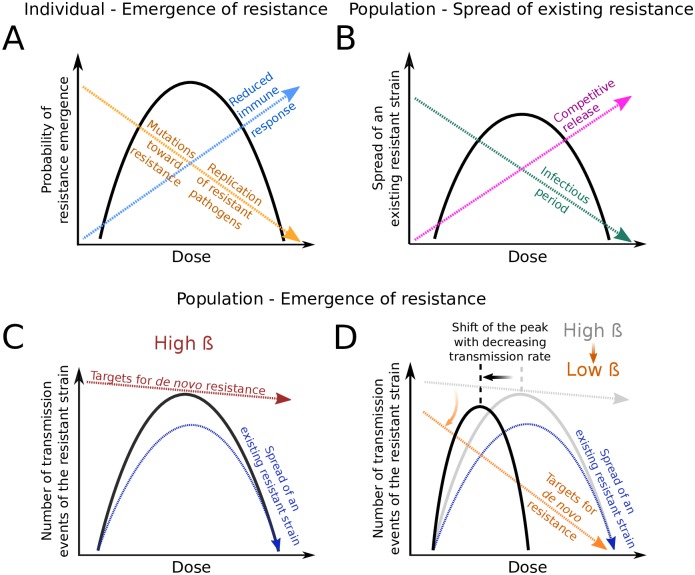
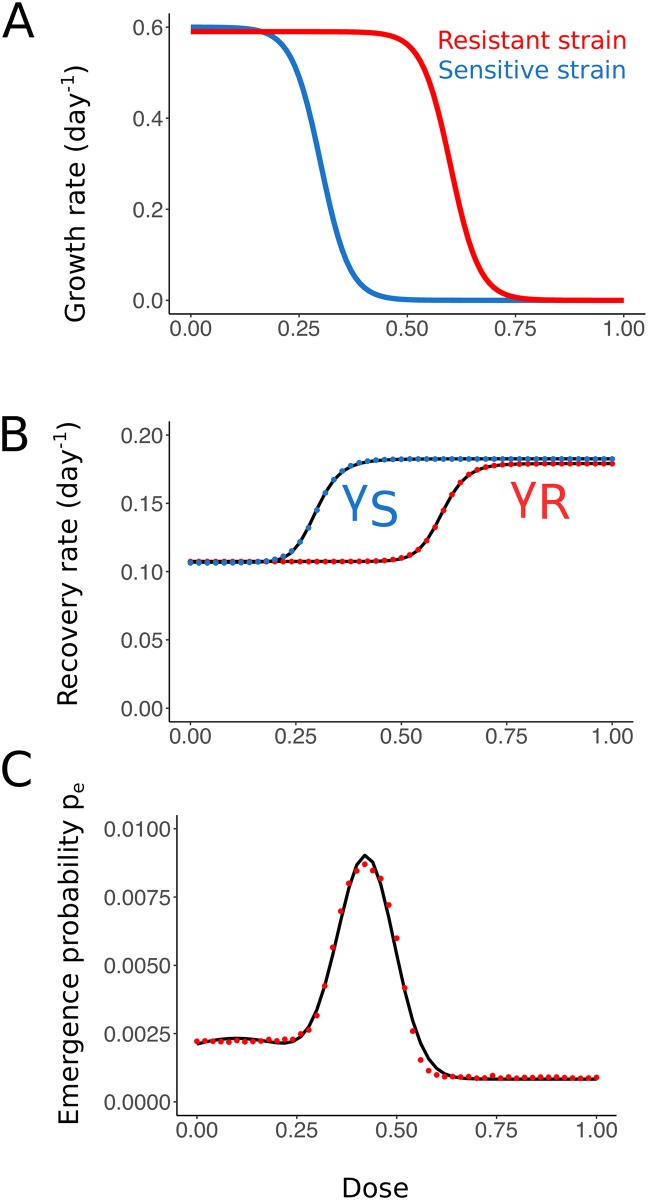
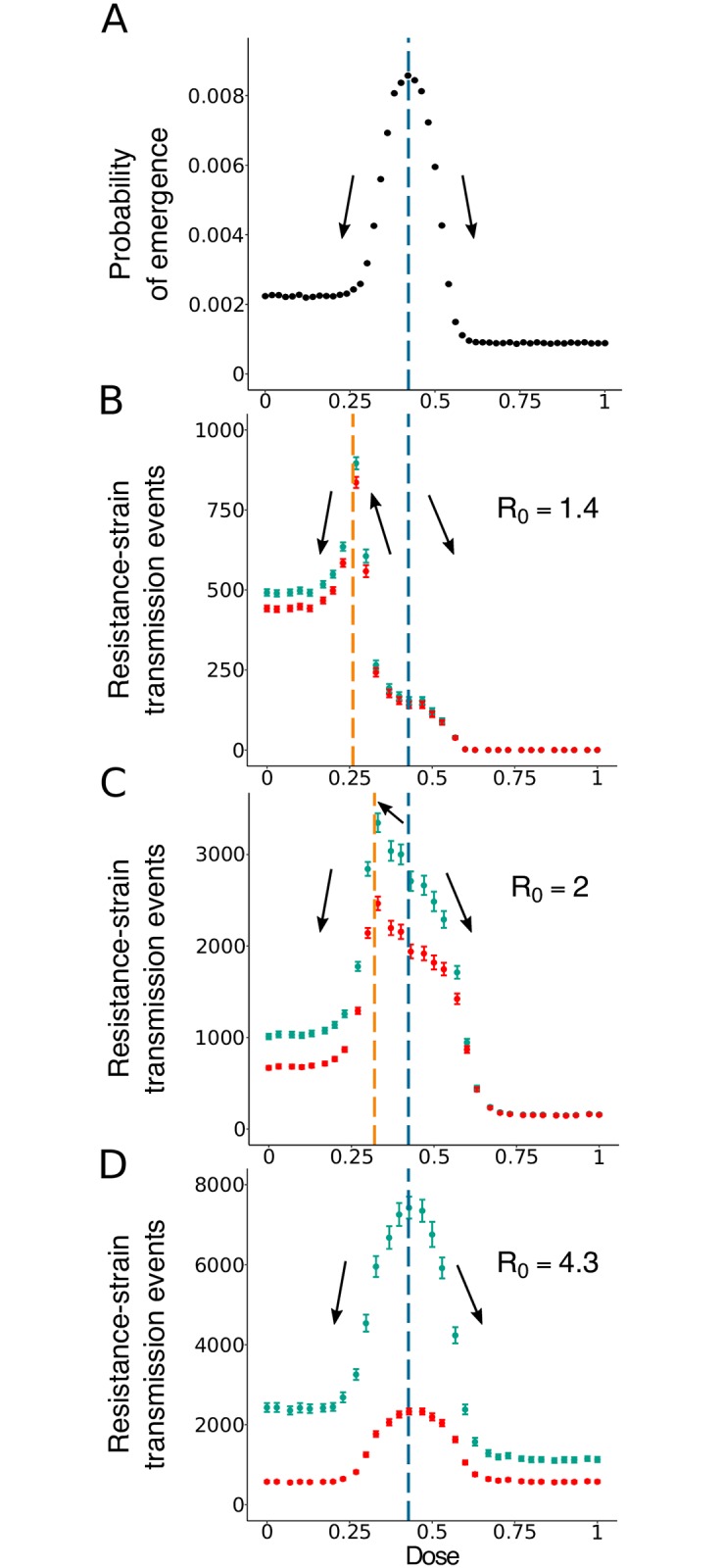
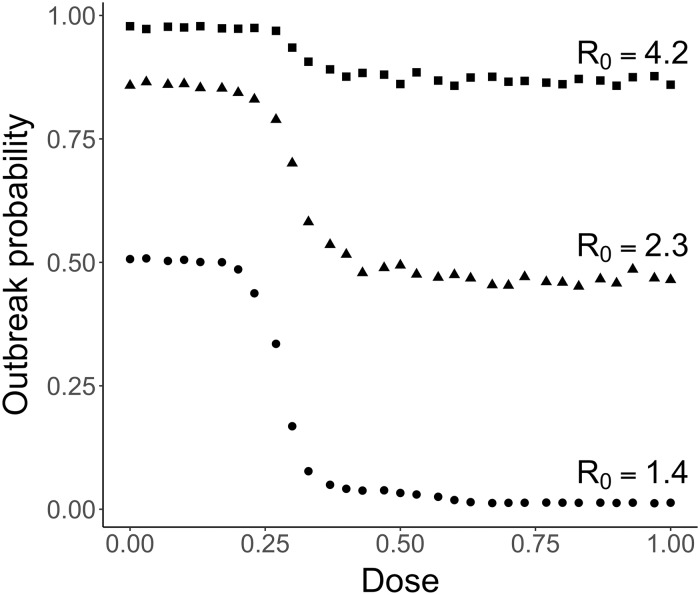
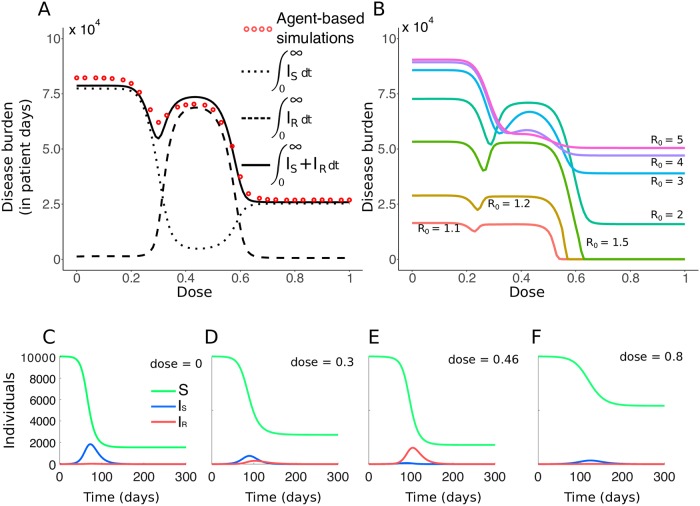
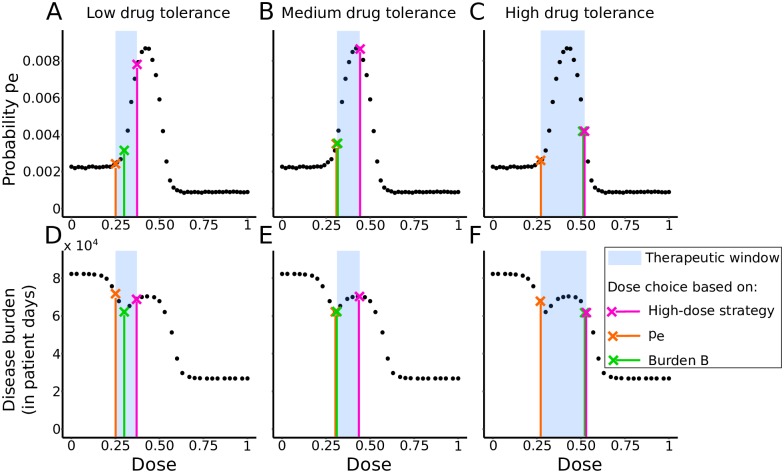
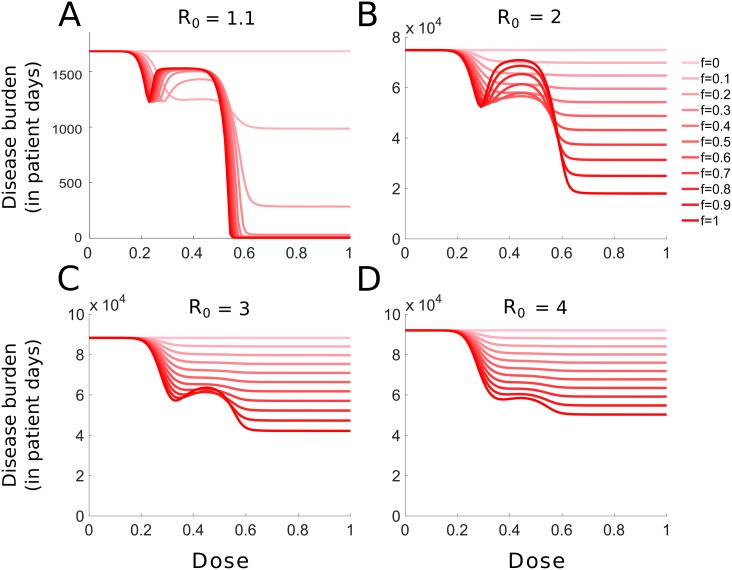
Antimicrobial resistance is one of the major public health threats of the 21st century. There is a pressing need to adopt more efficient treatment strategies in order to prevent the emergence and spread of resistant strains. The common approach is to treat patients with high drug doses, both to clear the infection quickly and to reduce the risk of de novo resistance. Recently, several studies have argued that, at least in some cases, low-dose treatments could be more suitable to reduce the within-host emergence of antimicrobial resistance. However, the choice of a drug dose may have consequences at the population level, which has received little attention so far. Here, we study the influence of the drug dose on resistance and disease management at the host and population levels. We develop a nested two-strain model and unravel trade-offs in treatment benefits between an individual and the community. We use several measures to evaluate the benefits of any dose choice. Two measures focus on the emergence of resistance, at the host level and at the population level. The other two focus on the overall treatment success: the outbreak probability and the disease burden. We find that different measures can suggest different dosing strategies. In particular, we identify situations where low doses minimize the risk of emergence of resistance at the individual level, while high or intermediate doses prove most beneficial to improve the treatment efficiency or even to reduce the risk of resistance in the population.
抗微生物药物耐药性是 21 世纪主要的公共卫生威胁之一。为了防止耐药菌株的出现和传播,迫切需要采用更有效的治疗策略。常见的方法是用高剂量药物治疗患者,既可以迅速清除感染,又可以降低新出现耐药性的风险。最近,有几项研究认为,至少在某些情况下,低剂量治疗可能更适合减少宿主内抗微生物药物耐药性的出现。然而,药物剂量的选择可能会对人群水平产生影响,而这一点迄今为止还没有得到太多关注。在这里,我们研究了药物剂量对宿主和人群水平的耐药性和疾病管理的影响。我们开发了一个嵌套的两菌株模型,并揭示了个体和社区之间在治疗效益方面的权衡。我们使用了几种措施来评估任何剂量选择的效益。其中两个措施侧重于宿主水平和人群水平的耐药性的出现,另外两个措施侧重于整体治疗效果:爆发概率和疾病负担。我们发现,不同的措施可能会建议不同的剂量策略。特别是,我们确定了在某些情况下,低剂量可以最大限度地降低个体水平出现耐药性的风险,而高剂量或中剂量则最有利于提高治疗效率,甚至降低人群中耐药性的风险。