Choi Jin-Young, Kim Jung-Hyun, Han Hyun-Jung
>Department of Veterinary Emergency Medicine, Konkuk Veterinary Medical Teaching Hospital, Konkuk University, 120, Neungdong-ro, Gwangjin-gu, Seoul, Republic of Korea, 05029.
Department of Veterinary Surgery, Konkuk Veterinary Medical Teaching Hospital, Konkuk University, 120, Neungdong-ro, Gwangjin-gu, Seoul, Republic of Korea, 05029.
J Vet Med Sci. 2019 Oct 24;81(10):1522-1526. doi: 10.1292/jvms.19-0225. Epub 2019 Aug 12.
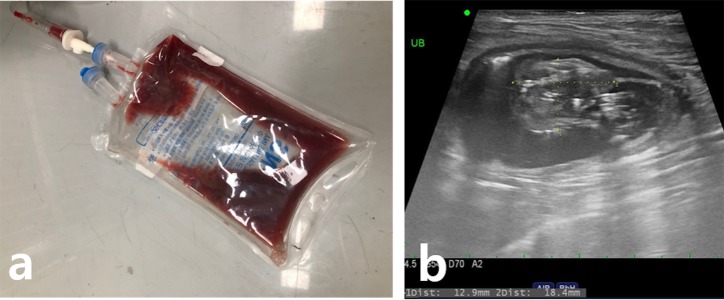
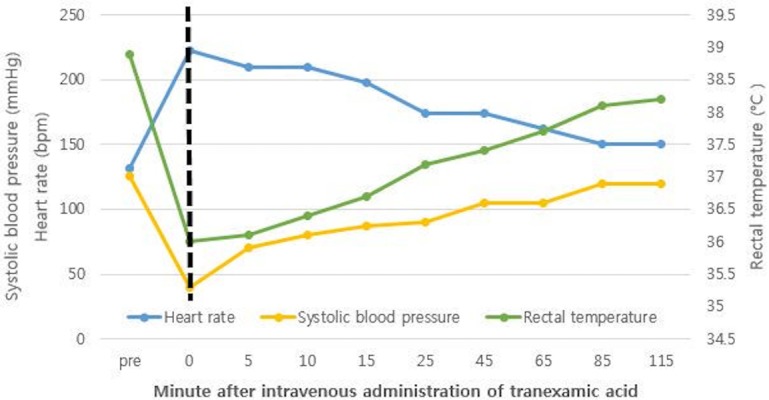
A 10-year-old male castrated Maltese was referred with clinical signs of hematuria, stranguria, and pollakiuria. The dog was diagnosed with sterile hemorrhagic cystitis with urethroliths and cystoliths. To remove the uroliths, the dog underwent retrograde urohydropropulsion followed by a cystotomy. The following day, persistent bleeding in the urinary bladder was identified with large hematoma, hematuria and anemia. In order to reduce bleeding, the dog received 10 mg/kg of tranexamic acid (TXA) intravenously. Immediately after TXA administration, the dog developed anaphylactic shock manifested by hypotension, hypothermia, tachycardia and a dull mentation. Thus, an emergency treatment including bolus injection of crystalloid, administration of dexamethasone and diphenhydramine, and oxygen supplementation was given, after which the dog quickly recovered within a few minutes.
一只10岁去势的雄性马尔济斯犬因出现血尿、排尿困难和尿频的临床症状前来就诊。该犬被诊断为无菌性出血性膀胱炎并伴有尿道结石和膀胱结石。为了取出尿路结石,该犬接受了逆行尿道水推进术,随后进行了膀胱切开术。第二天,发现膀胱持续出血,伴有大量血肿、血尿和贫血。为了减少出血,给该犬静脉注射了10 mg/kg的氨甲环酸(TXA)。在注射TXA后,该犬立即出现过敏性休克,表现为低血压、体温过低、心动过速和精神沉郁。因此,对其进行了包括快速注射晶体液、给予地塞米松和苯海拉明以及补充氧气在内的紧急治疗,之后该犬在几分钟内迅速恢复。