Gąsiorowski Ludwik, Furu Anlaug, Hejnol Andreas
Sars International Centre for Marine Molecular Biology, University of Bergen, Thormøhlens Gate 55, N-5006 Bergen, Norway.
Front Zool. 2019 Aug 7;16:33. doi: 10.1186/s12983-019-0334-9. eCollection 2019.
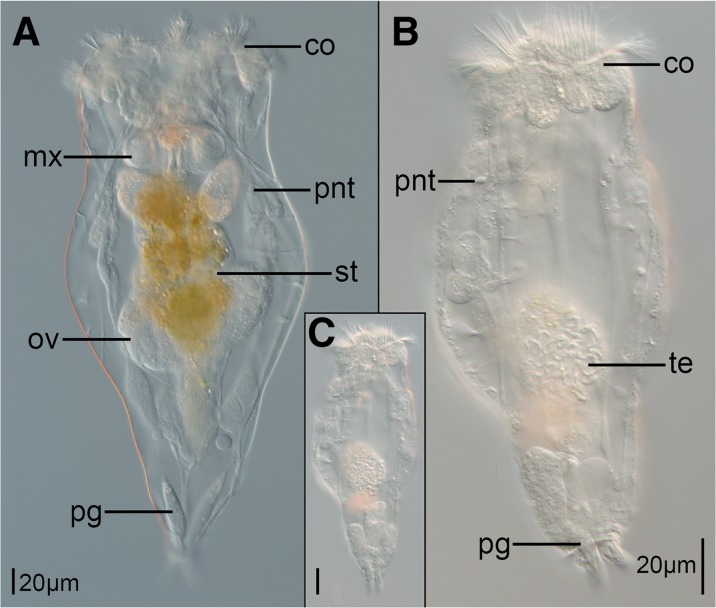
Monogononta is a large clade of rotifers comprised of diverse morphological forms found in a wide range of ecological habitats. Most monogonont species display cyclical parthenogenesis, where generations of asexually reproducing females are interspaced by mixis events when sexual reproduction occurs between mictic females and dwarf, haploid males. The morphology of monogonont feeding females is relatively well described, however data on male anatomy are very limited. Thus far, male musculature of only two species has been described with confocal laser scanning microscopy (CLSM) and it remains unknown how dwarfism influences the neuroanatomy of males on detailed level.
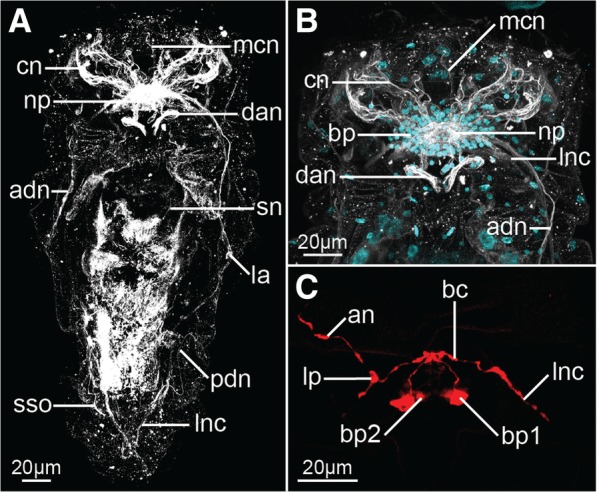
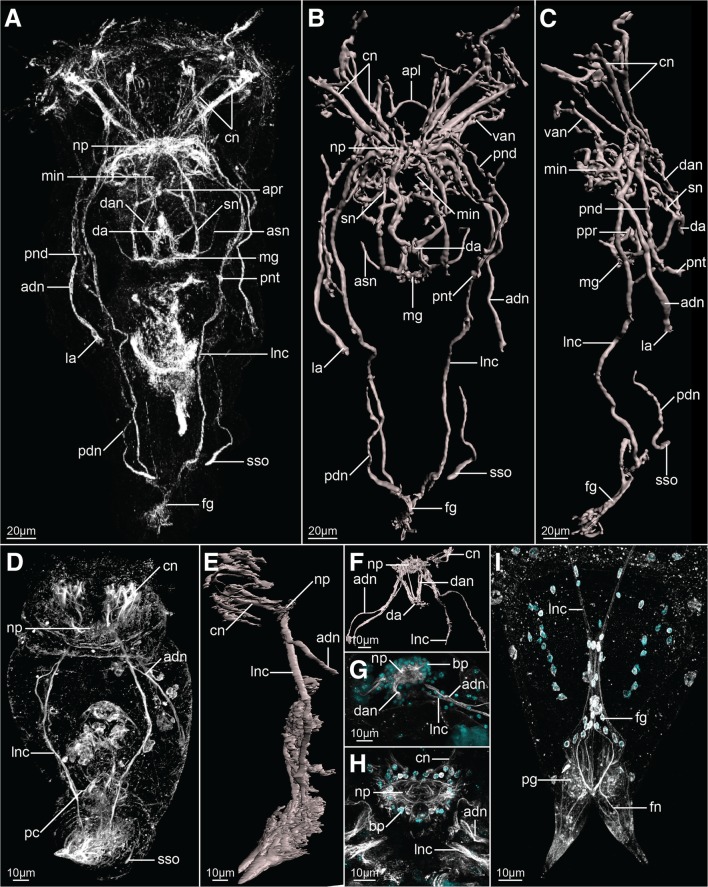
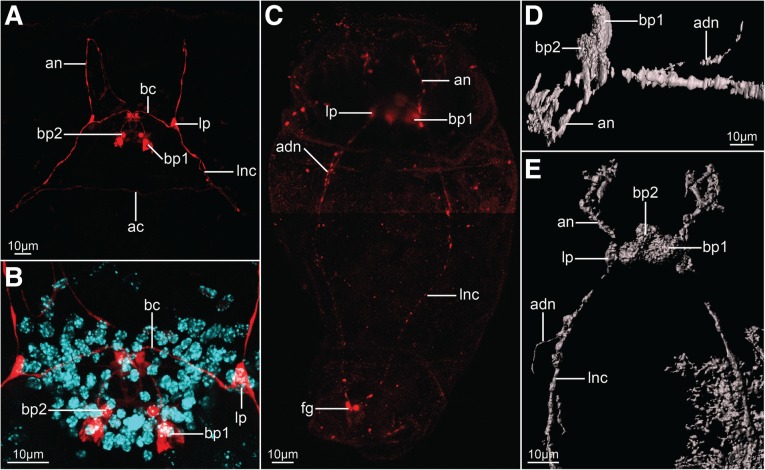
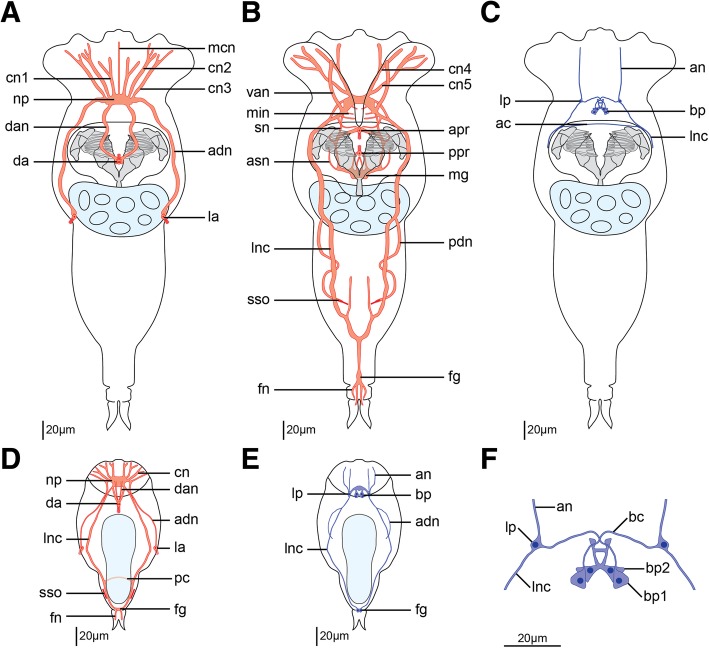
Here, we provide a CLSM-based description of the nervous system of both sexes of , a freshwater monogonont rotifer. The general nervous system architecture is similar between males and females and shows a similar level of complexity. However, the nervous system in males is more compact and lacks a stomatogastric part.
Comparison of the neuroanatomy between male and normal-sized feeding females provides a better understanding of the nature of male dwarfism in Monogononta. We propose that dwarfism of monogonont non-feeding males is the result of a specific case of heterochrony, called "proportional dwarfism" as they, due to their inability to feed, retain a juvenile body size, but still develop a complex neural architecture comparable to adult females. Reduction of the stomatogastric nervous system in the males correlates with the loss of the entire digestive tract and associated morphological structures.
单巢纲是轮虫的一个大类群,由在广泛生态栖息地中发现的多种形态形式组成。大多数单巢纲物种表现出周期性孤雌生殖,即无性繁殖的雌性世代被混交事件隔开,混交事件发生在减数雌体和矮小的单倍体雄体之间的有性生殖过程中。单巢纲取食雌性的形态相对已有较好描述,但关于雄性解剖结构的数据非常有限。到目前为止,仅用共聚焦激光扫描显微镜(CLSM)描述了两个物种的雄性肌肉组织,而矮小如何在详细水平上影响雄性神经解剖结构仍不清楚。
在此,我们提供了基于CLSM的淡水单巢纲轮虫两性神经系统的描述。雄性和雌性的一般神经系统结构相似,且复杂性水平相近。然而,雄性的神经系统更紧凑,且缺少口胃部分。
雄性与正常大小取食雌性的神经解剖结构比较,能更好地理解单巢纲中雄性矮小的本质。我们提出,单巢纲非取食雄性的矮小是异时性的一种特殊情况,即“比例矮小”的结果,因为它们由于无法取食,保持了幼体大小,但仍发育出与成年雌性相当的复杂神经结构。雄性口胃神经系统的减少与整个消化道及相关形态结构的丧失相关。