Division of Pharmacology, Otto-Loewi Research Center for Vascular Biology, Immunology and Inflammation, Medical University of Graz, Graz, Austria.
Department of Dermatology and Venerology, Medical University of Graz, Graz, Austria.
Allergy. 2020 Feb;75(2):392-402. doi: 10.1111/all.14022. Epub 2019 Sep 10.
Recent studies pointed to a crucial role for apolipoproteins in the pathogenesis of inflammatory diseases. However, the role of apolipoprotein-IV (ApoA-IV) in allergic inflammation has not been addressed thoroughly thus far.
Here, we explored the anti-inflammatory effects and underlying signaling pathways of ApoA-IV on eosinophil effector function in vitro and in vivo.
Migratory responsiveness, Ca -flux and apoptosis of human peripheral blood eosinophils were assessed in vitro. Allergen-driven airway inflammation was assessed in a mouse model of acute house dust mite-induced asthma. ApoA-IV serum levels were determined by ELISA.
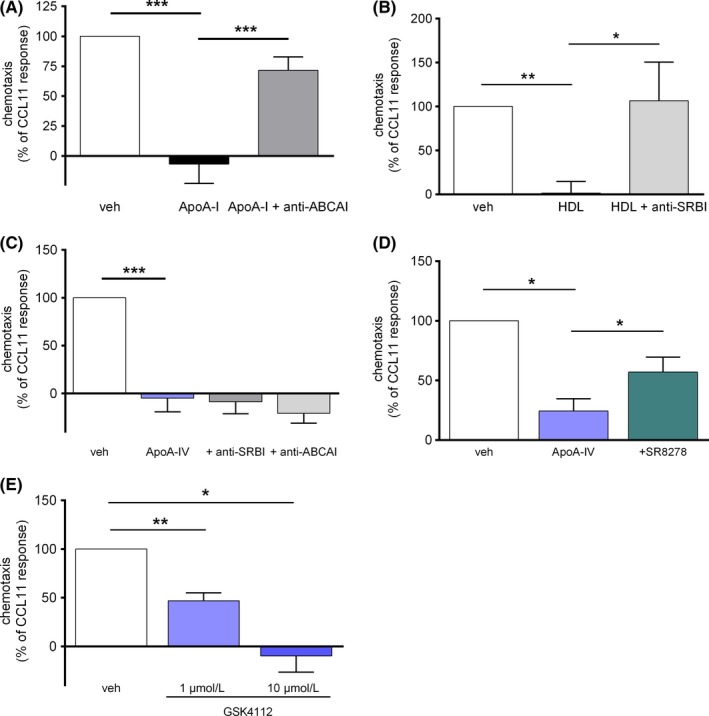
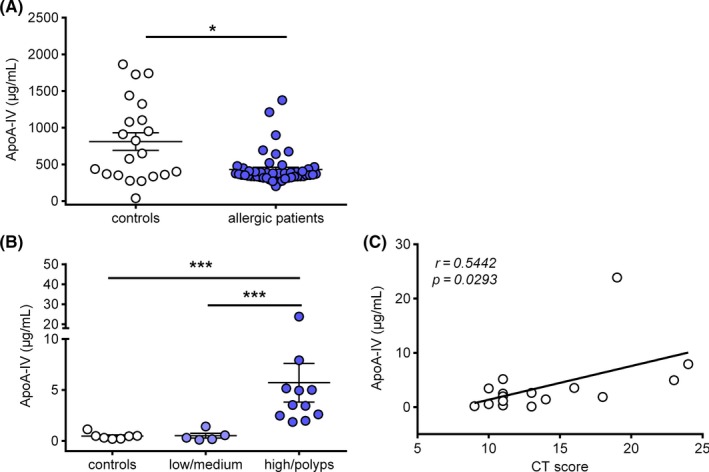
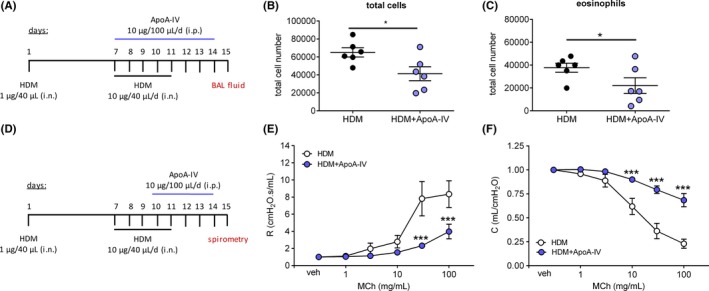
Recombinant ApoA-IV potently inhibited eosinophil responsiveness in vitro as measured by Ca -flux, shape change, integrin (CD11b) expression, and chemotaxis. The underlying molecular mechanism involved the activation of Rev-ErbA-α and induced a PI3K/PDK1/PKA-dependent signaling cascade. Systemic application of ApoA-IV prevented airway hyperresponsiveness (AHR) and airway eosinophilia in mice following allergen challenge. ApoA-IV levels were decreased in serum from allergic patients compared to healthy controls.
Our data suggest that ApoA-IV is an endogenous anti-inflammatory protein that potently suppresses effector cell functions in eosinophils. Thus, exogenously applied ApoA-IV may represent a novel pharmacological approach for the treatment of allergic inflammation and other eosinophil-driven disorders.
最近的研究表明载脂蛋白在炎症性疾病的发病机制中起着至关重要的作用。然而,载脂蛋白-IV(ApoA-IV)在过敏炎症中的作用迄今尚未得到充分阐明。
本研究旨在探讨 ApoA-IV 对体外和体内嗜酸性粒细胞效应功能的抗炎作用及其潜在信号通路。
在体外评估人外周血嗜酸性粒细胞的迁移反应性、Ca2+流和细胞凋亡。采用急性屋尘螨诱导哮喘小鼠模型评估过敏原驱动的气道炎症。通过 ELISA 测定 ApoA-IV 血清水平。
重组 ApoA-IV 可强烈抑制体外嗜酸性粒细胞的反应性,如通过 Ca2+流、形态变化、整合素(CD11b)表达和趋化性来衡量。潜在的分子机制涉及 Rev-ErbA-α 的激活,并诱导了 PI3K/PDK1/PKA 依赖性信号级联反应。过敏原攻击后,系统性应用 ApoA-IV 可预防小鼠气道高反应性(AHR)和气道嗜酸性粒细胞增多。与健康对照组相比,过敏患者的血清 ApoA-IV 水平降低。
我们的数据表明,ApoA-IV 是一种内源性抗炎蛋白,可强烈抑制嗜酸性粒细胞的效应细胞功能。因此,外源性应用 ApoA-IV 可能代表治疗过敏炎症和其他嗜酸性粒细胞驱动疾病的一种新的药理学方法。