Díaz Palacios Miguel Ángel, Hervás Marín David, Giner Valero Ana, Colomer Hernández Noelia, Torán Barona Carla, Hernández Fernández de Rojas Dolores
Department of Allergy, Hospital Universitari La Fe, Valencia, Spain.
Department of Biostatistics, Instituto de Investigación Sanitaria La Fe, Valencia, Spain.
J Asthma Allergy. 2019 Jul 17;12:195-203. doi: 10.2147/JAA.S193744. eCollection 2019.
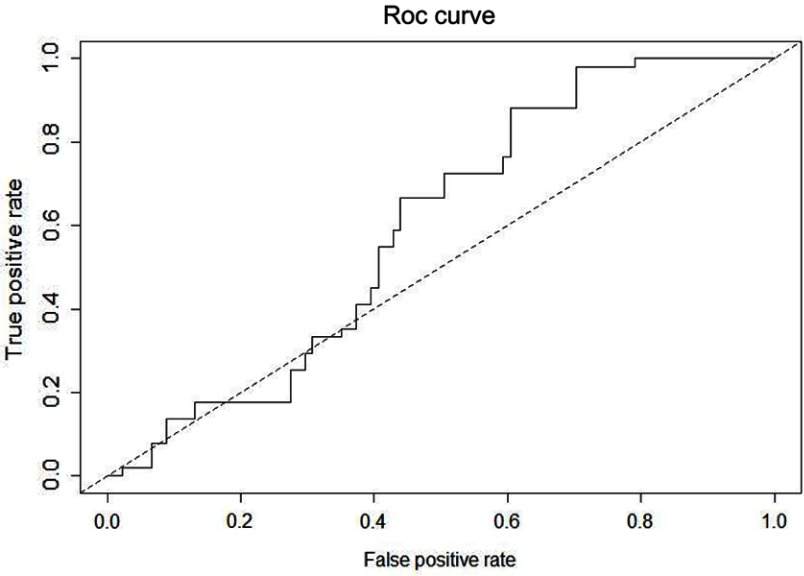
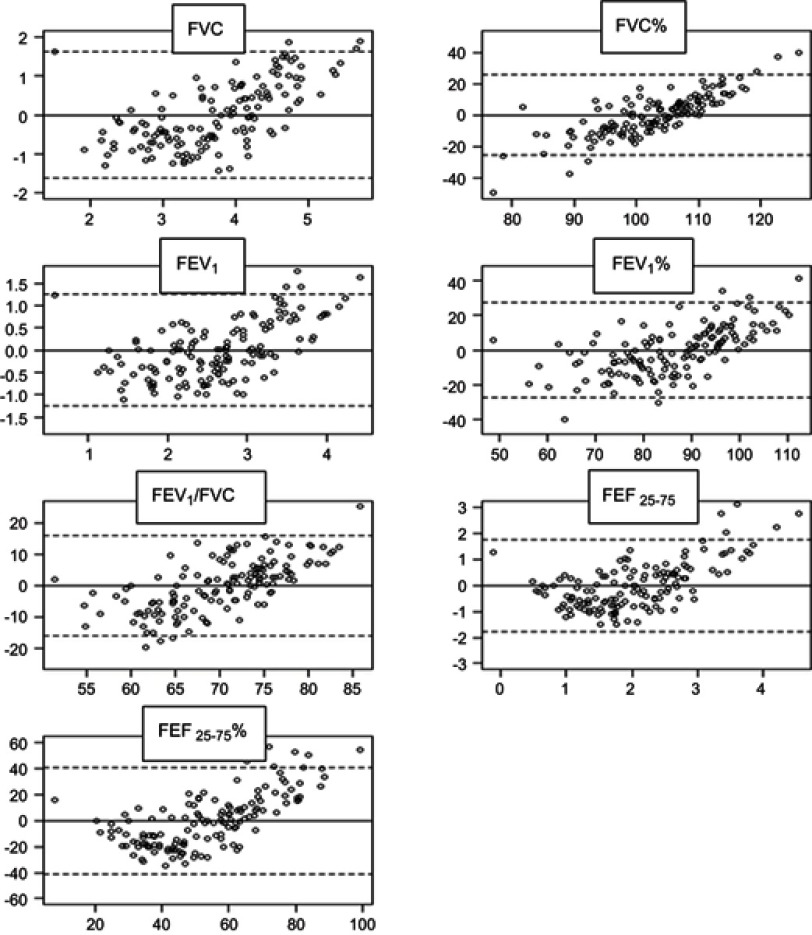
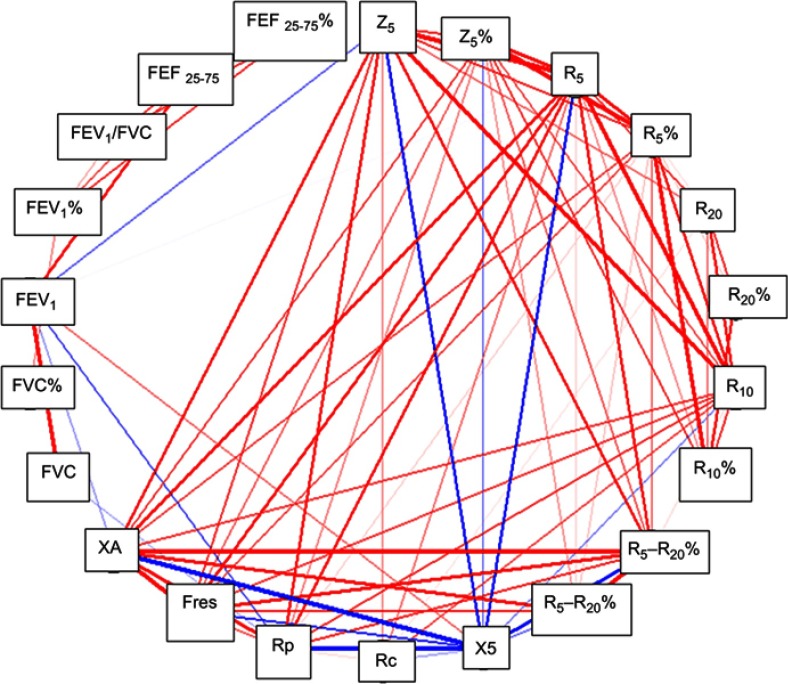
Impulse oscillometry (IOS) has been proposed as an alternative test to evaluate the obstruction of small airways and to detect changes in airways earlier than spirometry. In this study, we sought to determine the utility and association of IOS parameters with spirometry and asthma control in an adult population. Adults 14-82 years of age with asthma were classified into uncontrolled asthma (n=48), partially controlled asthma (n=45), and controlled asthma (n=49) groups, and characterized with fractional exhaled nitric oxide (FE), IOS, and spirometry in a transversal analysis planned as a one-visit study. The basic parameters evaluated in IOS are resistance at 5 Hz (R), an index affected by the large and small airway; resistance at 20 Hz (R), an index of the resistance of large airways; difference between R and R (R-R), indicative of the function of the small peripheral airways; reactance at 5 Hz (X), indicative of the capacitive reactance in the small peripheral airways; resonance frequency (Fres), the intermediate frequency at which the reactance is null, and reactance area (XA), which represents the total reactance (area under the curve) at all frequencies between 5 Hz to Fres. There were statistical differences between groups in standard spirometry and IOS parameters reflecting small peripheral airways (R, R, R-R, Fres, XA and X) (<0.001). Accuracy of IOS and/or spirometry to discriminate between controlled asthma vs partially controlled asthma and uncontrolled asthma was low (AUC=0.61). Using linear regression models, we found a good association between spirometry and IOS. In order to evaluate IOS as an alternative or supplementary method for spirometry, we designed a predictive model for spirometry from IOS applying a penalized regression model (Lasso). Then, we compared the original spirometry values with the values obtained from the predictive model using Bland-Altman plots, and the models showed an acceptable bias in the case of FEV/FVC, FEV%, and FVC%. IOS did not show a discriminative capacity to correctly classify patients according to the degree of asthma control. However, values of IOS showed good association with values of spirometry. IOS could be considered as an alternative and accurate complement to spirometry in adults. In a predictive model, spirometry values estimated from IOS tended to overestimate in low values of "real" spirometry and underestimate in high values.
脉冲振荡法(IOS)已被提议作为一种替代测试,用于评估小气道阻塞情况,并比肺量计更早地检测气道变化。在本研究中,我们试图确定IOS参数在成年人群中与肺量计及哮喘控制的效用和关联。将年龄在14 - 82岁的成年哮喘患者分为未控制哮喘组(n = 48)、部分控制哮喘组(n = 45)和控制哮喘组(n = 49),并在一项计划为单次就诊的横向分析中,通过呼出一氧化氮分数(FE)、IOS和肺量计对其进行特征描述。IOS评估的基本参数包括5赫兹时的阻力(R),这是一个受大气道和小气道影响的指标;20赫兹时的阻力(R),是大气道阻力指标;R与R的差值(R - R),指示小周边气道的功能;5赫兹时的电抗(X),指示小周边气道的电容电抗;共振频率(Fres),即电抗为零的中间频率,以及电抗面积(XA),它代表5赫兹至Fres之间所有频率下的总电抗(曲线下面积)。反映小周边气道的标准肺量计参数和IOS参数在各组之间存在统计学差异(<0.001)。IOS和/或肺量计区分控制哮喘与部分控制哮喘及未控制哮喘的准确性较低(AUC = 0.61)。使用线性回归模型,我们发现肺量计与IOS之间存在良好关联。为了评估IOS作为肺量计的替代或补充方法,我们应用惩罚回归模型(套索)从IOS设计了一个肺量计预测模型。然后,我们使用布兰德 - 奥特曼图将原始肺量计值与预测模型获得的值进行比较,结果显示在第1秒用力呼气容积/用力肺活量(FEV/FVC)、第1秒用力呼气容积占预计值百分比(FEV%)和用力肺活量占预计值百分比(FVC%)方面,模型显示出可接受的偏差。IOS未显示出根据哮喘控制程度正确分类患者的判别能力。然而,IOS值与肺量计值显示出良好关联。IOS可被视为成人肺量计的一种替代且准确的补充方法。在一个预测模型中,从IOS估计的肺量计值在“真实”肺量计低值时往往高估,在高值时往往低估。