School of Life Sciences, University of Essex, Colchester, CO4 3SQ, UK.
Institute of Molecular, Cell and Systems Biology, University of Glasgow, Glasgow, G12 8QQ, UK.
Plant Cell Environ. 2020 Jan;43(1):16-27. doi: 10.1111/pce.13643. Epub 2019 Aug 27.
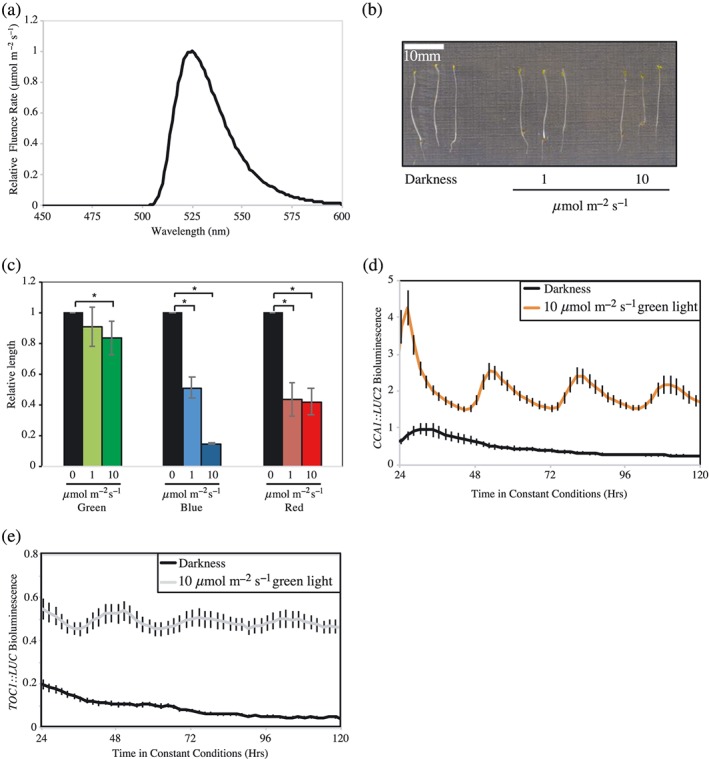
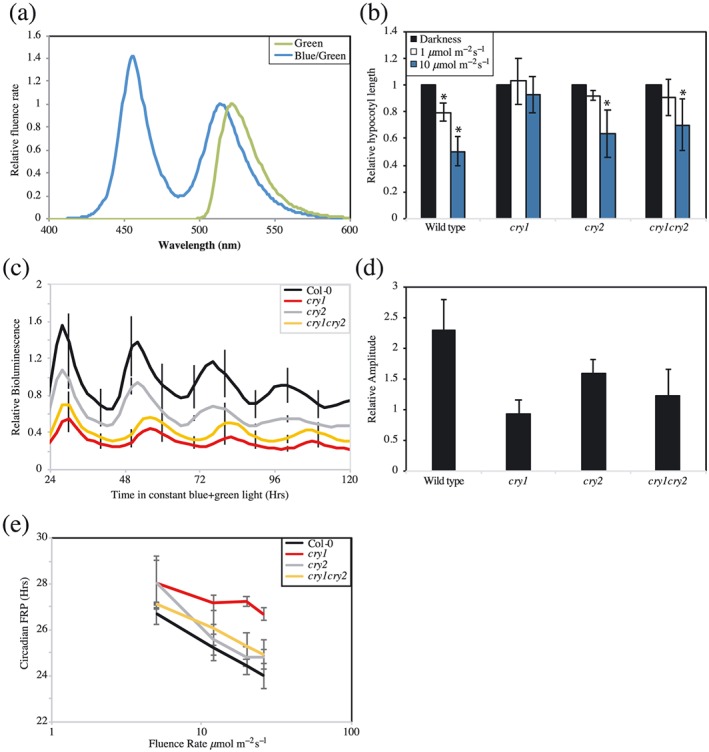
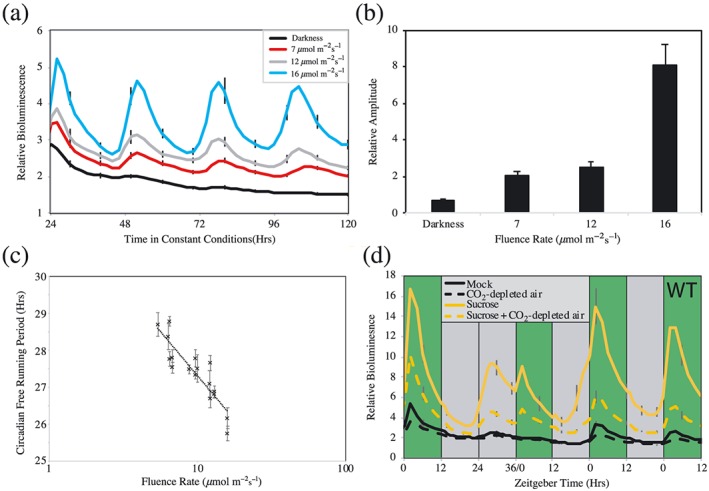
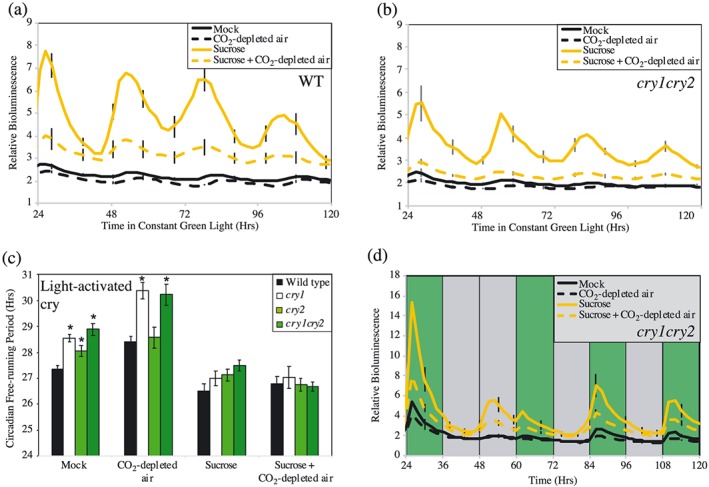
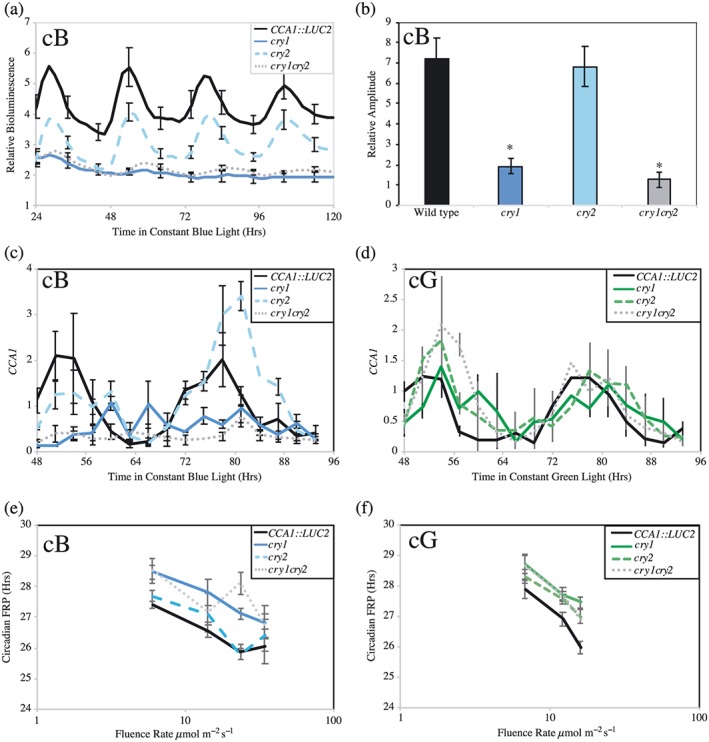
Plants are acutely sensitive of their light environment, adapting their growth habit and prioritizing developmental decisions to maximize fecundity. In addition to providing an energy source and directional information, light quality also contributes to entrainment of the circadian system, an endogenous timing mechanism that integrates endogenous and environmental signalling cues to promote growth. Whereas plants' perception of red and blue portions of the spectrum are well defined, green light sensitivity remains enigmatic. In this study, we show that low fluence rates of green light are sufficient to entrain and maintain circadian rhythms in Arabidopsis and that cryptochromes contribute to this response. Importantly, green light responses are distinguishable from low blue light-induced phenotypes. These data suggest a distinct signalling mechanism enables entrainment of the circadian system in green light-enriched environments, such as those found in undergrowth and in densely planted monoculture.
植物对其光环境非常敏感,会调整其生长习性并优先做出发育决策,以最大限度地提高繁殖力。除了提供能量源和方向信息外,光质还有助于生物钟的计时,这是一种内源性的时间机制,它整合了内源性和环境信号提示,以促进生长。虽然植物对光谱的红、蓝光部分的感知已经得到很好的定义,但对绿光的敏感性仍然是个谜。在这项研究中,我们表明,低强度的绿光足以使拟南芥的生物钟同步并维持其节律,而隐花色素在这一反应中起作用。重要的是,绿光反应与低蓝光诱导的表型不同。这些数据表明,在富含绿光的环境中,如林下和密植的单一种植环境中,存在一种独特的信号机制,使生物钟能够同步。