Department of Microbial Pathogenicity Mechanisms, Leibniz Institute for Natural Product Research and Infection Biology-Hans-Knoell-Institute, Beutenbergstraße 11A, 07745 Jena, Germany.
Center for Electron Microscopy Jena University Hospital, Ziegelmühlenweg 1, 07743 Jena, Germany.
Dis Model Mech. 2019 Sep 12;12(9):dmm039719. doi: 10.1242/dmm.039719.
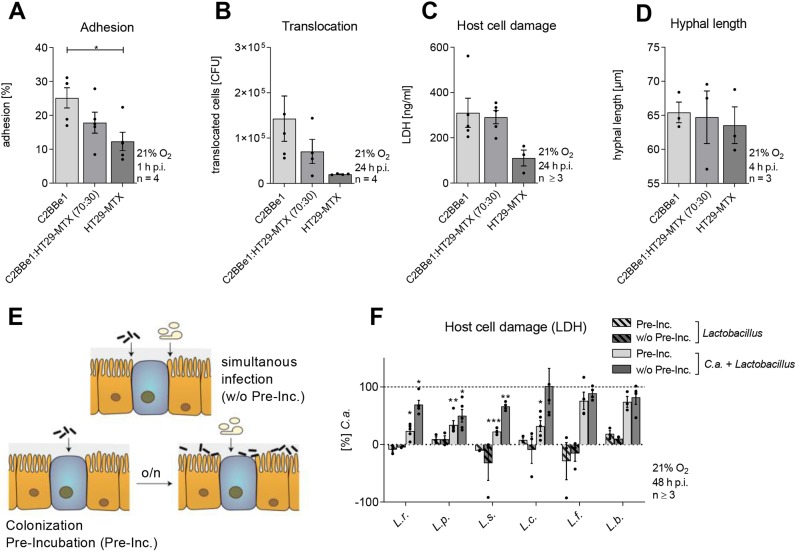
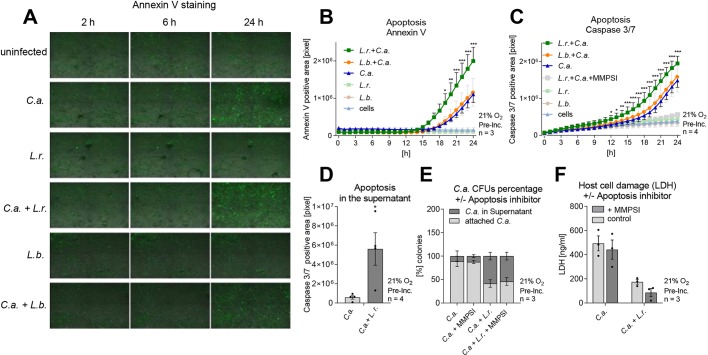
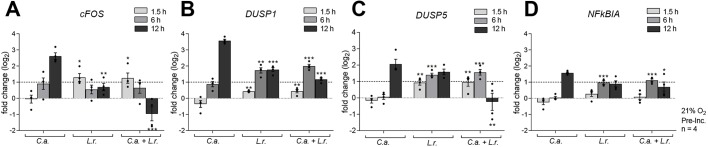
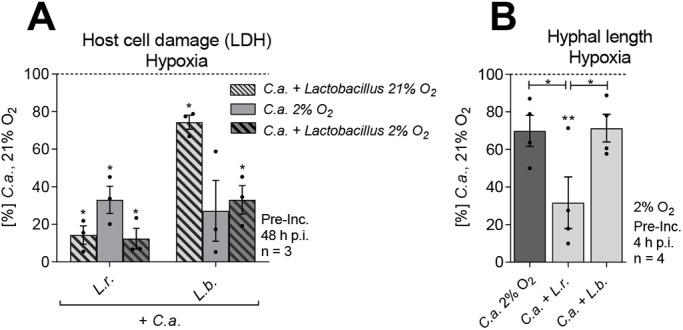
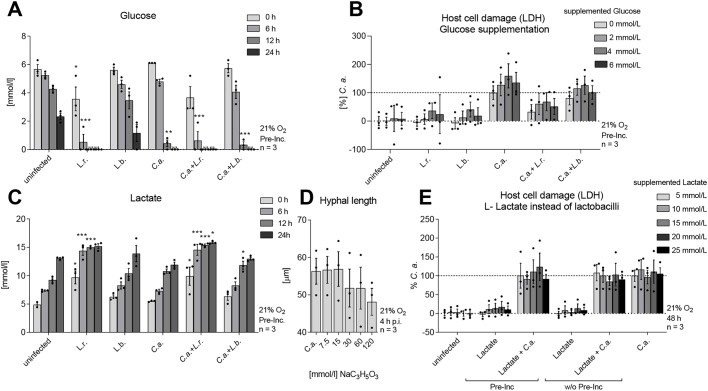
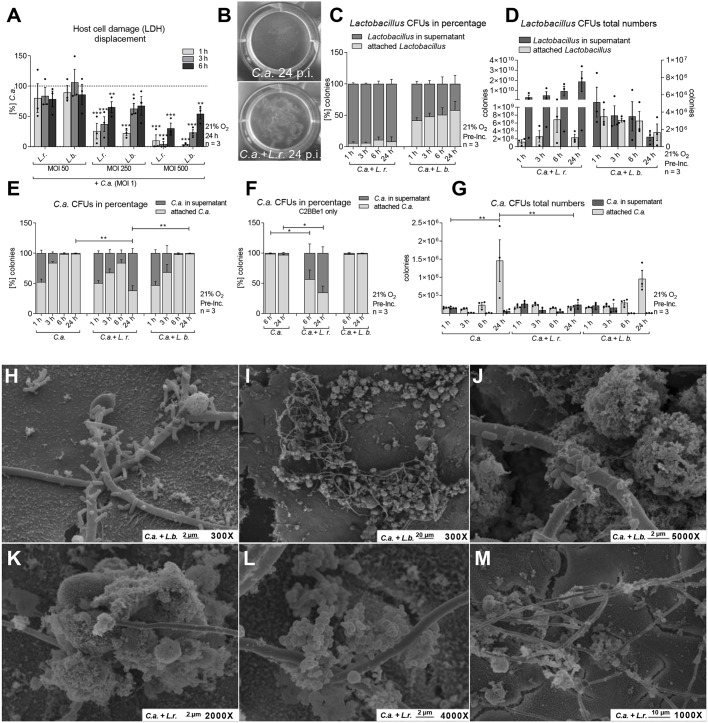
The intestine is the primary reservoir of that can cause systemic infections in immunocompromised patients. In this reservoir, the fungus exists as a harmless commensal. However, antibiotic treatment can disturb the bacterial microbiota, facilitating fungal overgrowth and favoring pathogenicity. The current gut models that are used to study the pathogenesis of investigate the state in which behaves as a pathogen rather than as a commensal. We present a novel gut model in which the fungal pathogenicity is reduced to a minimum by increasing the biological complexity. In this model, enterocytes represent the epithelial barrier and goblet cells limit adhesion and invasion. Significant protection against induced necrotic damage was achieved by the introduction of a microbiota of antagonistic lactobacilli. We demonstrated a time-, dose- and species-dependent protective effect against -induced cytotoxicity. This required bacterial growth, which relied on the presence of host cells, but was not dependent on the competition for adhesion sites. reduced hyphal elongation, a key virulence attribute. Furthermore, bacterial-driven shedding of hyphae from the epithelial surface, associated with apoptotic epithelial cells, was identified as a main and novel mechanism of damage protection. However, host cell apoptosis was not the driving mechanism behind shedding. Collectively, we established an gut model that can be used to experimentally dissect commensal-like interactions of with a bacterial microbiota and the host epithelial barrier. We also discovered fungal shedding as a novel mechanism by which bacteria contribute to the protection of epithelial surfaces.This article has an associated First Person interview with the joint first authors of the paper.
肠道是真菌的主要储存库,可导致免疫功能低下患者发生全身感染。在这个储存库中,真菌作为一种无害的共生菌存在。然而,抗生素治疗会扰乱细菌微生物群,促进真菌过度生长并有利于其致病性。目前用于研究真菌发病机制的肠道模型研究的是真菌作为病原体而不是共生菌的状态。我们提出了一种新的肠道模型,通过增加生物学复杂性将真菌的致病性降至最低。在该模型中,肠上皮细胞代表上皮屏障,杯状细胞限制真菌的黏附和侵袭。通过引入具有拮抗作用的乳杆菌菌群,可显著防止诱导的坏死性损伤。我们证明了对诱导的细胞毒性具有时间、剂量和物种依赖性的保护作用。这需要细菌生长,这依赖于宿主细胞的存在,但不依赖于对黏附位点的竞争。乳杆菌减少了真菌菌丝的伸长,这是一种关键的毒力属性。此外,从上皮表面脱落与凋亡上皮细胞相关的真菌菌丝,被鉴定为一种主要的新型保护机制。然而,上皮细胞脱落的驱动机制不是宿主细胞凋亡。总的来说,我们建立了一种肠道模型,可用于实验解析真菌与细菌微生物群和宿主上皮屏障的共生样相互作用。我们还发现了真菌脱落作为细菌有助于保护上皮表面的一种新机制。本文有一篇相关的第一人称采访,采访对象是该论文的共同第一作者。