Poylin Vitaliy Y, Irani Jennifer L, Rahbar Reza, Kapadia Muneera R
Beth Israel Deaconess Medical Center, Boston, MA, USA.
Brigham and Woman's Hospital, Boston, MA, USA.
Gastroenterol Rep (Oxf). 2019 Aug;7(4):279-282. doi: 10.1093/gastro/goz016. Epub 2019 May 9.
Rectal prolapse is a condition that occurs infrequently in men and there is little literature guiding treatment in this population. The purpose of this study was to evaluate the surgical approach and outcomes of rectal-prolapse repair in men.
A retrospective multicenter review was conducted of consecutive men who underwent rectal-prolapse repair between 2004 and 2014. Surgical approaches and outcomes, including erectile function and fecal continence, were evaluated.
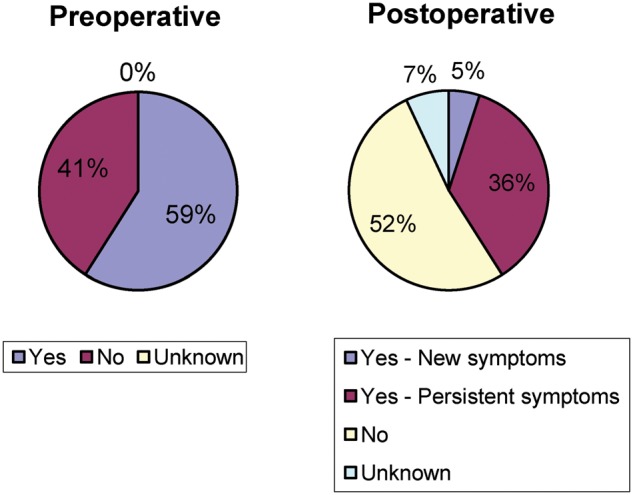
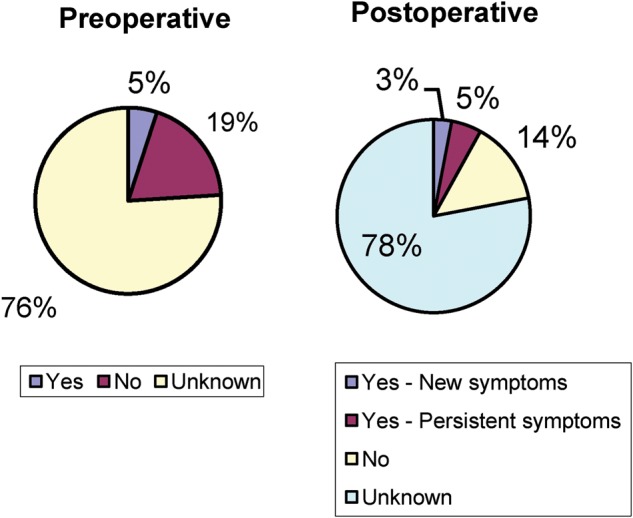
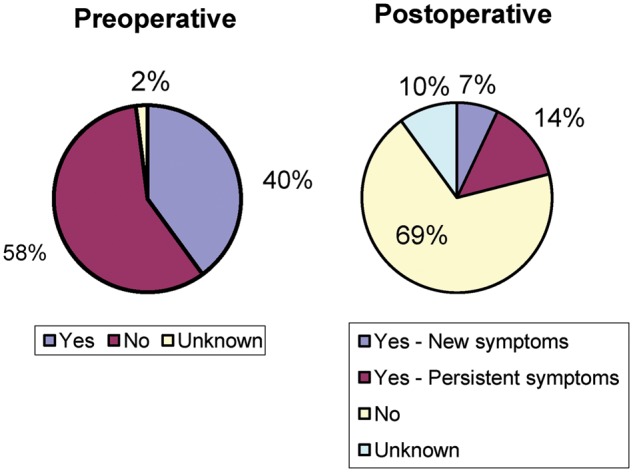
During the study period, 58 men underwent rectal-prolapse repair and the mean age of repair was 52.7 ± 24.1 years. The mean follow-up was 13.2 months (range, 0.5-117 months). The majority of patients underwent endoscopic evaluation (78%), but few patients underwent anal manometry (16%), defecography (9%) or ultrasound (3%). Ten patients (17%) underwent biofeedback/pelvic-floor physical therapy prior to repair. Nineteen patients (33%) underwent a perineal approach (most were perineal proctosigmoidectomy). Thirty-nine patients (67%) underwent repair using an abdominal approach (all were suture rectopexy) and, of these, 77% were completed using a minimally invasive technique. The overall complication rate was 26% including urinary retention (16%), which was more common in patients undergoing the perineal approach (32% vs. 8%, = 0.028), urinary-tract infection (7%) and wound infection (3%). The overall recurrence rate was 9%, with no difference between abdominal and perineal approaches. Information on sexual function was missing in the majority of patients both before and after surgery (76% and 78%, respectively).
Rectal-prolapse repair in men is safe and has a low recurrence rate; however, sexual function was poorly recorded across all institutions. Further studies are needed to evaluate to best approach to and functional outcomes of rectal-prolapse repair in men.
直肠脱垂在男性中很少见,关于该人群治疗的文献也很少。本研究的目的是评估男性直肠脱垂修复的手术方法和结果。
对2004年至2014年间连续接受直肠脱垂修复手术的男性进行回顾性多中心研究。评估手术方法和结果,包括勃起功能和大便失禁情况。
在研究期间,58名男性接受了直肠脱垂修复手术,平均修复年龄为52.7±24.1岁。平均随访时间为13.2个月(范围0.5 - 117个月)。大多数患者接受了内镜评估(78%),但很少有患者接受肛门测压(16%)、排粪造影(9%)或超声检查(3%)。10名患者(17%)在修复前接受了生物反馈/盆底物理治疗。19名患者(33%)采用了经会阴入路(大多数是经会阴直肠乙状结肠切除术)。39名患者(67%)采用腹部入路进行修复(均为缝合直肠固定术),其中77%采用微创技术完成。总体并发症发生率为26%,包括尿潴留(16%),在经会阴入路的患者中更常见(32%对8%,P = 0.028)、尿路感染(7%)和伤口感染(3%)。总体复发率为9%,腹部和会阴入路之间无差异。大多数患者术前和术后的性功能信息缺失(分别为76%和78%)。
男性直肠脱垂修复手术是安全的,复发率低;然而,所有机构对性功能的记录都很差。需要进一步研究以评估男性直肠脱垂修复的最佳方法和功能结果。