Khoo Xin-Hui, Paterson Ian C, Goh Bey-Hing, Lee Wai-Leng
School of Science, Monash University Malaysia, Subang Jaya 47500, Selangor, Malaysia.
Department of Oral and Craniofacial Sciences, University Malaya, Kuala Lumpur 50603, Malaysia.
Cancers (Basel). 2019 Aug 14;11(8):1166. doi: 10.3390/cancers11081166.
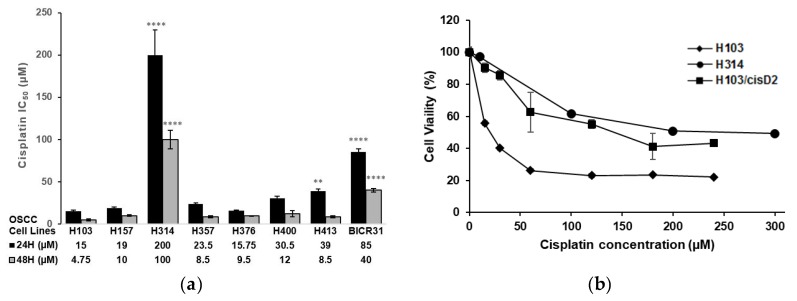
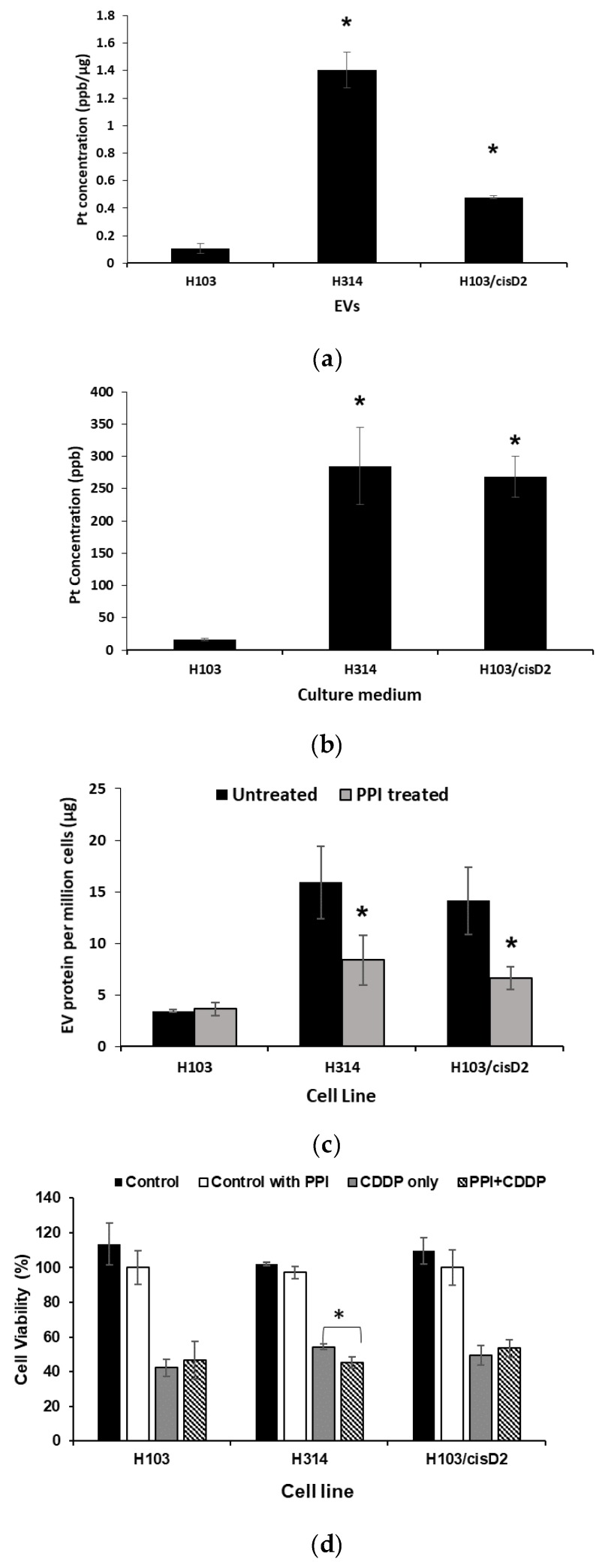
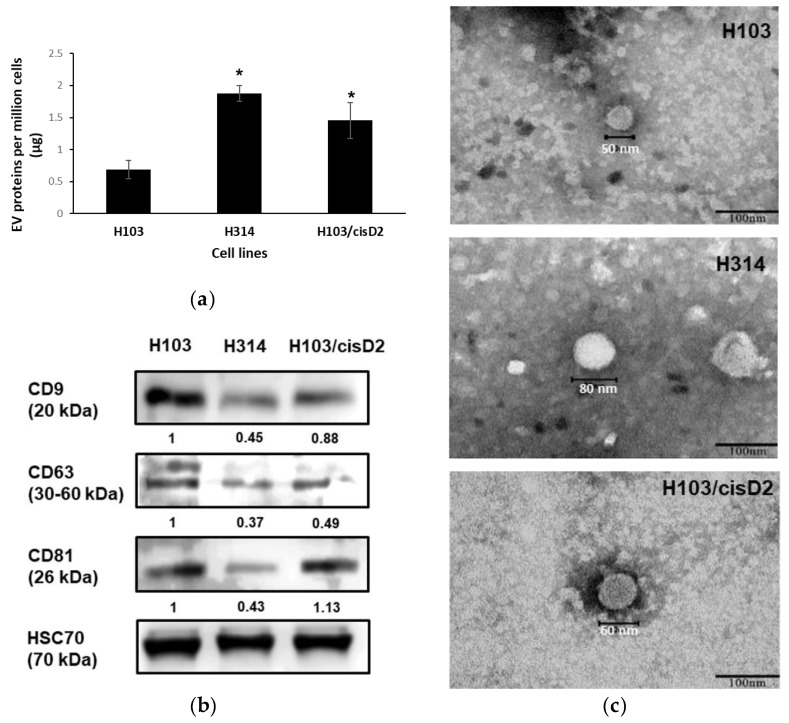
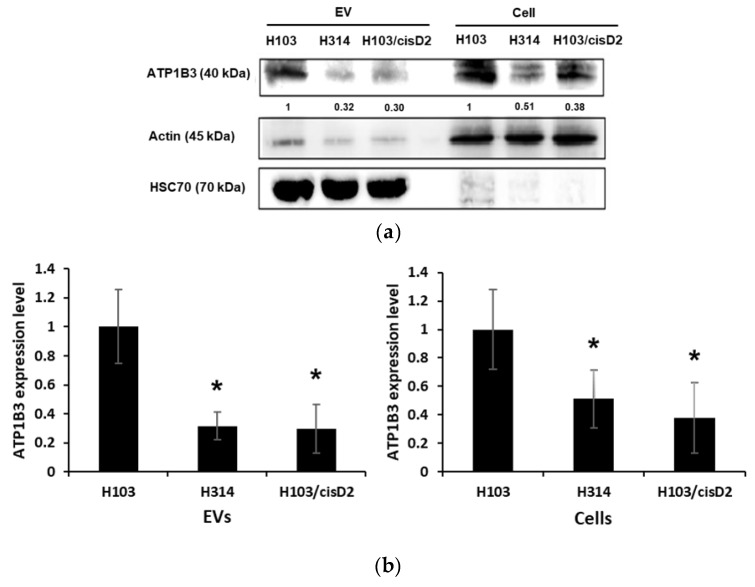
Drug resistance remains a severe problem in most chemotherapy regimes. Recently, it has been suggested that cancer cell-derived extracellular vesicles (EVs) could mediate drug resistance. In this study, the role of EVs in mediating the response of oral squamous cell carcinoma (OSCC) cells to cisplatin was investigated. We isolated and characterized EVs from OSCC cell lines showing differential sensitivities to cisplatin. Increased EV production was observed in both de novo (H314) and adaptive (H103/cisD2) resistant lines compared to sensitive H103 cells. The protein profiles of these EVs were then analyzed. Differences in the proteome of EVs secreted by H103 and H103/cisD2 indicated that adaptation to cisplatin treatment caused significant changes in the secreted nanovesicles. Intriguingly, both resistant H103/cisD2 and H314 cells shared a highly similar EV protein profile including downregulation of the metal ion transporter, ATP1B3, in the EVs implicating altered drug delivery. ICP-MS analysis revealed that less cisplatin accumulated in the resistant cells, but higher levels were detected in their EVs. Therefore, we inhibited EV secretion from the cells using a proton pump inhibitor and observed an increased drug sensitivity in cisplatin-resistant H314 cells. This finding suggests that control of EV secretion could be a potential strategy to enhance the efficacy of cancer treatment.
在大多数化疗方案中,耐药性仍然是一个严重的问题。最近,有人提出癌细胞衍生的细胞外囊泡(EVs)可能介导耐药性。在本研究中,研究了EVs在介导口腔鳞状细胞癌(OSCC)细胞对顺铂反应中的作用。我们从对顺铂敏感性不同的OSCC细胞系中分离并鉴定了EVs。与敏感的H103细胞相比,在原发性(H314)和适应性(H103/cisD2)耐药细胞系中均观察到EVs产生增加。然后分析了这些EVs的蛋白质谱。H103和H103/cisD2分泌的EVs蛋白质组的差异表明,对顺铂治疗的适应导致分泌的纳米囊泡发生了显著变化。有趣的是,耐药的H103/cisD2和H314细胞共享高度相似的EV蛋白质谱,包括EVs中金属离子转运蛋白ATP1B3的下调,这意味着药物递送发生了改变。电感耦合等离子体质谱分析显示,耐药细胞中积累的顺铂较少,但其EVs中检测到的顺铂水平较高。因此,我们使用质子泵抑制剂抑制细胞分泌EVs,并观察到顺铂耐药的H314细胞的药物敏感性增加。这一发现表明,控制EVs分泌可能是提高癌症治疗疗效的一种潜在策略。