Department of Orthopaedics, Affiliated Zhongshan Hospital of Dalian University, Dalian, China.
Mol Genet Genomic Med. 2019 Oct;7(10):e00921. doi: 10.1002/mgg3.921. Epub 2019 Aug 16.
Insulin-like growth factor-1 (IGF-1) promotes osteoblast differentiation and mineralization. The objective of this study was to investigate the effects of IGF-1 on proliferation, mineralization, alkaline phosphatase (ALP) synthesis, and gene expression of osteoblast differentiation in MC3T3-E1 osteoblasts cells, and to explore gene expression profiling differential genes.
MC3T3-E1 osteoblasts cells were cultured in medium with or without IGF-1. The ALP assay was employed to determine the osteoblast mineralization, and Alizarin red S to stain for calcium deposits, which were the indicators of mature osteocytes. The living cell number was assessed by the Cell Counting Kit-8 method. RNA-seq analysis was applied to identify genes that were differentially expressed in with or without IGF-1 as well as genes that varied between these two groups. The expression of osteogenic marker genes was determined by quantitative real-time polymerase chain reaction (qRT-PCR) and western blot analysis.
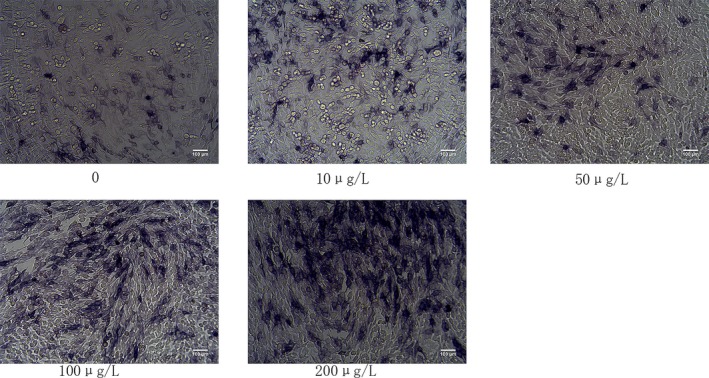
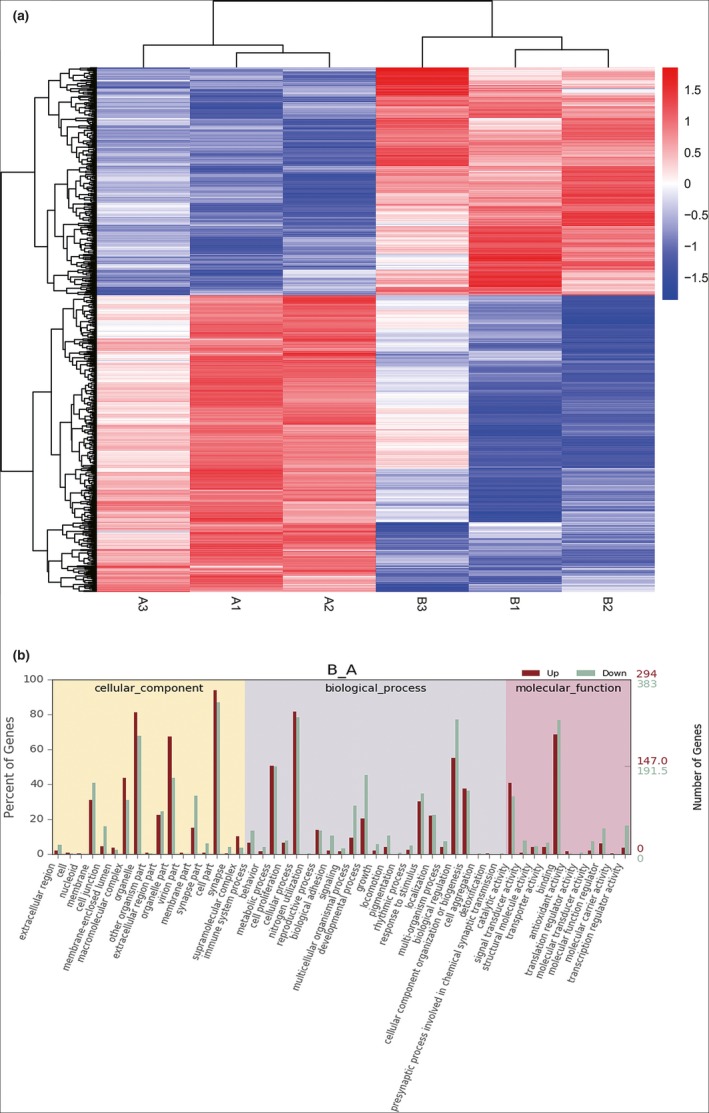
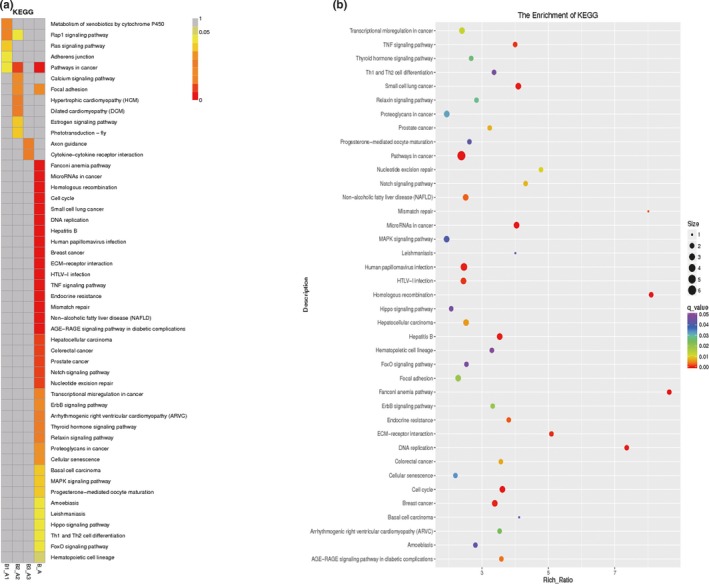
The cell number of osteoblasts exposed to IGF-1 at 200 μg/L significantly increased compared with the control group. The ALP activity in IGF-1-treated cells was higher than that in the control group. IGF-1 can increase ALP synthesis in osteoblasts in vitro. RNA-seq analysis showed that 677 triggered differentially expressed genes by IGF, of which 383 genes were downregulated and 294 genes were upregulated. Gene ontology (GO) analysis showed that IGF-1 caused a significant change in gene expression patterns.
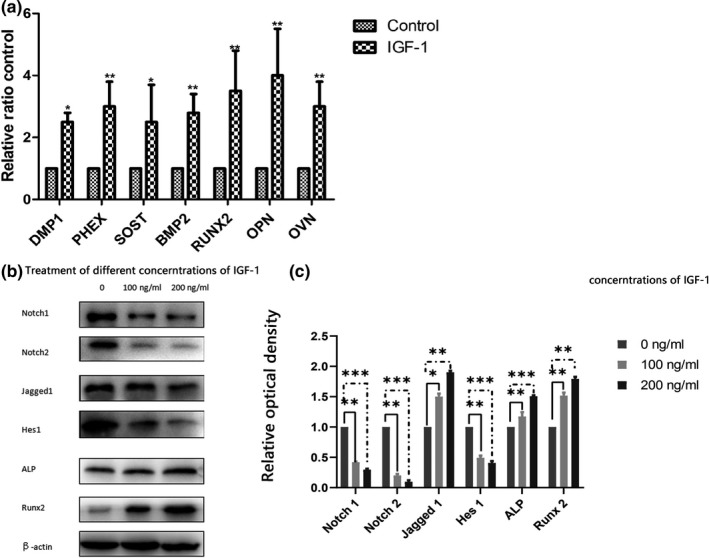
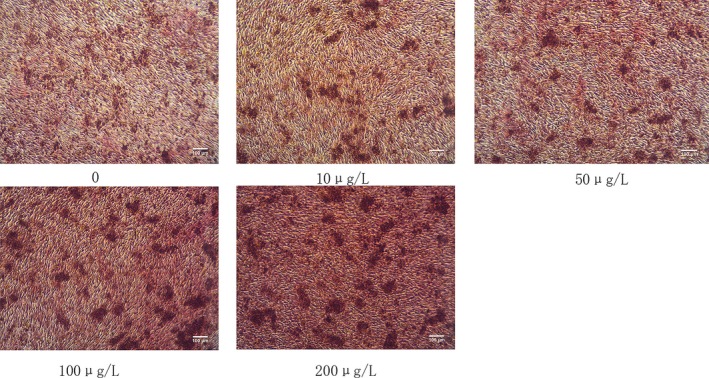
This result suggested that IGF-1 could probably promote the synthesis of organic matrix and mineralize action of bone. Osteogenic-related genes (DMP1, PHEX, SOST, BMP2, RUNX2, OPN, and OCN) were significantly upregulated both in GO analysis and in pathway analysis to perform qRT-PCR. Western blot analysis demonstrated that the Notch pathway was highly upregulated in MC3T3-E1 cells.
胰岛素样生长因子-1(IGF-1)可促进成骨细胞分化和矿化。本研究旨在探讨 IGF-1 对 MC3T3-E1 成骨细胞增殖、矿化、碱性磷酸酶(ALP)合成及成骨分化基因表达的影响,并对基因表达谱差异基因进行探索。
MC3T3-E1 成骨细胞在含或不含 IGF-1 的培养基中培养。ALP 测定法用于测定成骨细胞矿化情况,茜素红 S 染色用于检测钙沉积,这是成熟成骨细胞的指标。通过细胞计数试剂盒-8 法评估活细胞数量。采用 RNA-seq 分析鉴定 IGF-1 处理组和对照组之间差异表达的基因以及两组之间存在差异的基因。采用定量实时聚合酶链反应(qRT-PCR)和 Western blot 分析检测成骨标志物基因的表达。
与对照组相比,暴露于 200μg/L IGF-1 的成骨细胞数量明显增加。IGF-1 处理细胞中的 ALP 活性高于对照组。IGF-1 可在体外增加成骨细胞中 ALP 的合成。RNA-seq 分析显示,IGF 诱导了 677 个差异表达基因,其中 383 个基因下调,294 个基因上调。基因本体论(GO)分析显示,IGF-1 导致基因表达模式发生显著变化。
这一结果表明 IGF-1 可能促进有机基质的合成和骨的矿化作用。GO 分析和通路分析都显示成骨相关基因(DMP1、PHEX、SOST、BMP2、RUNX2、OPN 和 OCN)表达显著上调。Western blot 分析表明 Notch 通路在 MC3T3-E1 细胞中高度上调。