Institute of Plant Breeding, Genetics and Genomics and Department of Crop and Soil Sciences, The University of Georgia, Athens, GA, USA.
BMC Plant Biol. 2019 Aug 16;19(1):359. doi: 10.1186/s12870-019-1946-0.
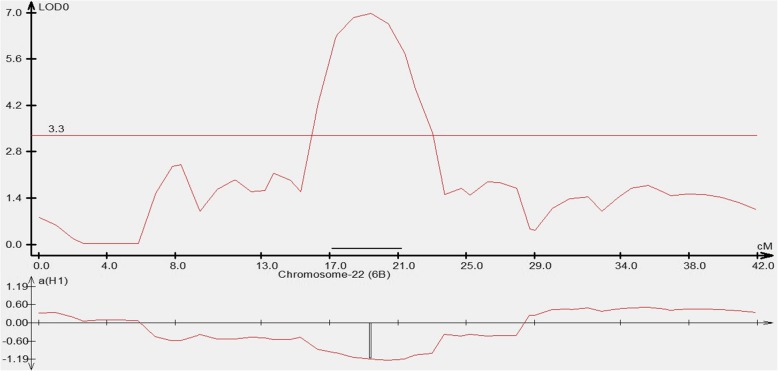
The genetic and genomic basis of flowering time and biomass yield in alfalfa (Medicago sativa L.) remains poorly understood mainly due to the autopolyploid nature of the species and the lack of adequate genomic resources. We constructed linkage maps using genotyping-by-sequencing (GBS) based single dose allele (SDA) SNP and mapped alfalfa timing of flowering (TOF), spring yield (SY), and cumulative summer biomass (CSB) in a pseudo-testcross F1 population derived from a fall dormant (3010) and a non-dormant (CW 1010) cultivars. We analyzed the quantitative trait loci (QTL) to identify conserved genomic regions and detected molecular markers and potential candidate genes associated with the traits to improve alfalfa and provide genomic resources for the future studies.
This study showed that both fall dormant and non-dormant alfalfa cultivars harbored QTL for early and late flowering, suggesting that flowering time in alfalfa is not an indicator of its fall dormancy (FD) levels. A weak phenotypic correlation between the flowering time and fall dormancy (FD) in F1 and checks also corroborated that alfalfa FD and TOF are not the predictors of one another. The relationship between flowering time and alfalfa biomass yield was not strong, but the non-dormant had relatively more SY than dormant. Therefore, selecting superior alfalfa cultivars that are non-dormant, winter-hardy, and early flowering would allow for an early spring harvest with enhanced biomass. In this study, we found 25 QTL for TOF, 17 for SY and six QTL for CSB. Three TOF related QTL were stable and four TOF QTL were detected in the corresponding genomic locations of the flowering QTL of M. truncatula, an indication of possible evolutionarily conserved regions. The potential candidate genes for the SNP sequences of QTL regions were identified for all three traits and these genes would be potential targets for further molecular studies.
This research showed that variation in alfalfa flowering time after spring green up has no association with dormancy levels. Here we reported QTL, markers, and potential candidate genes associated with spring flowering time and biomass yield of alfalfa, which constitute valuable genomic resources for improving these traits via marker-assisted selection (MAS).
由于物种的同源多倍体性质和缺乏足够的基因组资源,苜蓿(Medicago sativa L.)开花时间和生物量产量的遗传和基因组基础仍知之甚少。我们使用基于测序的基因型(GBS)单剂量等位基因(SDA)SNP 构建了连锁图谱,并在源自秋季休眠(3010)和非休眠(CW 1010)品种的拟测交 F1 群体中对苜蓿开花时间(TOF)、春季产量(SY)和夏季累积生物量(CSB)进行了作图。我们分析了数量性状基因座(QTL),以鉴定保守的基因组区域,并检测了与性状相关的分子标记和潜在候选基因,以改良苜蓿,并为未来的研究提供基因组资源。
本研究表明,秋季休眠和非休眠苜蓿品种都具有早花和晚花的 QTL,这表明苜蓿的开花时间不是其秋季休眠(FD)水平的指标。F1 和对照中开花时间与秋季休眠(FD)之间的弱表型相关性也证实了苜蓿 FD 和 TOF 彼此之间不是预测因子。开花时间与苜蓿生物量产量之间的关系不强烈,但非休眠品种的 SY 相对较高。因此,选择非休眠、抗寒、早花的优良苜蓿品种可以在早春进行收获,从而提高生物量。在这项研究中,我们发现了 25 个与 TOF 相关的 QTL、17 个与 SY 相关的 QTL 和 6 个与 CSB 相关的 QTL。三个与 TOF 相关的 QTL是稳定的,四个与 TOF 相关的 QTL在 M. truncatula 开花 QTL 的相应基因组位置被检测到,这表明可能存在进化保守的区域。所有三个性状的 QTL 区域 SNP 序列的潜在候选基因被鉴定出来,这些基因可能是进一步分子研究的潜在靶点。
本研究表明,春季返青后苜蓿开花时间的变化与休眠水平无关。在这里,我们报告了与苜蓿春季开花时间和生物量产量相关的 QTL、标记和潜在候选基因,这些基因构成了通过标记辅助选择(MAS)改良这些性状的有价值的基因组资源。