Department of Psychology, Simon Fraser University, 8888 University Drive, Burnaby, BC, V5A 1S6, Canada.
BC Children's Hospital Research Institute, Vancouver, BC, Canada.
Prev Sci. 2019 Nov;20(8):1255-1264. doi: 10.1007/s11121-019-01041-1.
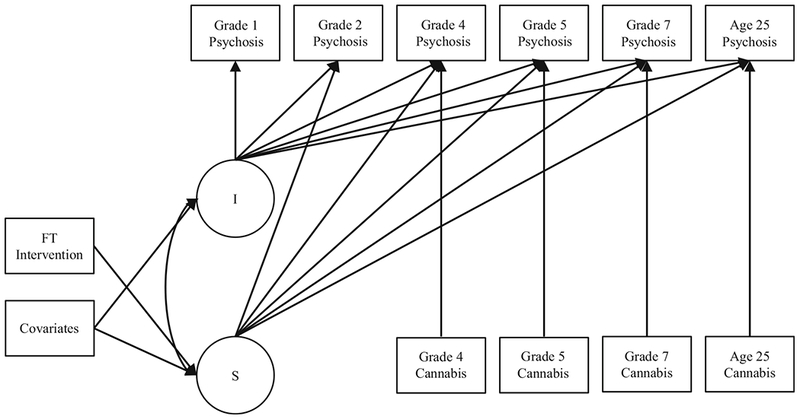
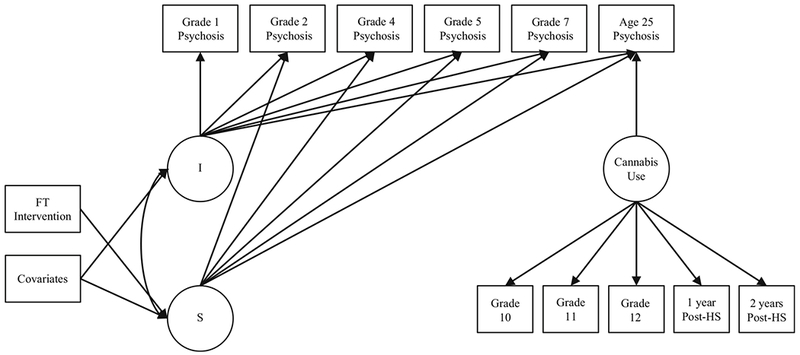
The Fast Track (FT) intervention was a multimodal preventive intervention addressing antisocial development across 10 years of childhood and early adolescence. The intervention included parent management training, child social-cognitive skills training, peer coaching and mentoring, academic skills tutoring, and a classroom social-emotional learning program. While not specifically designed to target psychosis symptoms (e.g., social withdrawal, thought abnormalities), the present study aimed to examine whether the FT intervention prevented psychosis symptoms through childhood and adolescence and into adulthood. Participants included the FT intervention and high-risk control samples (N = 891; 69% male; M age = 6.58 years, SD = .48). Psychosis symptoms were assessed using the "thought problems" subscale of the parent-report Child Behavior Checklist during grades 1, 2, 4, 5, and 7, and the self-report Adult Behavior Checklist at age 25 years, in line with prior research using this measure. Growth models included the FT condition and covariates (i.e., initial risk screen score, cohort, socioeconomic status, rural/urban status, race, and sex) as predictors; and child, adolescent, and adult psychosis symptoms as outcomes. Intervention status was not significantly associated with the slope of psychosis symptoms; however, after controlling for concurrent cannabis use, intervention participants reported lower levels of psychosis symptoms over time. Findings suggest that interventions targeting antisocial behavior may prevent psychosis symptoms in the long term.
快速通道(FT)干预是一种多模式预防干预措施,针对儿童和青少年早期的 10 年反社会发展。该干预措施包括家长管理培训、儿童社会认知技能培训、同伴指导和辅导、学术技能辅导以及课堂社会情感学习计划。虽然干预措施并非专门针对精神病症状(例如社交退缩、思维异常),但本研究旨在探讨 FT 干预是否可以预防精神病症状,从儿童期到青春期再到成年期。参与者包括 FT 干预组和高风险对照组(n=891;69%为男性;平均年龄=6.58 岁,标准差=0.48)。精神病症状使用父母报告的儿童行为检查表的“思维问题”子量表在 1、2、4、5 和 7 年级评估,以及 25 岁时的自我报告成人行为检查表评估,这与之前使用该措施的研究一致。增长模型包括 FT 条件和协变量(即初始风险筛查得分、队列、社会经济地位、农村/城市地位、种族和性别)作为预测因素;儿童、青少年和成年精神病症状作为结果。干预状态与精神病症状的斜率无显著相关性;然而,在控制同期大麻使用后,干预组报告的精神病症状随时间推移逐渐降低。研究结果表明,针对反社会行为的干预措施可能会从长远预防精神病症状。