DSM Nutritional Products Ltd., Kaiseraugst, Switzerland.
LMU -Ludwig-Maximilians Universität Munich, Dr von Hauner Children's Hospital, Munich, Germany.
PLoS One. 2019 Aug 19;14(8):e0216790. doi: 10.1371/journal.pone.0216790. eCollection 2019.
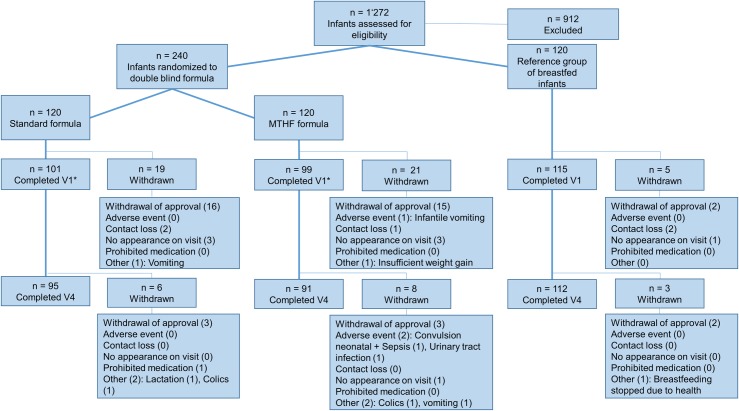
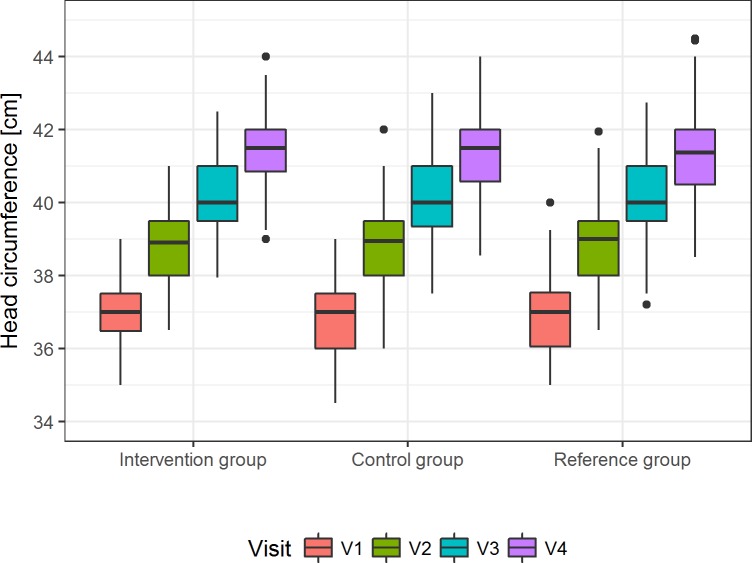
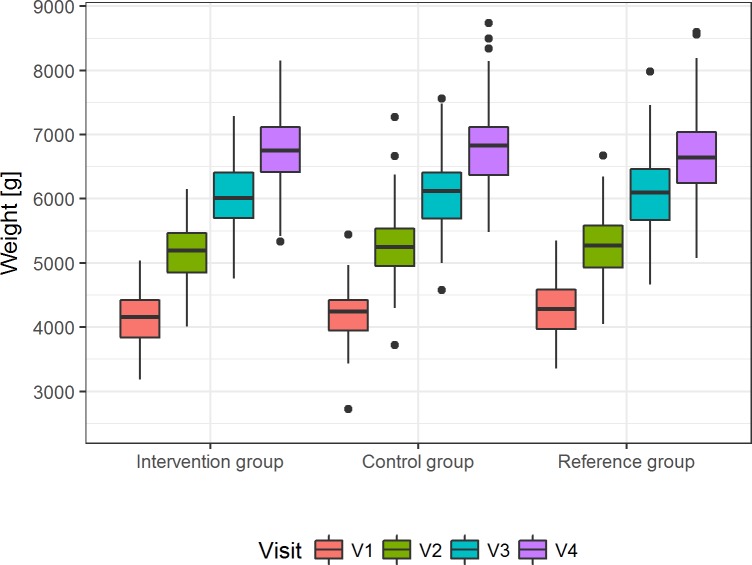
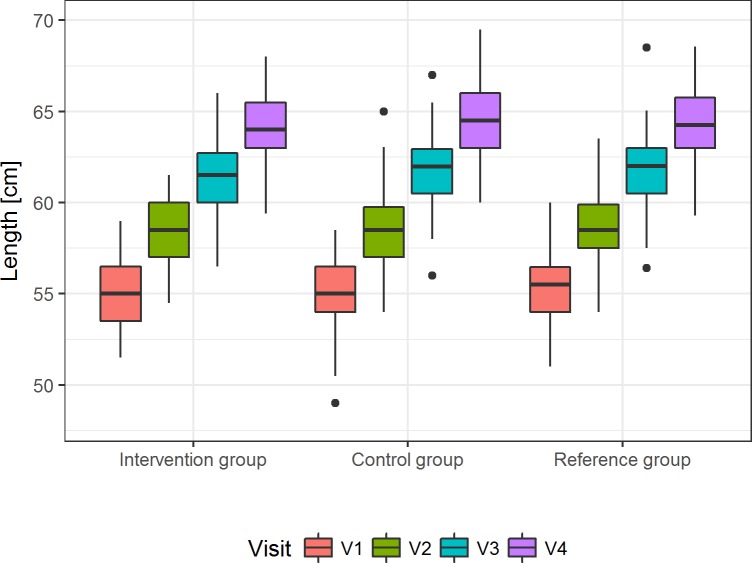
L-5-methyltetrahydrofolate is the predominant folate form in human milk but is currently not approved as a folate source for infant and follow-on formula. We aimed to assess the suitability of L-5-methyltetrahydrofolate as a folate source for infants. Growth and tolerance in healthy term infants fed formulae containing equimolar doses of L-5-methyltetrahydrofolate (10.4 μg/ 100 ml, n = 120, intervention group) or folic acid (10.0 μg/ 100 ml, n = 120, control group) was assessed in a randomized, double-blind, parallel, controlled trial. A reference group of breastfed infants was followed. Both formulae were well accepted without differences in tolerance or occurrence of adverse events. The most common adverse events were common cold, poor weight gain or growth, rash, eczema, or dry skin and respiratory tract infection. Weight gain (the primary outcome) was equivalent in the two groups (95% CI -2.11; 1.68 g/d). In line with this, there was only a small difference in absolute body weight adjusted for birth weight and sex at visit 4 (95% CI -235; 135 g). Equivalence was also shown for gain in head circumference but not for recumbent length gain and increase in calorie intake. Given the nature of the test, this does not indicate an actual difference, and adjusted means at visit 4 were not significantly different for any of these parameters. Infants receiving formula containing L-5-methyltetrahydrofolate had lower mean plasma levels of unmetabolized folic acid (intervention: 0.73 nmol/L, control: 1.15 nmol/L, p<0.0001) and higher levels of red cell folate (intervention: 907.0 ±192.8 nmol/L, control: 839.4 ±142.4 nmol/L, p = 0.0095). We conclude that L-5-methyltetrahydrofolate is suitable for use in infant and follow-on formula, and there are no indications of untoward effects. Trial registration: This trial was registered at ClinicalTrials.gov (NCT02437721).
L-5-甲基四氢叶酸是母乳中主要的叶酸形式,但目前尚未被批准作为婴儿和后续配方奶粉的叶酸来源。我们旨在评估 L-5-甲基四氢叶酸作为婴儿叶酸来源的适宜性。在一项随机、双盲、平行、对照试验中,评估了喂养含有等摩尔剂量的 L-5-甲基四氢叶酸(10.4μg/100ml,n=120,干预组)或叶酸(10.0μg/100ml,n=120,对照组)的配方奶粉的健康足月婴儿的生长和耐受性。同时对母乳喂养的婴儿进行了随访。两种配方奶均被很好地接受,在耐受性或不良反应的发生方面没有差异。最常见的不良反应是普通感冒、体重增长不良或生长缓慢、皮疹、湿疹或皮肤干燥和呼吸道感染。两组的体重增加(主要结局)相当(95%CI-2.11;1.68g/d)。与此一致,在第 4 次访视时,根据出生体重和性别调整的绝对体重仅存在微小差异(95%CI-235;135g)。头围的增加也是如此,但卧位长度的增加和热量摄入的增加则不然。鉴于试验的性质,这并不表明存在实际差异,并且在第 4 次访视时,任何参数的调整后平均值均无显著差异。接受含有 L-5-甲基四氢叶酸的配方奶粉的婴儿未代谢叶酸的平均血浆水平较低(干预组:0.73nmol/L,对照组:1.15nmol/L,p<0.0001),红细胞叶酸水平较高(干预组:907.0±192.8nmol/L,对照组:839.4±142.4nmol/L,p=0.0095)。我们得出结论,L-5-甲基四氢叶酸适合用于婴儿和后续配方奶粉,并且没有不良反应的迹象。试验注册:本试验在 ClinicalTrials.gov 注册(NCT02437721)。