Immunology Unit, Department of Experimental Medicine, Faculty of Medicine, IRBLleida, University of Lleida, Lleida, Spain.
The Jackson Laboratory, Bar Harbor, ME, United States.
Front Immunol. 2019 Jul 25;10:1732. doi: 10.3389/fimmu.2019.01732. eCollection 2019.
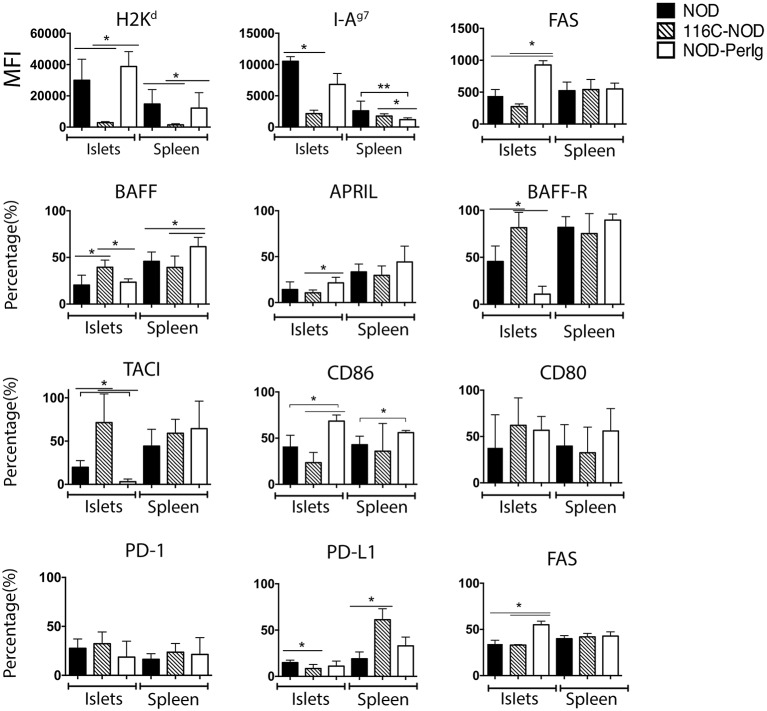
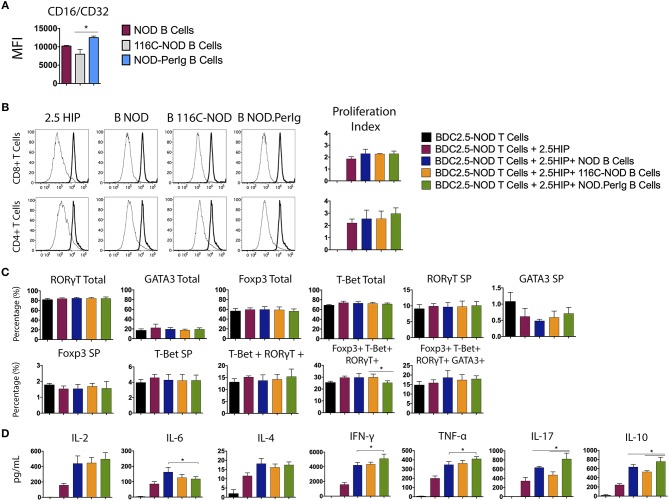
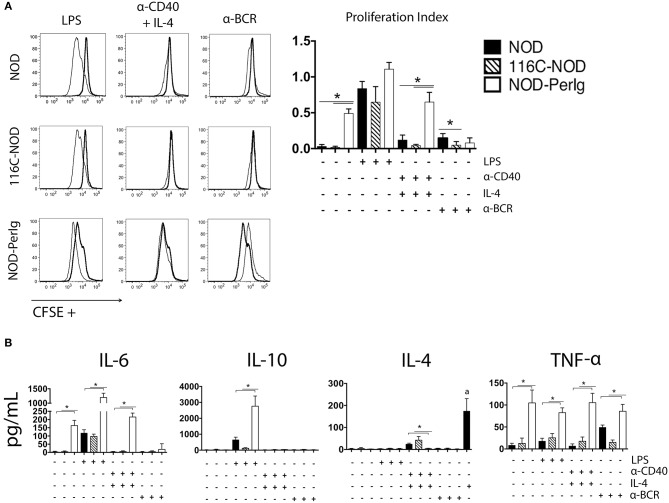
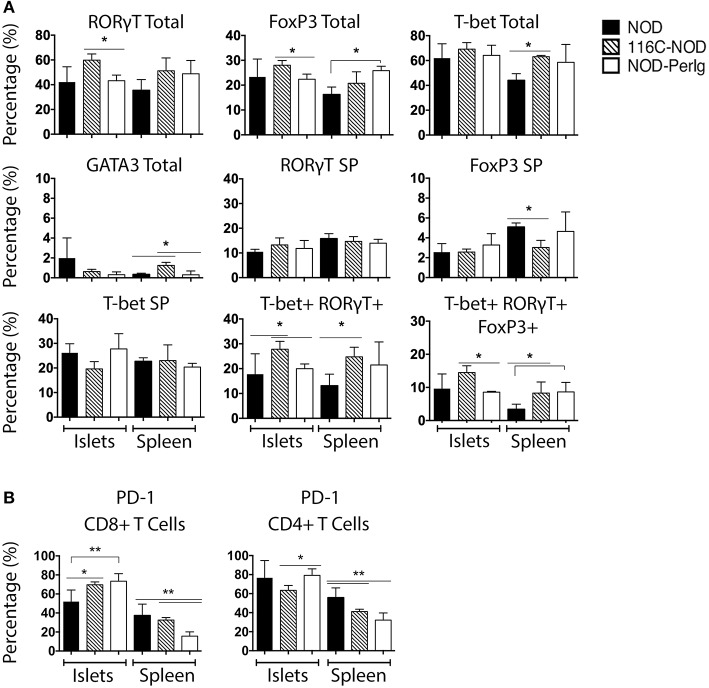
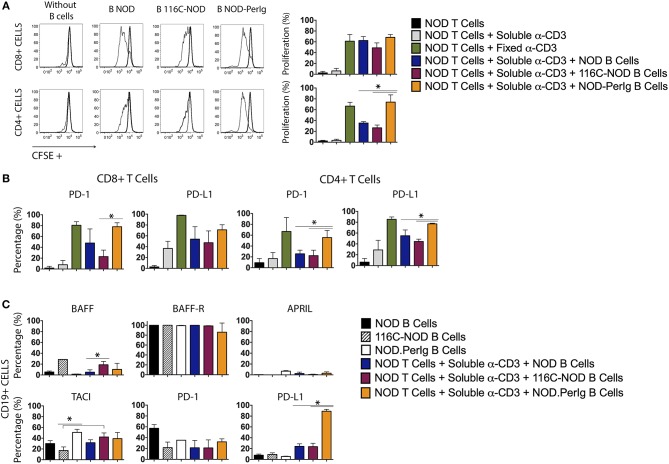
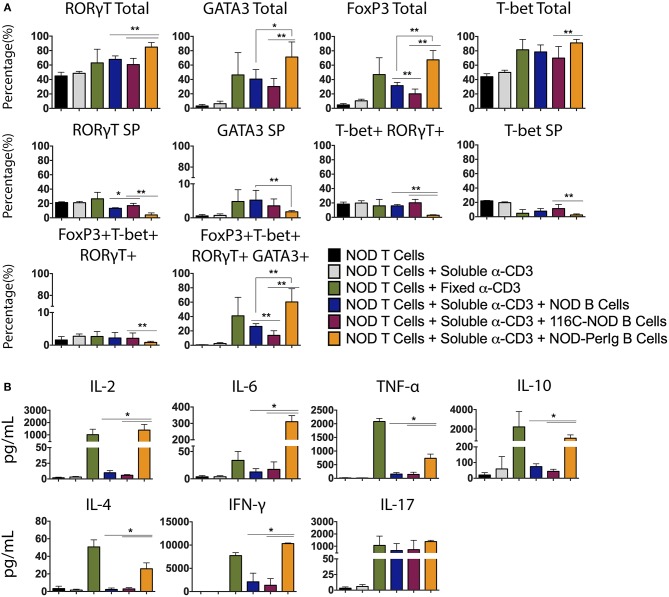
Previous studies indicate that B-lymphocytes play a key role activating diabetogenic T-lymphocytes during the development of autoimmune diabetes. Recently, two transgenic NOD mouse models were generated: the NOD- and the 116C-NOD mice. In NOD- mice, B-lymphocytes acquire an activated proliferative phenotype and support accelerated autoimmune diabetes development. In contrast, in 116C-NOD mice, B-lymphocytes display an anergic-like phenotype delaying autoimmune diabetes onset and decreasing disease incidence. The present study further evaluates the T- and B-lymphocyte phenotype in both models. In islet-infiltrating B-lymphocytes (IIBLs) from 116C-NOD mice, the expression of H2-K and H2-A is decreased, whereas that of BAFF, BAFF-R, and TACI is increased. In contrast, IIBLs from NOD- show an increase in CD86 and FAS expression. In addition, islet-infiltrating T-lymphocytes (IITLs) from NOD- mice exhibit an increase in PD-1 expression. Moreover, proliferation assays indicate a high capacity of B-lymphocytes from NOD- mice to secrete high amounts of cytokines and induce T-lymphocyte activation compared to 116C B-lymphocytes. This functional variability between 116C and B-lymphocytes ultimately results in differences in the ability to shape T-lymphocyte phenotype. These results support the role of B-lymphocytes as key regulators of T-lymphocytes in autoimmune diabetes and provide essential information on the phenotypic characteristics of the T- and B-lymphocytes involved in the autoimmune response in autoimmune diabetes.
先前的研究表明,B 淋巴细胞在自身免疫性糖尿病的发展过程中激活致糖尿病性 T 淋巴细胞起着关键作用。最近,生成了两种转基因 NOD 小鼠模型:NOD-和 116C-NOD 小鼠。在 NOD-小鼠中,B 淋巴细胞获得激活的增殖表型,并支持加速自身免疫性糖尿病的发展。相比之下,在 116C-NOD 小鼠中,B 淋巴细胞表现出类似无反应的表型,延迟自身免疫性糖尿病的发作并降低疾病发生率。本研究进一步评估了这两种模型中的 T 和 B 淋巴细胞表型。在 116C-NOD 小鼠的胰岛浸润 B 淋巴细胞(IIBL)中,H2-K 和 H2-A 的表达降低,而 BAFF、BAFF-R 和 TACI 的表达增加。相比之下,NOD-的 IIBL 显示出 CD86 和 FAS 表达增加。此外,NOD-小鼠的胰岛浸润 T 淋巴细胞(IITL)中 PD-1 的表达增加。此外,增殖实验表明,与 116C B 淋巴细胞相比,NOD-小鼠的 B 淋巴细胞具有更高的分泌大量细胞因子和诱导 T 淋巴细胞激活的能力。116C 和 B 淋巴细胞之间的这种功能变异性最终导致塑造 T 淋巴细胞表型的能力存在差异。这些结果支持 B 淋巴细胞作为自身免疫性糖尿病中 T 淋巴细胞的关键调节因子的作用,并提供了关于参与自身免疫反应的 T 和 B 淋巴细胞表型特征的重要信息。