Mirzanajafi-Zanjani Mina, Yousefi Mohammad, Ehsani Ali
Student Research Committee, Department of Food Science and Technology Tabriz University of Medical Sciences Tabriz Iran.
Department of Food Science and Technology, Food and Drug Safety Research Center Tabriz University of Medical Sciences Tabriz Iran.
Food Sci Nutr. 2019 Jul 18;7(8):2471-2484. doi: 10.1002/fsn3.1132. eCollection 2019 Aug.
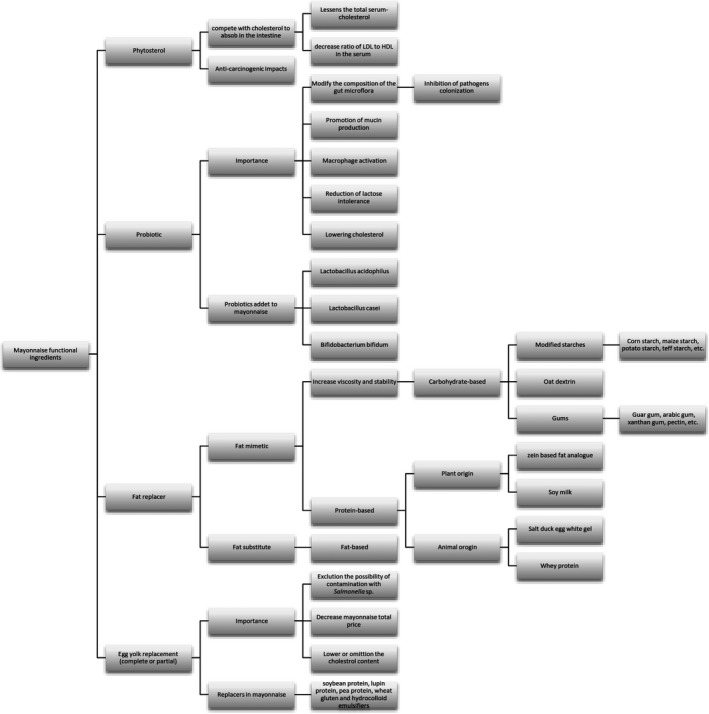
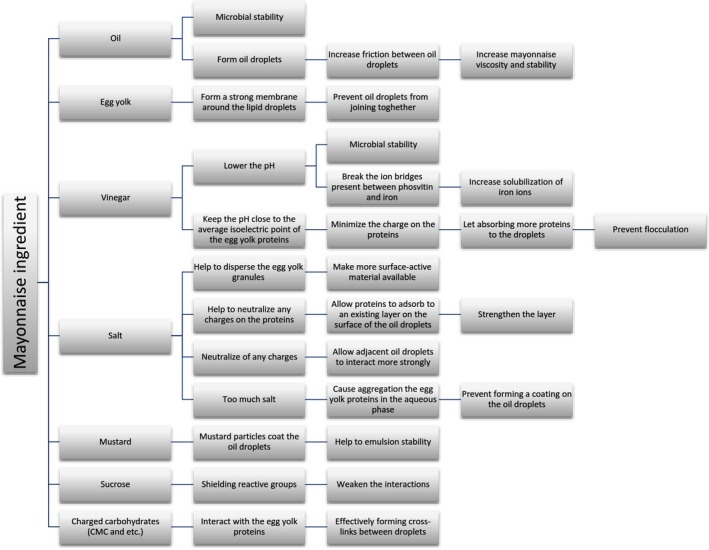
Mayonnaise is a semisolid oil-in-water (O/W) emulsion which is made through the careful blending of oil, vinegar, egg yolk, and spices (especially mustard). In addition, mayonnaise traditionally contains 70%-80% oil, and egg yolk is a key ingredient contributing to its stability. Despite concerns about high cholesterol level in egg yolk, it is yet the most widely utilized emulsifying agent owing to its high emulsifying capacity. Today, the public knowledge about diet and health has been incremented, compelling the people to consume foodstuffs containing functional features. Thus, consumers, aware of the considerable influence of the diet on their health, demand nutritious and healthier food. Mayonnaise is usually cited by health-related issues due to its high cholesterol and fat content. Many researchers have tried to replace fat, as well as egg yolk completely or partially; however, low-fat mayonnaises require extra ingredients to keep the stability. In other words, each ingredient plays a specific role in textural and oxidative stability, and using alternative emulsifiers and fat replacers may affect the sensorial, textural, and antioxidant features of mayonnaise. Furthermore, mayonnaise, like other high-fat foodstuffs, is vulnerable to auto-oxidation. In addition to using fat replacers, mayonnaise is accompanied with bioactive ingredients to produce a healthy system. Therefore in this review, we gathered a quick summary of the ideas, including lowering the cholesterol and fat and using natural antioxidants, prebiotics, and probiotics in order to produce a healthy and functional mayonnaise sauce.
蛋黄酱是一种水包油(O/W)型半固体乳化物,它是通过将油、醋、蛋黄和香料(尤其是芥末)仔细混合而成。此外,传统蛋黄酱含有70%-80%的油,蛋黄是有助于其稳定性的关键成分。尽管人们担心蛋黄中的胆固醇含量高,但由于其高乳化能力,它仍是使用最广泛的乳化剂。如今,公众对饮食与健康的认知有所提高,促使人们消费具有功能性的食品。因此,消费者意识到饮食对自身健康有重大影响,便要求食用营养更丰富、更健康的食品。蛋黄酱因其高胆固醇和高脂肪含量,常被提及与健康相关的问题。许多研究人员试图完全或部分替代脂肪以及蛋黄;然而,低脂蛋黄酱需要额外的成分来保持稳定性。换句话说,每种成分在质地和氧化稳定性方面都起着特定作用,使用替代乳化剂和脂肪替代品可能会影响蛋黄酱的感官、质地和抗氧化特性。此外,蛋黄酱与其他高脂肪食品一样,容易发生自动氧化。除了使用脂肪替代品外,蛋黄酱还添加了生物活性成分以形成一个健康的体系。因此,在本综述中,我们汇总了一些观点的简要概述,包括降低胆固醇和脂肪含量,以及使用天然抗氧化剂、益生元和益生菌来制作健康且具有功能性的蛋黄酱酱料。