Department of Immunology, College of Basic Medical Science, Jilin University, Changchun, Jilin 130021, P.R. China.
Department of Obstetrics and Gynecology, The First Hospital of Jilin University, Changchun, Jilin 130021, P.R. China.
Mol Med Rep. 2019 Oct;20(4):2990-3002. doi: 10.3892/mmr.2019.10535. Epub 2019 Jul 29.
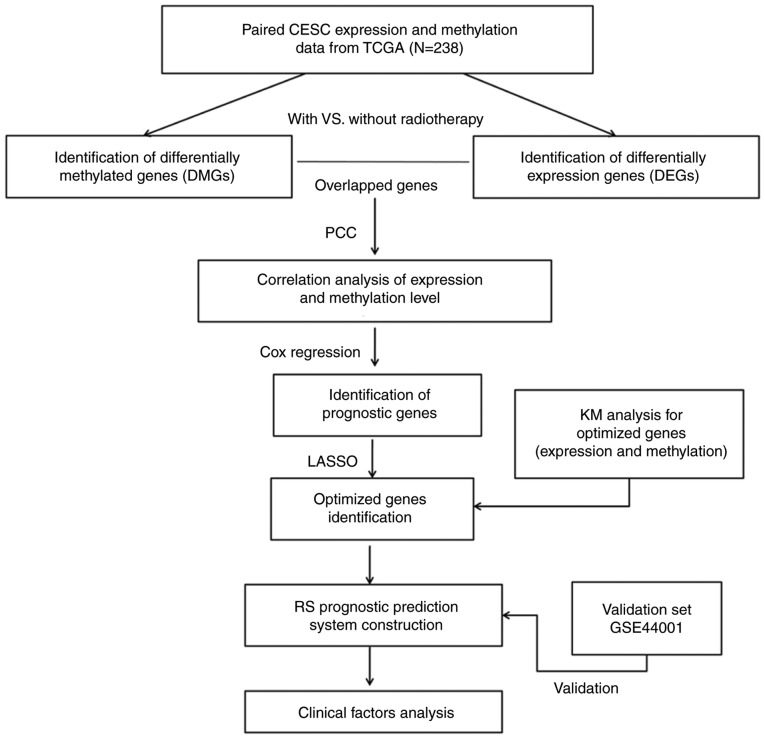
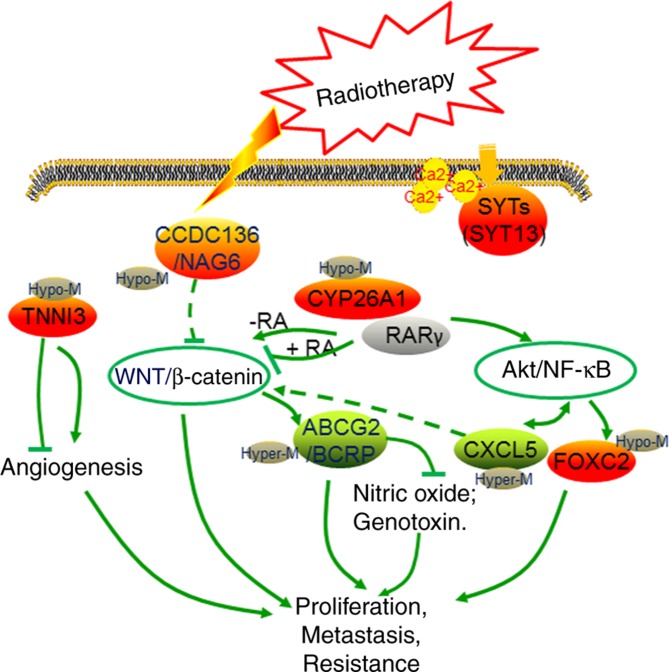
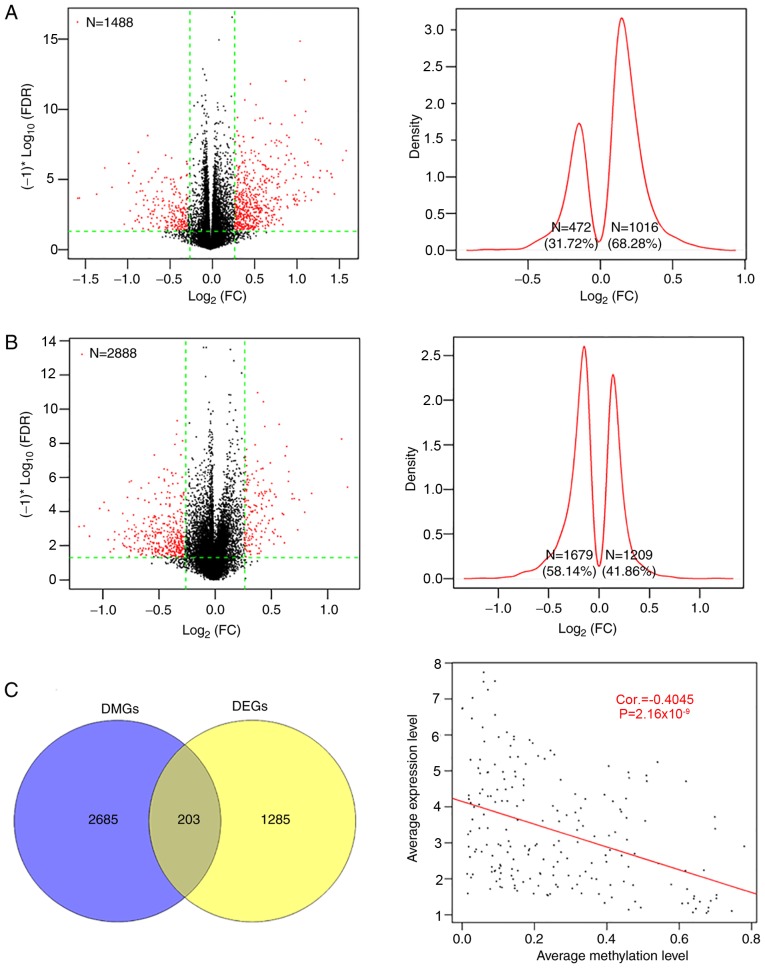
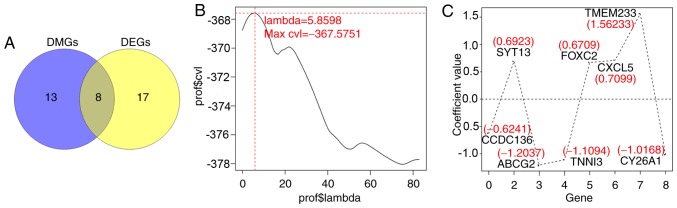
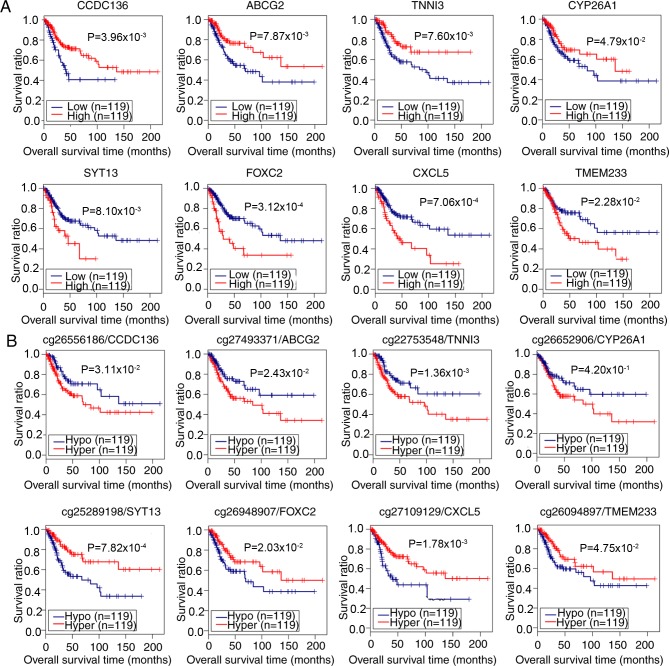
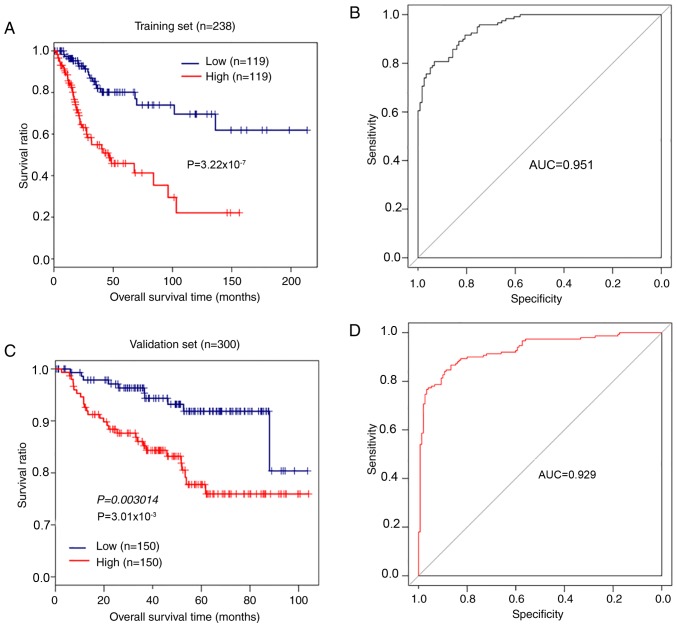
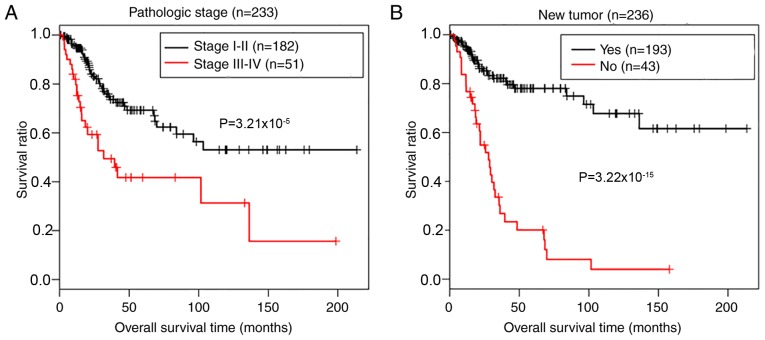
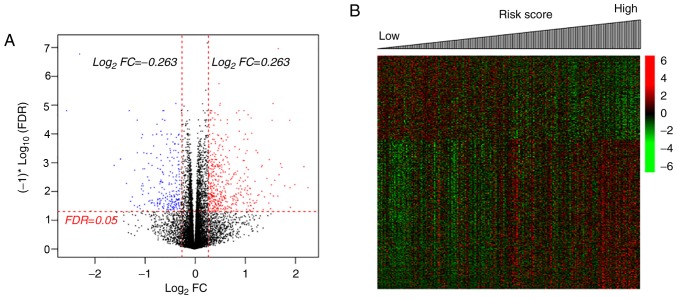
Gene expression and DNA methylation levels affect the outcomes of patients with cancer. The present study aimed to establish a multigene risk model for predicting the outcomes of patients with cervical cancer (CerC) treated with or without radiotherapy. RNA sequencing training data with matched DNA methylation profiles were downloaded from The Cancer Genome Atlas database. Patients were divided into radiotherapy and non‑radiotherapy groups according to the treatment strategy. Differently expressed and methylated genes between the two groups were identified, and 8 prognostic genes were identified using Cox regression analysis. The optimized risk model based on the 8‑gene signature was defined using the Cox's proportional hazards model. Kaplan‑Meier survival analysis indicated that patients with higher risk scores exhibited poorer survival compared with patients with lower risk scores (log‑rank test, P=3.22x10‑7). Validation using the GSE44001 gene set demonstrated that patients in the high‑risk group exhibited a shorter survival time comprared with the low‑risk group (log‑rank test, P=3.01x10‑3). The area under the receiver operating characteristic curve values for the training and validation sets were 0.951 and 0.929, respectively. Cox regression analyses indicated that recurrence and risk status were risk factors for poor outcomes in patients with CerC treated with or without radiotherapy. The present study defined that the 8‑gene signature was an independent risk factor for the prognosis of patients with CerC. The 8‑gene prognostic model had predictive power for CerC prognosis.
基因表达和 DNA 甲基化水平影响癌症患者的预后。本研究旨在建立一个多基因风险模型,以预测接受或未接受放疗的宫颈癌(CerC)患者的结局。从癌症基因组图谱数据库下载了具有匹配 DNA 甲基化图谱的 RNA 测序训练数据。根据治疗策略将患者分为放疗组和非放疗组。两组间差异表达和甲基化基因,并使用 Cox 回归分析鉴定 8 个预后基因。基于 8 基因特征的优化风险模型使用 Cox 比例风险模型进行定义。Kaplan-Meier 生存分析表明,风险评分较高的患者与风险评分较低的患者相比,生存情况较差(对数秩检验,P=3.22x10⁻⁷)。使用 GSE44001 基因集进行验证表明,高风险组的患者生存时间比低风险组短(对数秩检验,P=3.01x10⁻³)。训练集和验证集的受试者工作特征曲线下面积分别为 0.951 和 0.929。Cox 回归分析表明,复发和风险状况是接受或未接受放疗的 CerC 患者预后不良的危险因素。本研究定义 8 基因特征是 CerC 患者预后的独立危险因素。8 基因预后模型对 CerC 预后具有预测能力。