Rider Sean M, Mizuno Shuichi, Kang James D
Department of Orthopedic Surgery, Brigham and Women's Hospital, Harvard Medical School, Boston, Massachusetts, USA.
Spine Surg Relat Res. 2018 Apr 7;3(1):1-11. doi: 10.22603/ssrr.2017-0095. eCollection 2019 Jan 25.
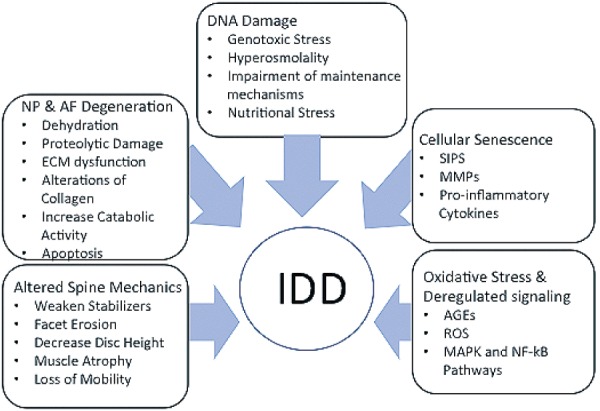
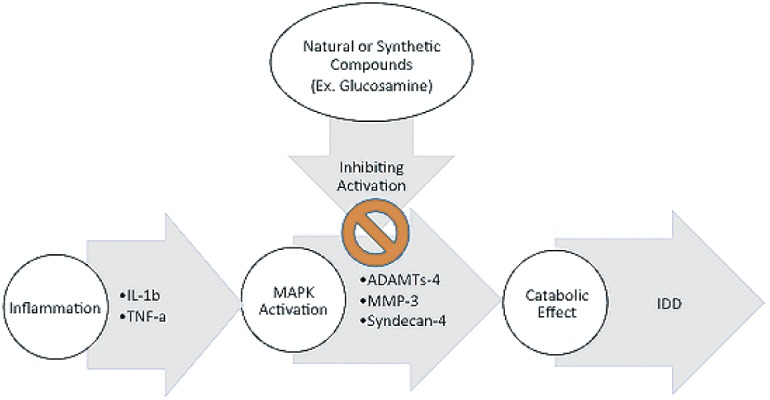
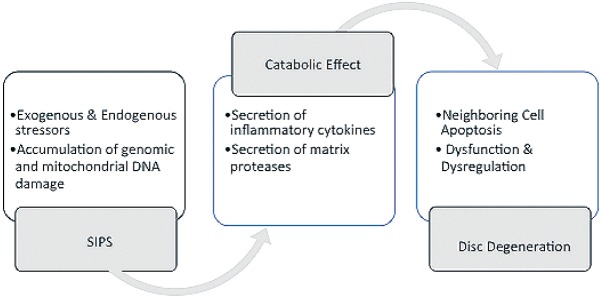
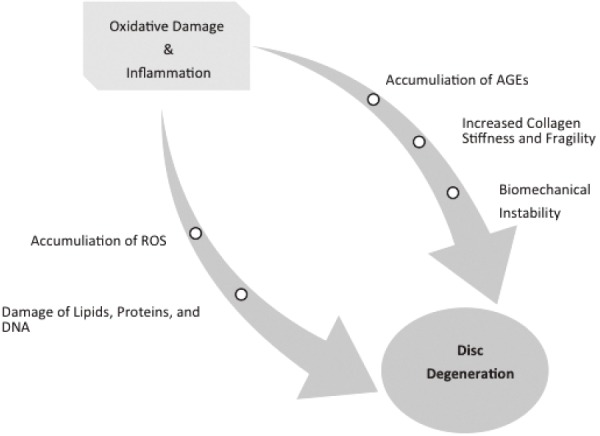
Intervertebral disc degeneration is a well-known cause of disability, the result of which includes neck and back pain with associated mobility limitations. The purpose of this article is to provide an overview of the known molecular mechanisms through which intervertebral disc degeneration occurs as a result of complex interactions of exogenous and endogenous stressors. This review will focus on some of the identified molecular changes leading to the deterioration of the extracellular matrix of both the annulus fibrosus and nucleus pulposus. In addition, we will provide a summation of our current knowledge supporting the role of associated DNA and intracellular damage, cellular senescence's catabolic effects, oxidative stress, and the cell's inappropriate response to damage in contributing to intervertebral disc degeneration. Our current understanding of the molecular mechanisms through which intervertebral disc degeneration occurs provides us with abundant insight into how physical and chemical changes exacerbate the degenerative process of the entire spine. Furthermore, we will describe some of the related molecular targets and therapies that may contribute to intervertebral repair and regeneration.
椎间盘退变是一种众所周知的致残原因,其结果包括颈部和背部疼痛以及相关的活动受限。本文的目的是概述已知的分子机制,通过这些机制,由于外源性和内源性应激源的复杂相互作用,椎间盘发生退变。本综述将聚焦于一些已确定的分子变化,这些变化导致纤维环和髓核的细胞外基质恶化。此外,我们将总结目前的知识,以支持相关DNA和细胞内损伤、细胞衰老的分解代谢作用、氧化应激以及细胞对损伤的不适当反应在椎间盘退变中的作用。我们目前对椎间盘退变发生的分子机制的理解,为我们深入了解物理和化学变化如何加剧整个脊柱的退变过程提供了丰富的见解。此外,我们将描述一些可能有助于椎间盘修复和再生的相关分子靶点和疗法。