Departamento de Biodiversidad y Conservación, Instituto Mediterráneo de Estudios Avanzados (CSIC-UIB), Miquel Marquès, 21, 07190, Esporles, Illes Balears, Spain.
ARAID Foundation - IUCA Grupo-Aragosaurus, Facultad de Ciencias, Universidad de Zaragoza, Pedro Cerbuna 12 -, 50009, Zaragoza, Spain.
BMC Genomics. 2019 Aug 23;20(1):665. doi: 10.1186/s12864-019-6026-1.
In recent years, Next Generation Sequencing (NGS) has accelerated the generation of full mitogenomes, providing abundant material for studying different aspects of molecular evolution. Some mitogenomes have been observed to harbor atypical sequences with bizarre secondary structures, which origins and significance could only be fully understood in an evolutionary framework.
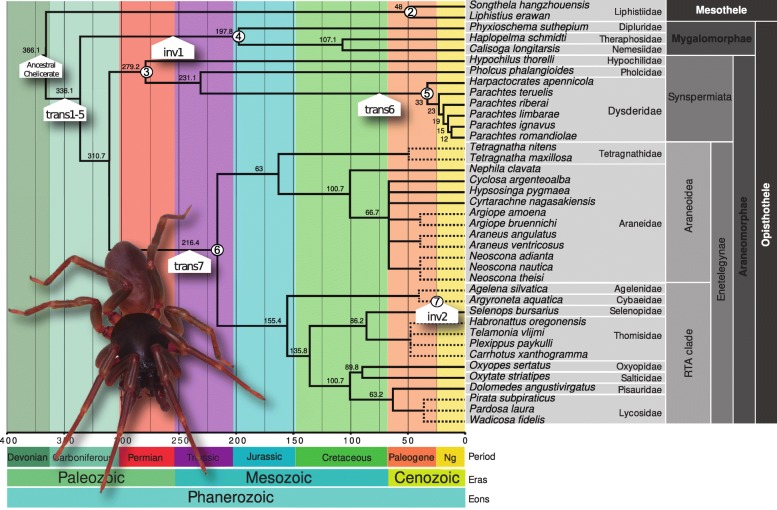
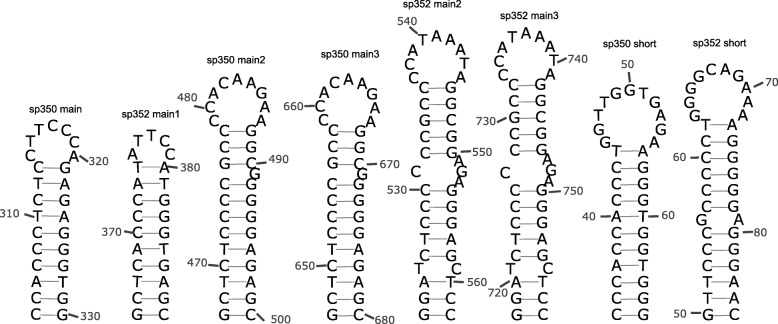
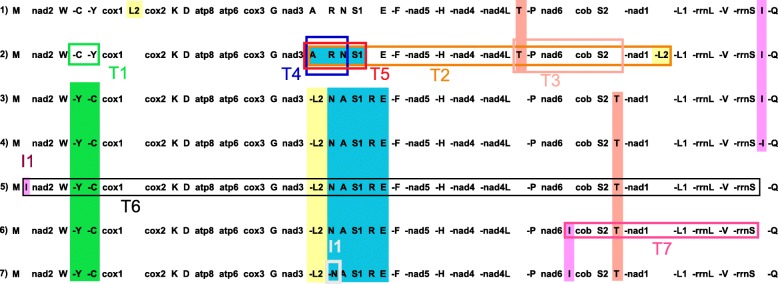
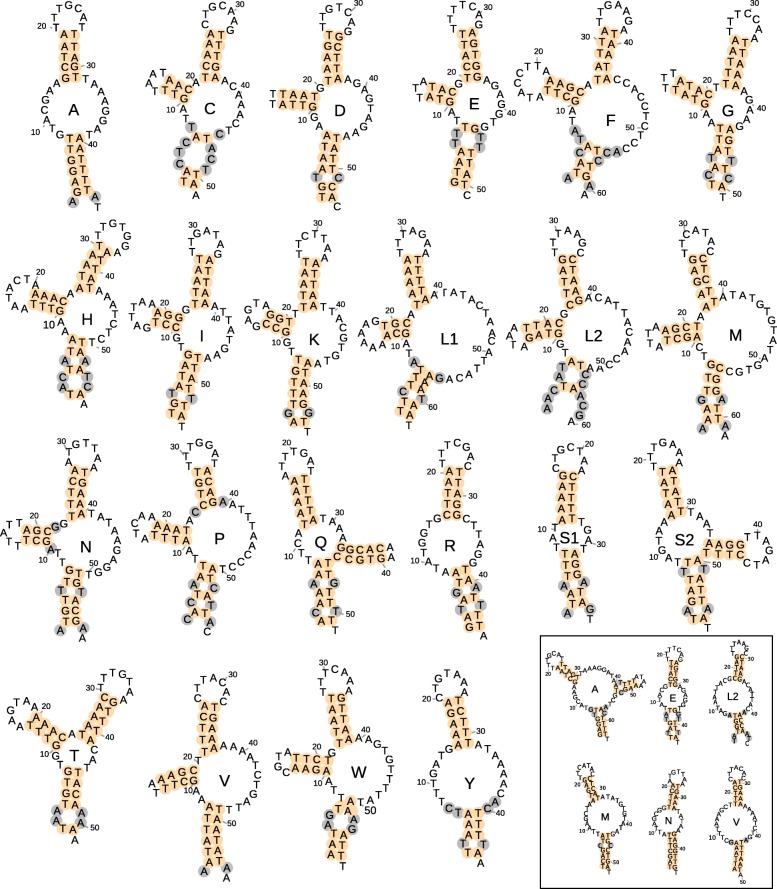
Here we report and analyze the mitochondrial sequences and gene arrangements of six closely related spiders in the sister genera Parachtes and Harpactocrates, which belong to the nocturnal, ground dwelling family Dysderidae. Species of both genera have compacted mitogenomes with many overlapping genes and strikingly reduced tRNAs that are among the shortest described within metazoans. Thanks to the conservation of the gene order and the nucleotide identity across close relatives, we were able to predict the secondary structures even on arm-less tRNAs, which would be otherwise unattainable for a single species. They exhibit aberrant secondary structures with the lack of either DHU or TΨC arms and many miss-pairings in the acceptor arm but this degeneracy trend goes even further since at least four tRNAs are arm-less in the six spider species studied.
The conservation of at least four arm-less tRNA genes in two sister spider genera for about 30 myr suggest that these genes are still encoding fully functional tRNAs though they may be post-transcriptionally edited to be fully functional as previously described in other species. We suggest that the presence of overlapping and truncated tRNA genes may be related and explains why spider mitogenomes are smaller than those of other invertebrates.
近年来,下一代测序(NGS)加速了完整线粒体基因组的产生,为研究分子进化的不同方面提供了丰富的材料。一些线粒体基因组中存在具有奇异二级结构的非典型序列,其起源和意义只有在进化框架中才能完全理解。
我们在这里报告并分析了属于夜行动物、地面居住的 Dysderidae 科的两个姐妹属 Parachtes 和 Harpactocrates 的 6 种密切相关蜘蛛的线粒体序列和基因排列。这两个属的物种都具有紧凑的线粒体基因组,许多基因重叠,tRNA 明显减少,是后生动物中最短的之一。由于基因排列和核苷酸同一性在近亲之间的保守性,我们能够预测二级结构,即使对于没有臂的 tRNA 也是如此,否则对于单个物种来说是无法实现的。它们表现出异常的二级结构,要么缺乏 DHU 或 TΨC 臂,要么在接受臂中存在许多错配,但这种退化趋势甚至更进一步,因为在研究的 6 种蜘蛛物种中,至少有 4 种 tRNA 没有臂。
至少有 4 种无臂 tRNA 基因在两个姐妹蜘蛛属中保守了约 3000 万年,这表明这些基因仍然编码功能齐全的 tRNA,尽管它们可能像以前在其他物种中描述的那样,经过转录后编辑才能完全发挥功能。我们认为重叠和截断的 tRNA 基因的存在可能是相关的,并解释了为什么蜘蛛线粒体基因组比其他无脊椎动物的更小。