Pons Joan, Bauzà-Ribot Maria M, Jaume Damià, Juan Carlos
IMEDEA (CSIC-UIB), Mediterranean Institute for Advanced Studies, c/Miquel Marquès 21, 07190 Esporles, Spain.
BMC Genomics. 2014 Jul 6;15(1):566. doi: 10.1186/1471-2164-15-566.
Comparative mitochondrial genomic analyses are rare among crustaceans below the family or genus level. The obliged subterranean crustacean amphipods of the family Metacrangonyctidae, found from the Hispaniola (Antilles) to the Middle East, including the Canary Islands and the peri-Mediterranean region, have an evolutionary history and peculiar biogeography that can respond to Tethyan vicariance. Indeed, recent phylogenetic analysis using all protein-coding mitochondrial sequences and one nuclear ribosomal gene have lent support to this hypothesis (Bauzà-Ribot et al. 2012).
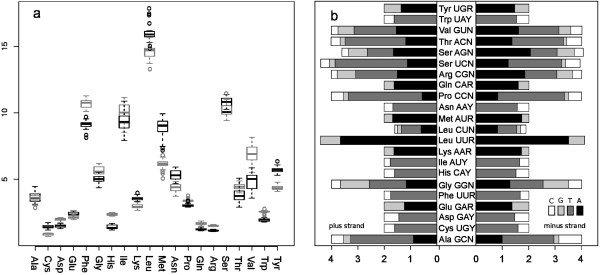
We present the analyses of mitochondrial genome sequences of 21 metacrangonyctids in the genera Metacrangonyx and Longipodacrangonyx, covering the entire geographical range of the family. Most mitogenomes were attained by next-generation sequencing techniques using long-PCR fragments sequenced by Roche FLX/454 or GS Junior pyro-sequencing, obtaining a coverage depth per nucleotide of up to 281×. All mitogenomes were AT-rich and included the usual 37 genes of the metazoan mitochondrial genome, but showed a unique derived gene order not matched in any other amphipod mitogenome. We compare and discuss features such as strand bias, phylogenetic informativeness, non-synonymous/synonymous substitution rates and other mitogenomic characteristics, including ribosomal and transfer RNAs annotation and structure.
Next-generation sequencing of pooled long-PCR amplicons can help to rapidly generate mitogenomic information of a high number of related species to be used in phylogenetic and genomic evolutionary studies. The mitogenomes of the Metacrangonyctidae have the usual characteristics of the metazoan mitogenomes (circular molecules of 15,000-16,000 bp, coding for 13 protein genes, 22 tRNAs and two ribosomal genes) and show a conserved gene order with several rearrangements with respect to the presumed Pancrustacean ground pattern. Strand nucleotide bias appears to be reversed with respect to the condition displayed in the majority of crustacean mitogenomes since metacrangonyctids show a GC-skew at the (+) and (-) strands; this feature has been reported also in the few mitogenomes of Isopoda (Peracarida) known thus far. The features of the rRNAs, tRNAs and sequence motifs of the control region of the Metacrangonyctidae are similar to those of the few crustaceans studied at present.
在科级或属级以下的甲壳类动物中,比较线粒体基因组分析很少见。发现于伊斯帕尼奥拉岛(安的列斯群岛)至中东地区,包括加那利群岛和地中海周边地区的穴居性十足目甲壳动物Meta crangonyctidae科,具有可响应特提斯海间断分布的进化历史和独特生物地理学。事实上,最近使用所有蛋白质编码线粒体序列和一个核糖体基因进行的系统发育分析支持了这一假说(Bauzà-Ribot等人,2012年)。
我们展示了Meta crangonyx属和Longipodacrangonyx属21种Meta crangonyctidae科动物的线粒体基因组序列分析,涵盖了该科的整个地理范围。大多数线粒体基因组是通过下一代测序技术获得的,使用Roche FLX/454或GS Junior焦磷酸测序对长PCR片段进行测序,每个核苷酸的覆盖深度高达281倍。所有线粒体基因组都富含AT,包含后生动物线粒体基因组通常的37个基因,但显示出一种独特的衍生基因排列顺序,在任何其他十足目线粒体基因组中都未发现与之匹配的情况。我们比较并讨论了链偏向、系统发育信息性、非同义/同义替换率以及其他线粒体基因组特征,包括核糖体RNA和转运RNA的注释与结构。
对合并的长PCR扩增子进行下一代测序有助于快速生成大量相关物种的线粒体基因组信息,用于系统发育和基因组进化研究。Meta crangonyctidae科的线粒体基因组具有后生动物线粒体基因组的常见特征(15,000 - 16,000 bp的环状分子,编码13个蛋白质基因、22个tRNA和两个核糖体基因),并且相对于假定的泛甲壳动物基本模式,显示出一种具有若干重排的保守基因排列顺序。与大多数甲壳类线粒体基因组所显示的情况相比,链核苷酸偏向似乎发生了反转,因为Meta crangonyctidae科动物在(+)链和(-)链上均显示出GC偏向;在迄今为止已知的少数等足目(鳃足亚纲)线粒体基因组中也报道了这一特征。Meta crangonyctidae科的rRNA、tRNA和控制区序列基序的特征与目前研究的少数甲壳类动物相似。