Department of Nephrology, Monash Medical Centre, Melbourne, Australia.
Monash University, Melbourne, Australia.
BMC Nephrol. 2019 Aug 22;20(1):330. doi: 10.1186/s12882-019-1474-z.
Proteinuria is a common clinical presentation, the diagnostic workup for which involves many non-invasive and invasive investigations. We report on two siblings that highlight the clinically relevant functional role of cubulin for albumin resorption in the proximal tubule and supports the use of genomic sequencing early in the diagnostic work up of patients who present with proteinuria.
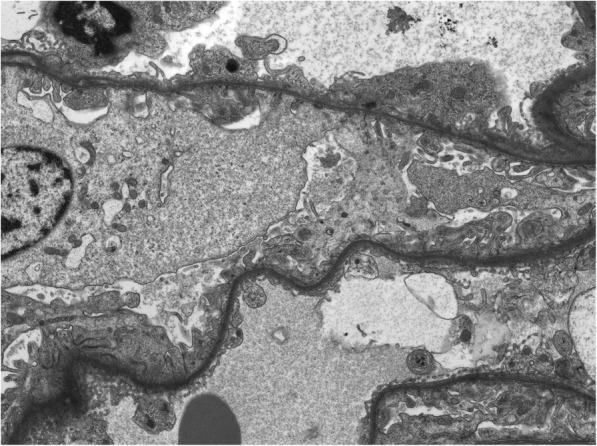
An 8-year-old boy was referred with an incidental finding of proteinuria. All preliminary investigations were unremarkable. Further assessment revealed consanguineous family history and a brother with isolated proteinuria. Renal biopsy demonstrated normal light microscopy and global glomerular basement membrane thinning on electron microscopy. Chromosomal microarray revealed long continuous stretches of homozygosity (LCSH) representing ~ 4.5% of the genome. Shared regions of LCSH between the brothers were identified and their further research genomic analysis implicated a homozygous stop-gain variant in CUBN (10p12.31).
CUBN mutations have been implicated as a hereditary cause of megaloblastic anaemia and variable proteinuria. This is the second reported family with isolated proteinuria due to biallelic CUBN variants in the absence of megaloblastic anaemia, demonstrating the ability of genomic testing to identify genetic causes of nephropathy within expanding associated phenotypic spectra. Genomic sequencing, undertaken earlier in the diagnostic trajectory, may reduce the need for invasive investigations and the time to definitive diagnosis for patients and families.
蛋白尿是一种常见的临床症状,其诊断工作需要进行许多非侵入性和侵入性检查。我们报告了两例兄妹病例,强调了 cubulin 在近端肾小管中对白蛋白重吸收的功能作用,支持在出现蛋白尿的患者的诊断工作中尽早进行基因组测序。
一名 8 岁男孩因蛋白尿的偶然发现而被转介。所有初步检查均无异常。进一步评估显示家族中有近亲结婚史,且有一个哥哥也有单纯性蛋白尿。肾脏活检显示光镜下正常,电镜下肾小球基底膜整体变薄。染色体微阵列显示长连续纯合区(LCSH),占基因组的约 4.5%。兄弟之间共享 LCSH 区域,并通过进一步的全基因组分析发现 CUBN(10p12.31)存在纯合致停突变。
CUBN 突变已被认为是巨幼细胞性贫血和可变蛋白尿的遗传性原因。这是第二个报道的家族性孤立性蛋白尿病例,其原因是 CUBN 双等位基因突变,而无巨幼细胞性贫血,这表明基因组检测能够在不断扩大的相关表型谱中识别出肾病的遗传原因。在诊断轨迹中更早地进行基因组测序,可能减少对侵入性检查的需求,并缩短患者和家庭获得明确诊断的时间。