Department of Pediatrics, Tongji Hospital, Tongji Medical college, Huazhong University of Science and Technology, Jiefang Ave. No. 1095, Wuhan, 430030, China.
Department of Neurosurgery, Tongji Hospital, Tongji Medical college, Huazhong University of Science and Technology, Wuhan, China.
BMC Nephrol. 2022 Jan 3;23(1):15. doi: 10.1186/s12882-021-02654-x.
Imerslund-Gräsbeck Syndrome (IGS) is mainly caused by CUBN gene biallelic mutations. Proteinuria accompanies IGS specific symptoms in about half of the patients, isolated proteinuria is rarely reported. Here we present 3 patients with isolated proteinuria and focal segmental glomerulosclerosis (FSGS) caused by CUBN gene biallelic pathogenic variants.
Whole exome sequencing was performed on three children with isolated proteinuria. CUBN gene biallelic pathogenic variants were found and then verified by sanger sequencing. Their clinical, pathological and molecular genetic characteristics were analyzed and correlated accordingly.
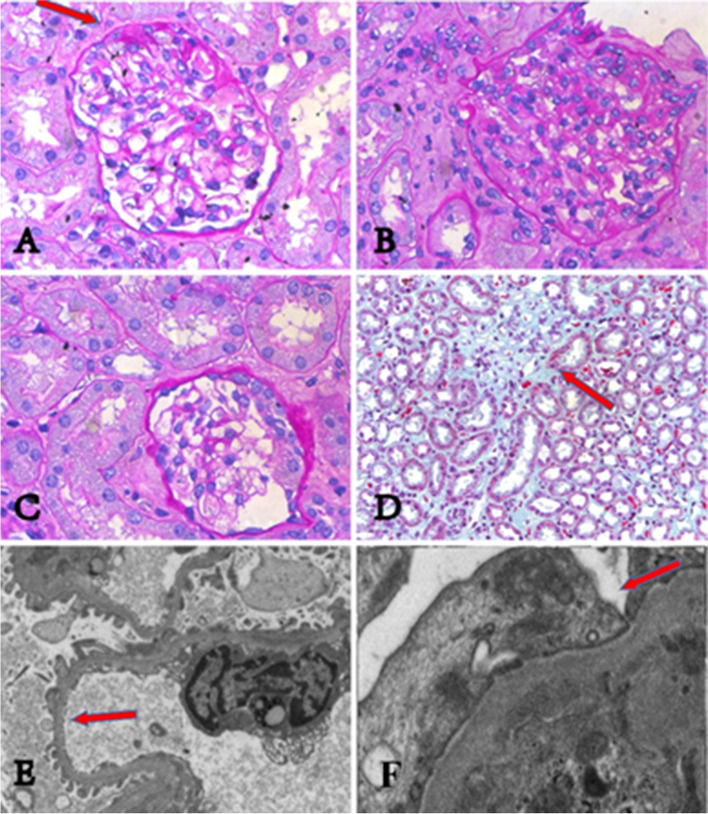
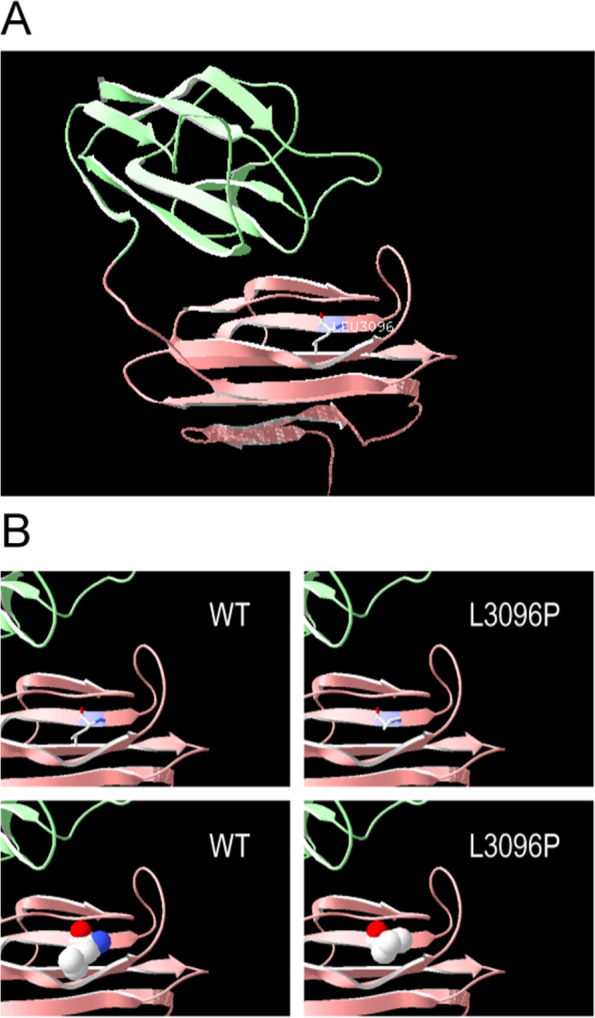
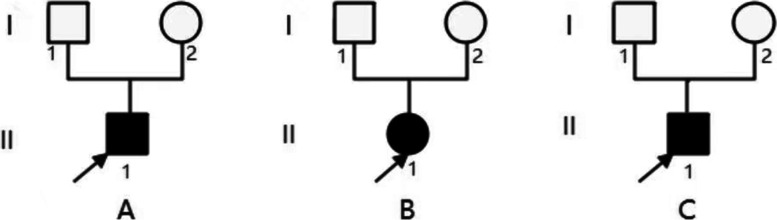
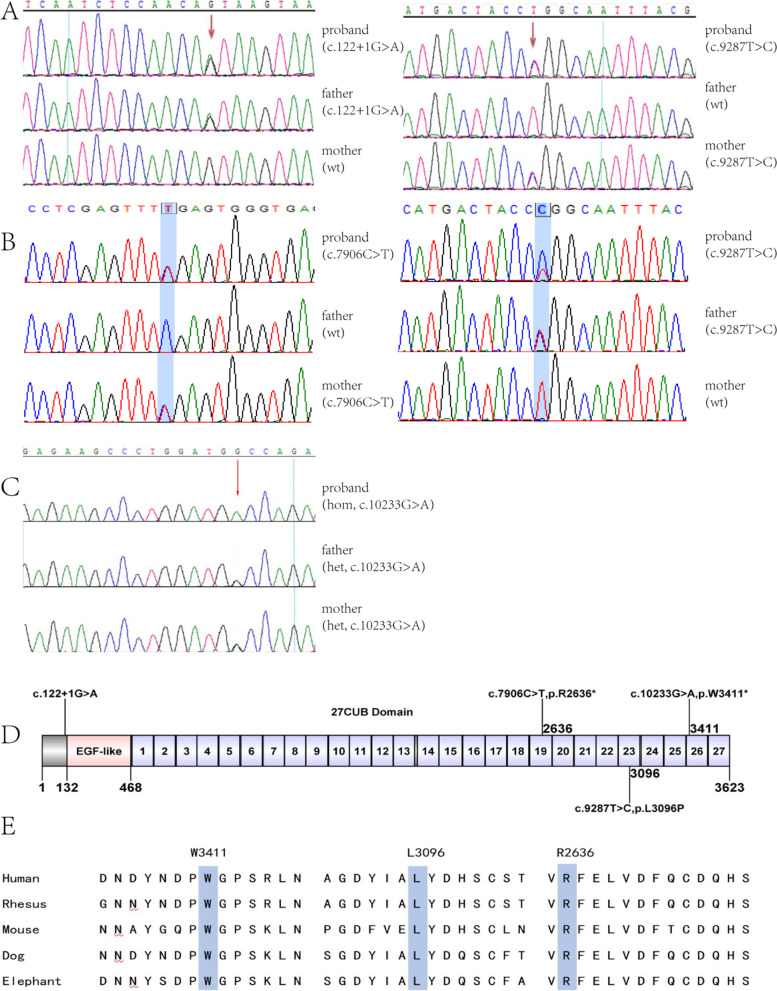
All three children presented with isolated proteinuria, no megaloblastic anemia. Their urine levels of β2 microglobulin were normal or slightly higher. Renal biopsies showed focal segmental glomerulosclerosis with mild glomerular mesangial hypercellularity, partial effacement of foot processes and podocyte microvillation. Two of them were found to carry compound heterozygous mutations and one homozygous mutation of CUBN gene. Totally four CUBN gene biallelic pathogenic variants were identified, including c.9287 T > C (p.L3096P), c.122 + 1G > A, c.7906C > T (p.R2636*), c.10233G > A (p.W3411*). Except for intron splice-site mutation, all other variants are located in highly conserved sites of CUB domain for binding to albumin.
The results demonstrate that CUBN gene mutations may cause isolated proteinuria pathologically presented as FSGS. Our cases extend the spectrum of renal manifestation and genotype of CUBN gene mutations.
先天性巨膀胱- 肾小球间质性肾炎(IGS)主要由 CUBN 基因双等位基因突变引起。大约一半的患者伴有 IGS 特异性症状的蛋白尿,孤立性蛋白尿则很少报道。本文报道了 3 例由 CUBN 基因双等位致病性变异引起的孤立性蛋白尿伴局灶节段性肾小球硬化(FSGS)的患者。
对 3 例孤立性蛋白尿患儿进行全外显子组测序。发现 CUBN 基因双等位致病性变异,然后通过 Sanger 测序进行验证。分析其临床、病理和分子遗传学特征,并进行相应的相关性分析。
3 例患儿均表现为孤立性蛋白尿,无巨幼细胞性贫血。尿β2 微球蛋白水平正常或略有升高。肾活检显示局灶节段性肾小球硬化,肾小球系膜细胞轻度增生,部分足突融合和足突微绒毛化。其中 2 例携带复合杂合突变,1 例携带 CUBN 基因纯合突变。共鉴定出 4 种 CUBN 基因双等位致病性变异,包括 c.9287T>C(p.L3096P)、c.122+1G>A、c.7906C>T(p.R2636*)、c.10233G>A(p.W3411*)。除内含子剪接位点突变外,其他所有变异均位于与白蛋白结合的 CUB 结构域高度保守的位点。
这些结果表明,CUBN 基因突变可能导致病理表现为 FSGS 的孤立性蛋白尿。本病例扩展了 CUBN 基因突变的肾脏表现和基因型谱。