BK21 PLUS Team, College of Pharmacy, The Catholic University of Korea, Bucheon, 14662, Republic of Korea.
Sci Rep. 2019 Aug 22;9(1):12277. doi: 10.1038/s41598-019-48794-x.
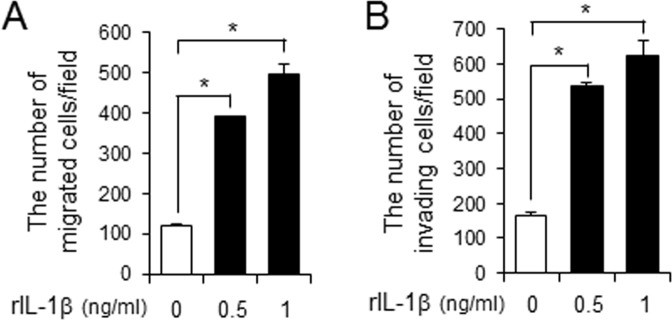
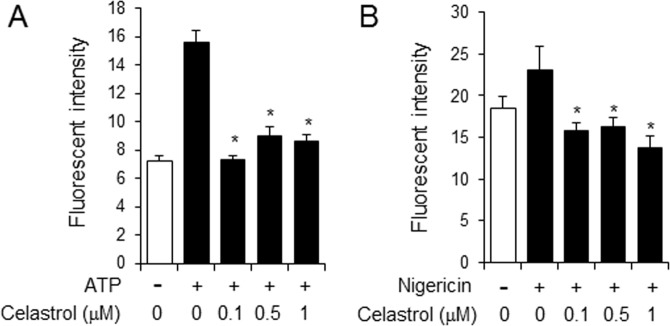
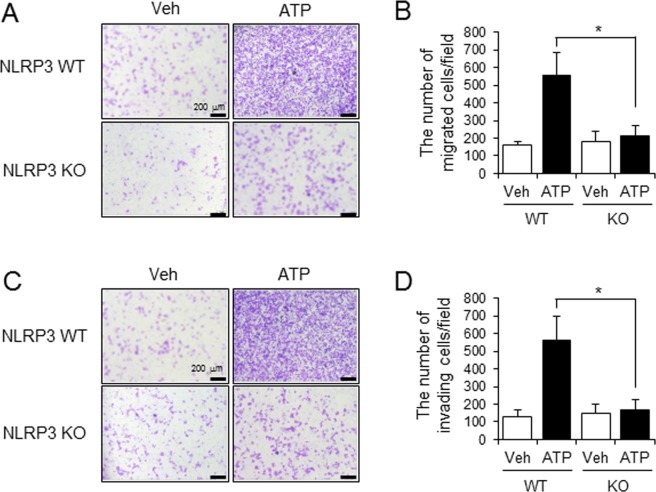
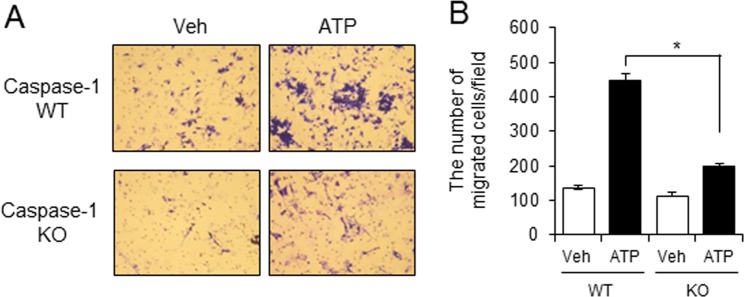
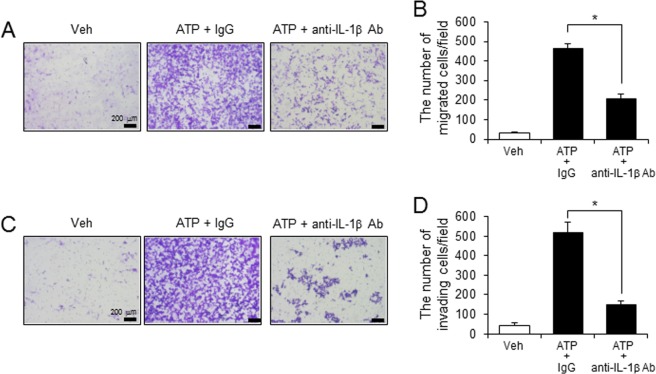
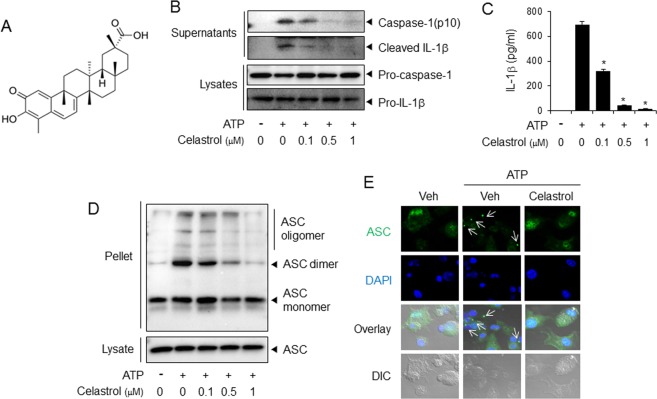
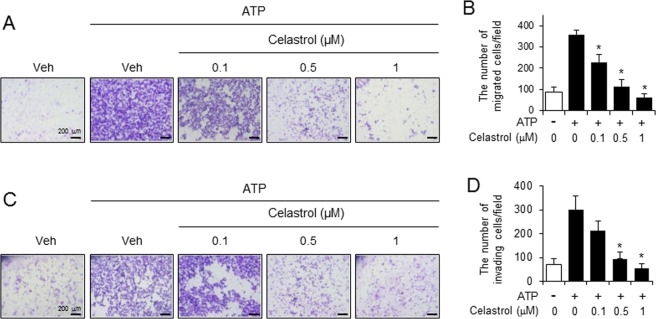
Tumor microenvironment favors tumor cells to promote their growth and metastasis such as migration, invasion, and angiogenesis. IL-1β, one of the inflammatory cytokines released from myeloid cells in tumor microenvironment, plays an important role in development and progress of tumor. The activation of inflammasome is a critical step to secrete mature IL-1β through stepwise reactions to activate capspase-1. Therefore, we investigated whether the inhibition of NACHT, LRR and PYD domains-containing protein 3 (NLRP3) inflammasome in macrophages regulated the metastatic potential of tumor cells. NLRP3 inflammasome was activated by ATP in bone marrow-derived primary mouse macrophages. The metastatic potential of mouse melanoma cell line (B16F10) was determined by migration and invasion assays with transwell system. ATP-treated wild-type macrophages increased the migration and invasion of melanoma cells. However, NLRP3- or caspase-1-knockout macrophages exhibited greatly diminished ability to promote the migration and invasion of melanoma cells. In addition, treatment with celastrol, an inhibitor of NLRP3 inflammasome, reduced the potency of macrophages to stimulate migration and invasion of melanoma cells. The results demonstrate that inhibition of the NLRP3 inflammasome in macrophages by genetic deficiency or a pharmacological inhibitor is linked to suppression of the metastatic potential of tumor cells. The results would provide a novel anti-cancer strategy to modulate tumor microenvironment by suppressing NLRP3 inflammasome and consequently reducing IL-1β production.
肿瘤微环境有利于肿瘤细胞促进其生长和转移,如迁移、侵袭和血管生成。IL-1β是肿瘤微环境中髓系细胞释放的炎症细胞因子之一,在肿瘤的发生和发展中发挥重要作用。炎性小体的激活是通过逐步反应分泌成熟的 IL-1β激活 capspase-1 的关键步骤。因此,我们研究了巨噬细胞中 NACHT、LRR 和 PYD 结构域包含蛋白 3(NLRP3)炎性小体的抑制是否调节肿瘤细胞的转移潜力。ATP 在骨髓来源的原代小鼠巨噬细胞中激活 NLRP3 炎性小体。通过 Transwell 系统的迁移和侵袭实验测定小鼠黑色素瘤细胞系(B16F10)的转移潜力。ATP 处理的野生型巨噬细胞增加了黑色素瘤细胞的迁移和侵袭。然而,NLRP3 或 caspase-1 敲除巨噬细胞表现出极大地减弱促进黑色素瘤细胞迁移和侵袭的能力。此外,用 celastrol(NLRP3 炎性小体的抑制剂)处理可降低巨噬细胞刺激黑色素瘤细胞迁移和侵袭的能力。结果表明,通过遗传缺陷或药理学抑制剂抑制巨噬细胞中的 NLRP3 炎性小体与抑制肿瘤细胞的转移潜力有关。该结果为通过抑制 NLRP3 炎性小体从而减少 IL-1β 产生来调节肿瘤微环境提供了一种新的抗癌策略。