Department of Research and Development, Foundation Medicine, Inc., Cambridge, Massachusetts.
Department of Research and Development, Foundation Medicine, Inc., Cambridge, Massachusetts.
J Mol Diagn. 2019 Nov;21(6):1053-1066. doi: 10.1016/j.jmoldx.2019.06.011. Epub 2019 Aug 22.
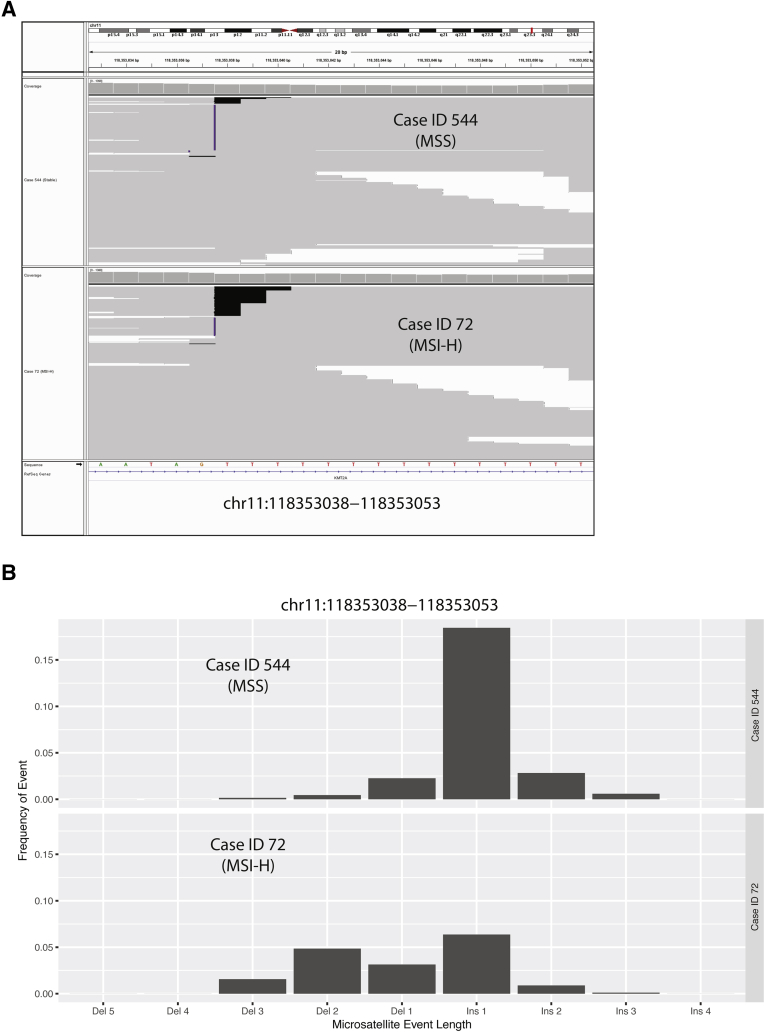
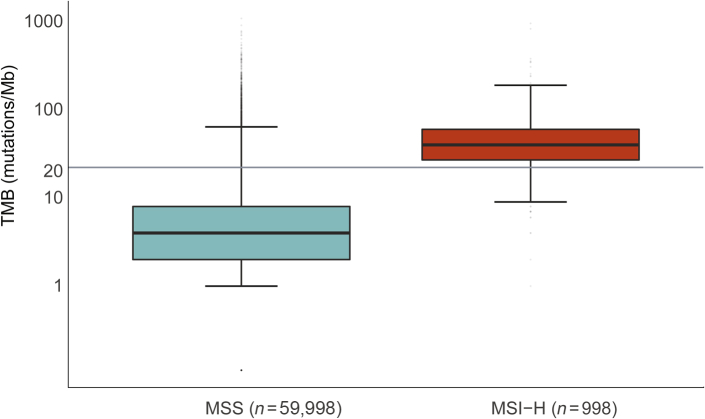
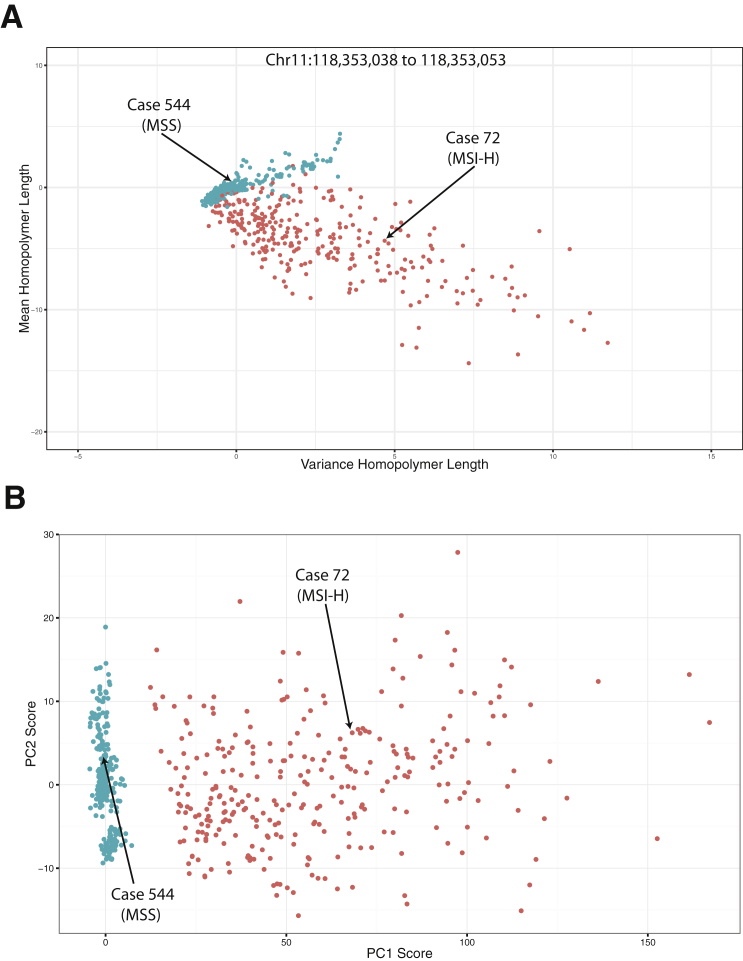
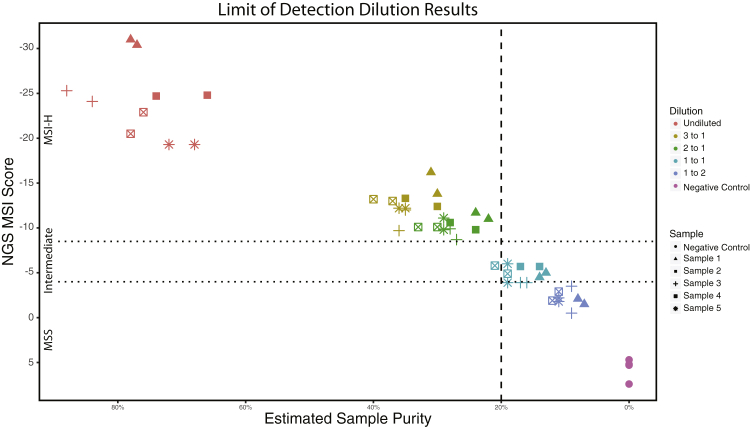
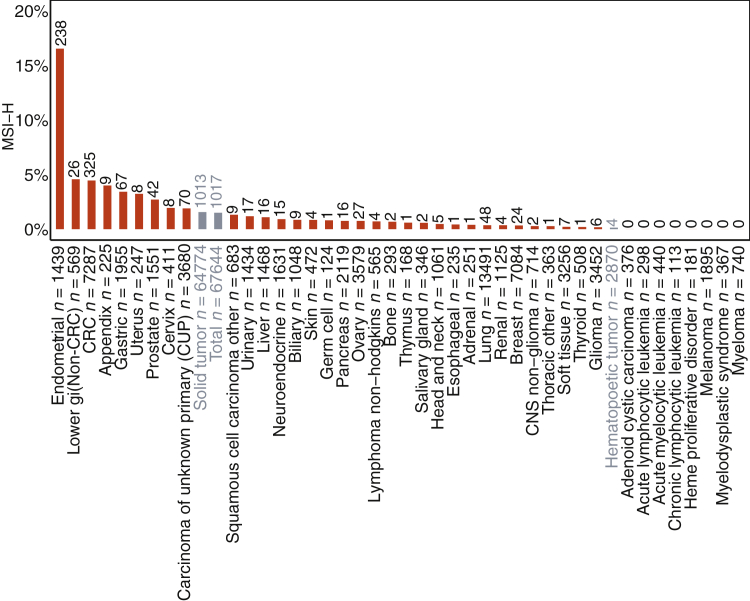
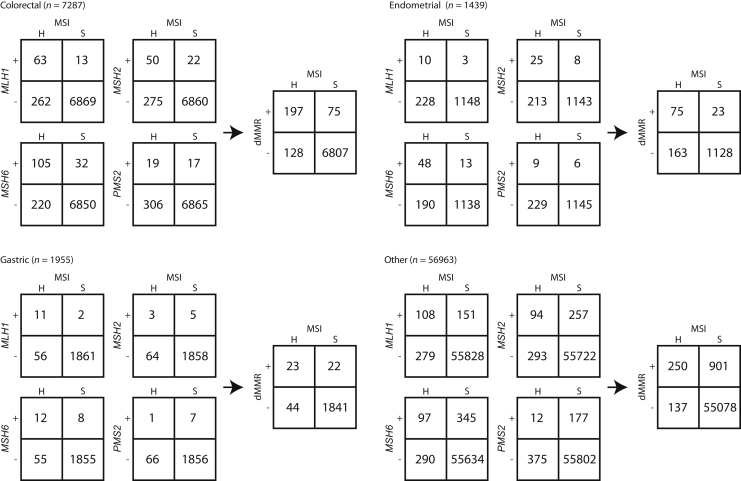
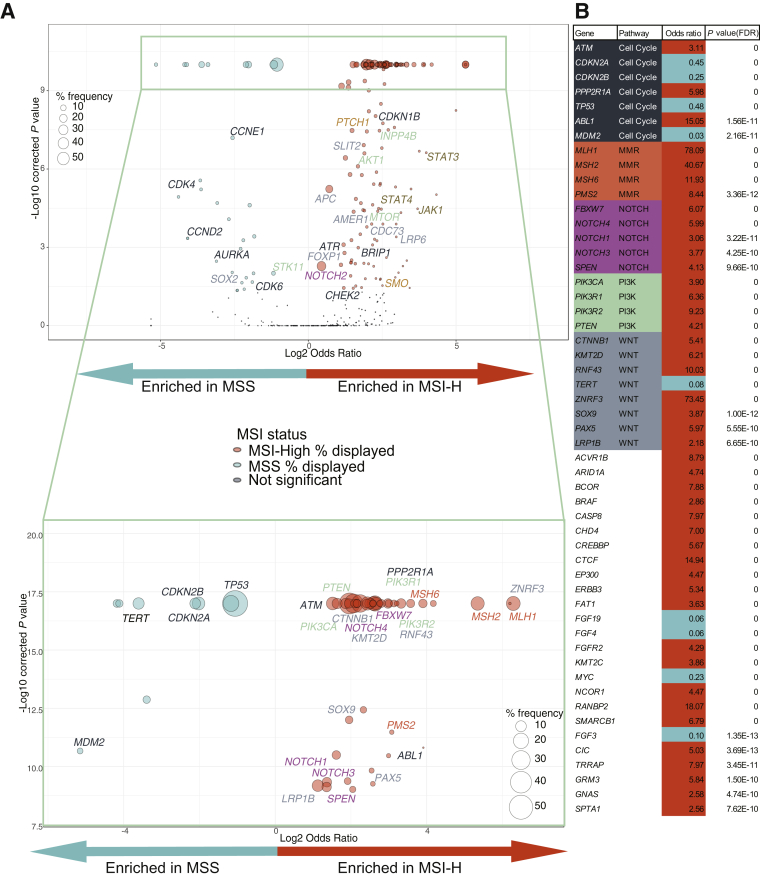
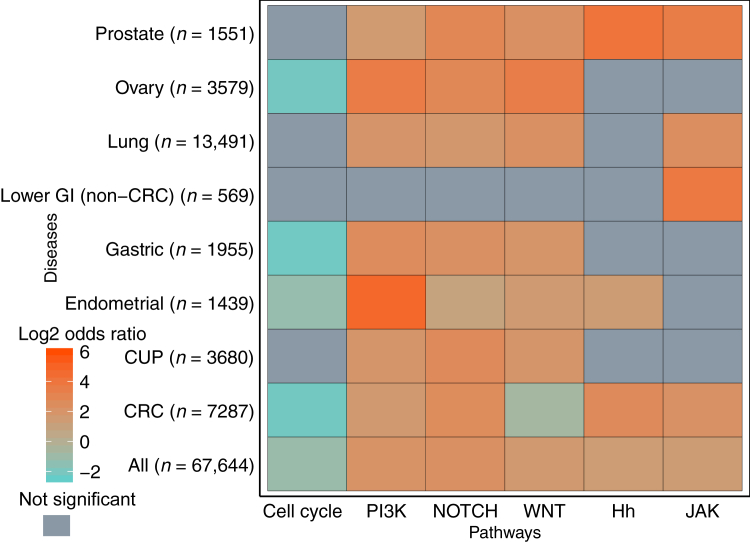
Microsatellite instability (MSI) is an important biomarker for predicting response to immune checkpoint inhibitor therapy, as emphasized by the recent checkpoint inhibitor approval for MSI-high (MSI-H) solid tumors. Herein, we describe and validate a novel method for determining MSI status from a next-generation sequencing comprehensive genomic profiling assay using formalin-fixed, paraffin-embedded samples. This method is 97% (65/67) concordant with current standards, PCR and immunohistochemistry. We further apply this method to >67,000 patient tumor samples to identify genes and pathways that are enriched in MSI-stable or MSI-H tumor groups. Data show that although rare in tumors other than colorectal and endometrial carcinomas, MSI-H samples are present in many tumor types. Furthermore, the large sample set revealed that MSI-H tumors selectively share alterations in genes across multiple common pathways, including WNT, phosphatidylinositol 3-kinase, and NOTCH. Last, MSI is sufficient, but not necessary, for a tumor to have elevated tumor mutation burden. Therefore, MSI can be determined from comprehensive genomic profiling with high accuracy, allowing for efficient MSI-H detection across all tumor types, especially those in which routine use of immunohistochemistry or PCR-based assays would be impractical because of a rare incidence of MSI. MSI-H tumors are enriched in alterations in specific signaling pathways, providing a rationale for investigating directed immune checkpoint inhibitor therapies in combination with pathway-targeted therapies.
微卫星不稳定性 (MSI) 是预测免疫检查点抑制剂治疗反应的重要生物标志物,最近 MSI 高(MSI-H)实体瘤的免疫检查点抑制剂获批也强调了这一点。在此,我们描述并验证了一种从下一代测序综合基因组分析检测中确定 MSI 状态的新方法,该方法使用福尔马林固定、石蜡包埋的样本。该方法与当前标准(PCR 和免疫组织化学)的一致性为 97%(65/67)。我们进一步将该方法应用于 >67000 例患者的肿瘤样本,以确定在 MSI 稳定或 MSI-H 肿瘤组中富集的基因和途径。数据表明,尽管除结直肠癌和子宫内膜癌以外的肿瘤中 MSI-H 样本罕见,但在许多肿瘤类型中均存在 MSI-H 样本。此外,大样本集显示,MSI-H 肿瘤选择性地在多个常见途径(包括 WNT、磷脂酰肌醇 3-激酶和 NOTCH)中共享基因改变。最后,MSI 足以使肿瘤具有高肿瘤突变负担,但不是必需的。因此,MSI 可以通过综合基因组分析以高精度确定,从而能够在所有肿瘤类型中高效检测 MSI-H,尤其是在由于 MSI 发生率低而常规使用免疫组织化学或基于 PCR 的检测不切实际的情况下。MSI-H 肿瘤中富集了特定信号通路的改变,为研究与靶向通路治疗联合使用定向免疫检查点抑制剂治疗提供了依据。