Lin Jianzhen, Jiao Ao, Lv Wu, Zhang Chengshuo, Shi Yue, Yang Zhaoming, Sun Ning, Li Xiaohang, Zhang Jialin
Hepatobiliary Surgery Department and Unit of Organ Transplantation, The First Hospital of China Medical University, Shenyang, China.
Department of General Surgery, Liaoning Cancer Hospital and Institute, Shenyang, China.
Front Pharmacol. 2019 Aug 9;10:896. doi: 10.3389/fphar.2019.00896. eCollection 2019.
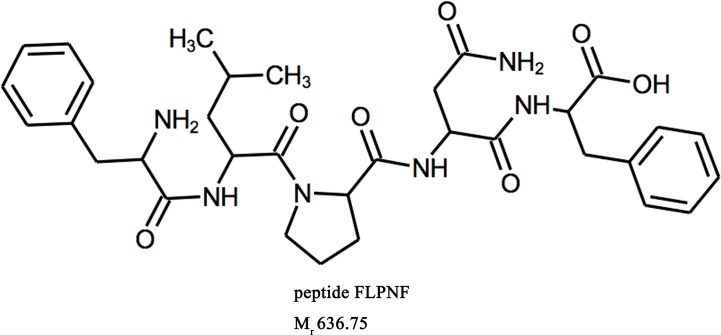
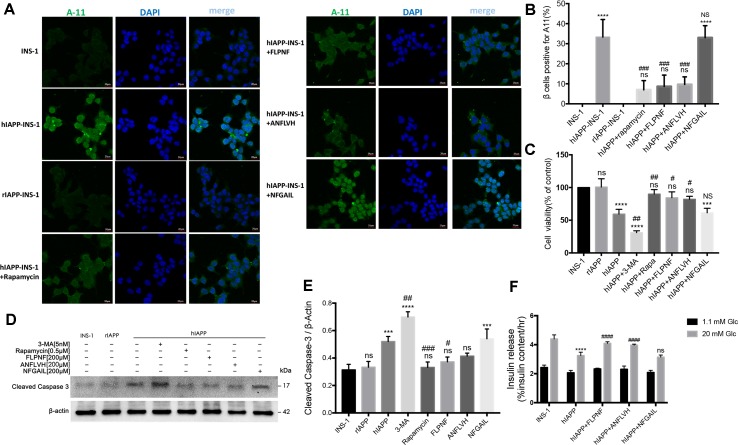
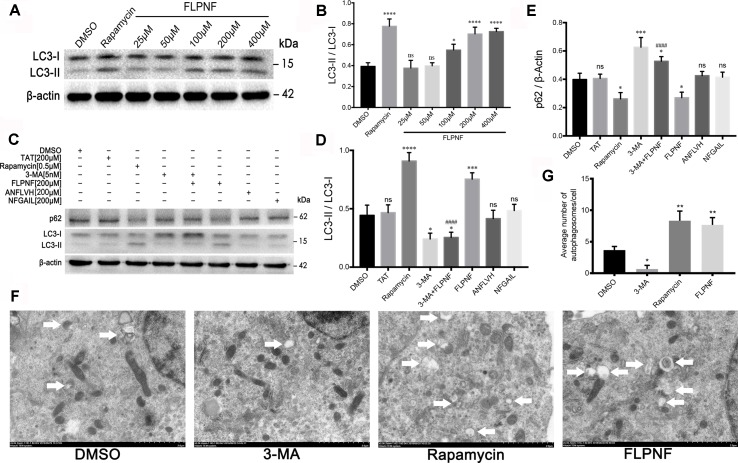
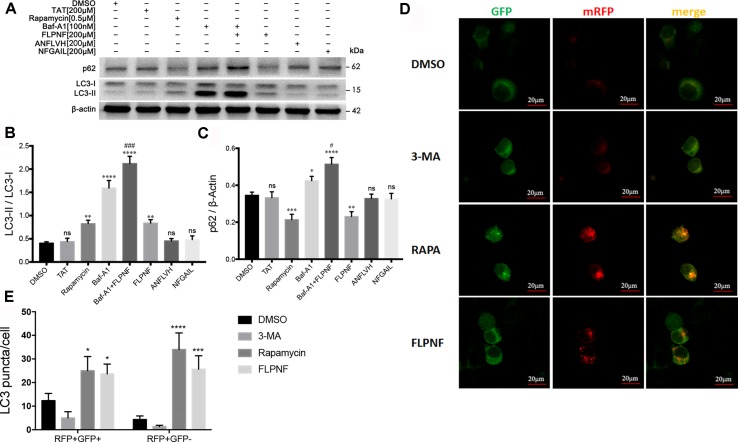
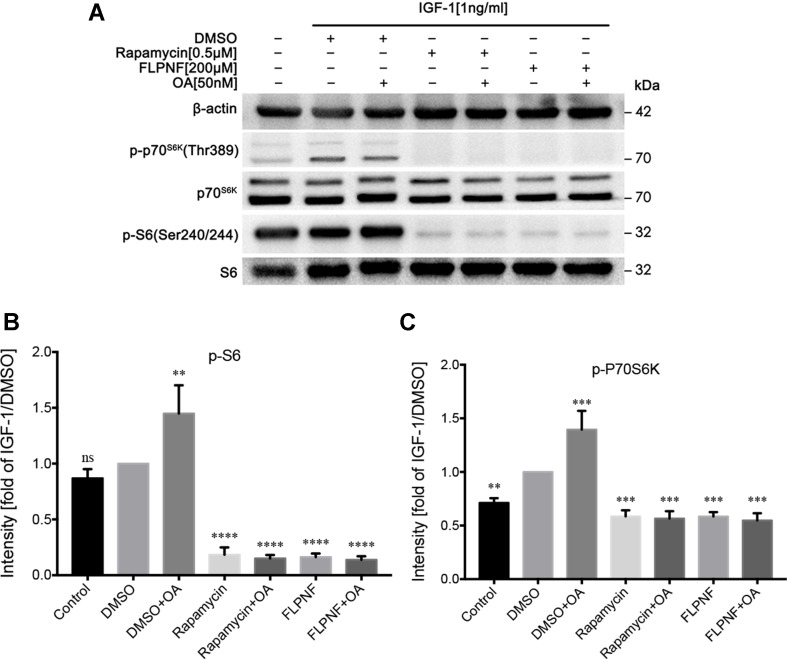
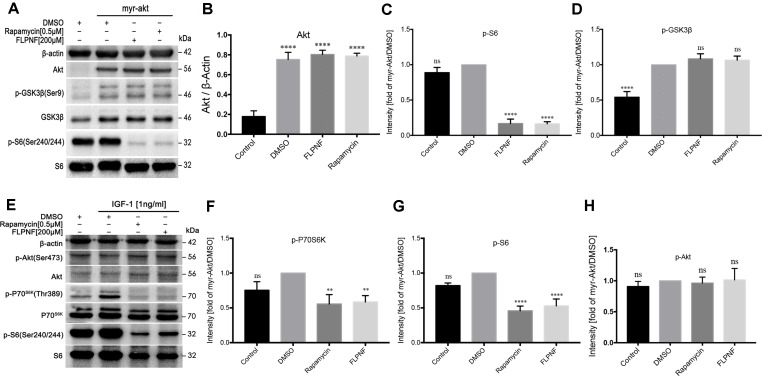
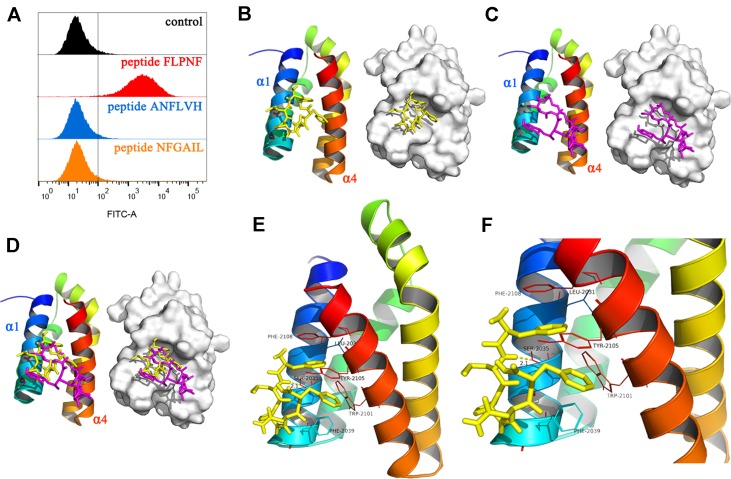
The human islet amyloid polypeptide (hIAPP), the major component of islet amyloid deposition, is one of the amyloidogenic peptides and has been associated with β cell loss and dysfunction in type 2 diabetes (T2D). Autophagy plays a central role in the clearance of hIAPP aggregates, thereby diminishing the hIAPP-induced cytotoxicity. Conversely, hIAPP has been reported to have interfering effects on the autophagy. The pentapeptide FLPNF developed in our previous study has been shown to have effects on the level of the downstream proteins of mTOR and autophagy-lysosome pathway. In the present study, the peptide FLPNF-mediated increase in autophagy flux and its underlying mechanisms, as well as its protecting effect on INS-1 cells, were investigated. Autophagy flux in INS-1 cells overexpressing hIAPP (hIAPP-INS-1 cells) markedly increased after exposure to peptide FLPNF for 24 h and peaked at a concentration of 200 µM. Peptide FLPNF enhanced the autophagy by inhibiting the mTORC1 activity. Flow cytometry results showed the peptide FLPNF bind to mammalian target of rapamycin (mTOR), and further molecular docking analysis revealed a direct interaction between peptide FLPNF and the FRB domain of mTOR. Meanwhile, both peptide FLPNF and rapamycin significantly decreased the hIAPP-induced apoptosis, whereas 3-MA increased the apoptosis. Furthermore, peptide FLPNF reduced the hIAPP oligomer and improved the hIAPP-INS-1 cells insulin release function at high glucose concentration. Taken together, the peptide FLPNF decreased the hIAPP oligomer upregulating autophagy by inhibiting mTORC1 activity, thus protecting the INS-1 cells from hIAPP-induced apoptosis and improving the insulin release function of INS-1 cells.
人胰岛淀粉样多肽(hIAPP)是胰岛淀粉样沉积物的主要成分,是淀粉样生成肽之一,与2型糖尿病(T2D)中的β细胞丢失和功能障碍有关。自噬在hIAPP聚集体的清除中起核心作用,从而减少hIAPP诱导的细胞毒性。相反,据报道hIAPP对自噬有干扰作用。我们先前研究中开发的五肽FLPNF已被证明对mTOR和自噬-溶酶体途径的下游蛋白水平有影响。在本研究中,研究了肽FLPNF介导的自噬通量增加及其潜在机制,以及其对INS-1细胞的保护作用。在暴露于肽FLPNF 24小时后,过表达hIAPP的INS-1细胞(hIAPP-INS-1细胞)中的自噬通量显著增加,并在200μM的浓度下达到峰值。肽FLPNF通过抑制mTORC1活性增强自噬。流式细胞术结果表明肽FLPNF与雷帕霉素的哺乳动物靶点(mTOR)结合,进一步的分子对接分析揭示了肽FLPNF与mTOR的FRB结构域之间的直接相互作用。同时,肽FLPNF和雷帕霉素均显著降低hIAPP诱导的细胞凋亡,而3-MA则增加细胞凋亡。此外,肽FLPNF减少了hIAPP寡聚体,并在高葡萄糖浓度下改善了hIAPP-INS-1细胞的胰岛素释放功能。综上所述,肽FLPNF通过抑制mTORC1活性降低hIAPP寡聚体并上调自噬,从而保护INS-1细胞免受hIAPP诱导的细胞凋亡并改善INS-1细胞的胰岛素释放功能。