Al-Khalaf Huda H, Aboussekhra Abdelilah
Department of Molecular Oncology, King Faisal Specialist Hospital and Research Center, Riyadh 11211, KSA.
The National Center for Stem Cell Technology, King Abdulaziz City for Science and Technology, Riyadh 11211, KSA.
Oncotarget. 2019 Aug 6;10(47):4868-4879. doi: 10.18632/oncotarget.27115.
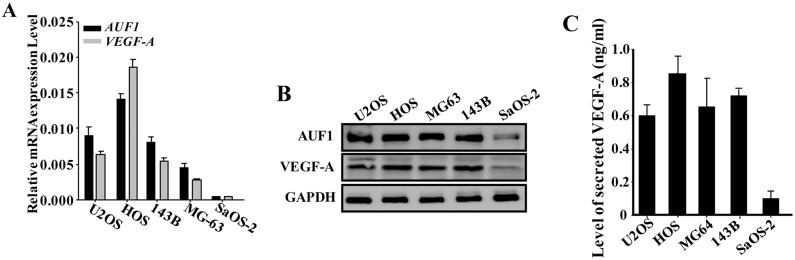
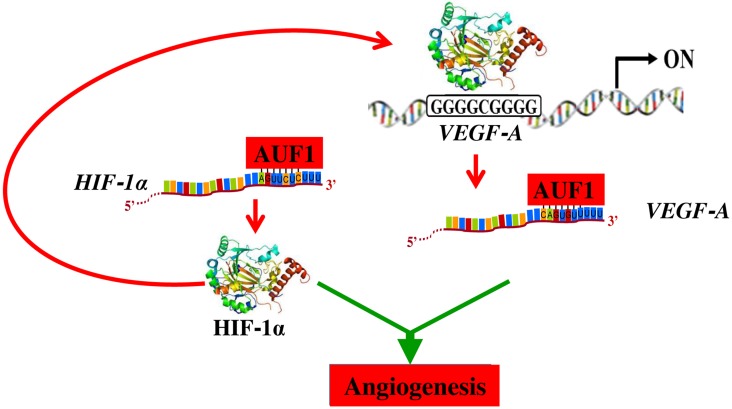
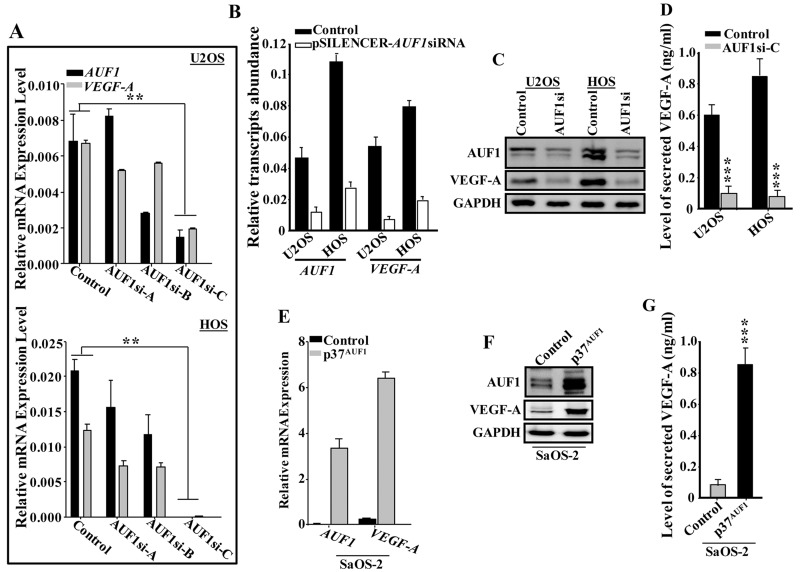
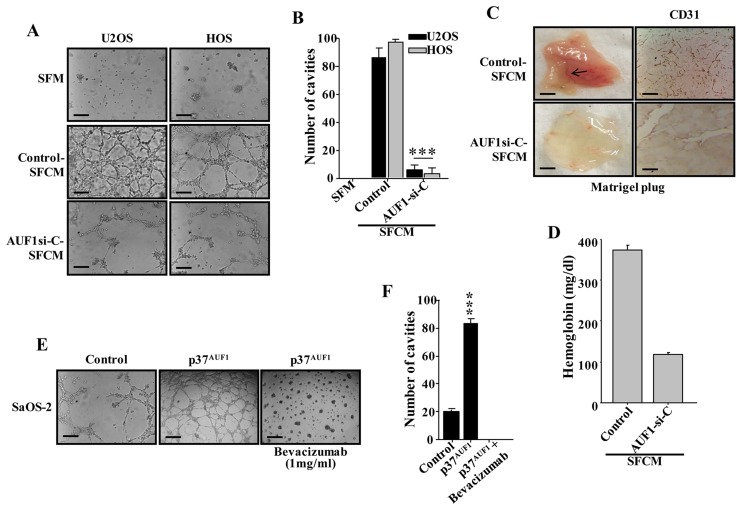
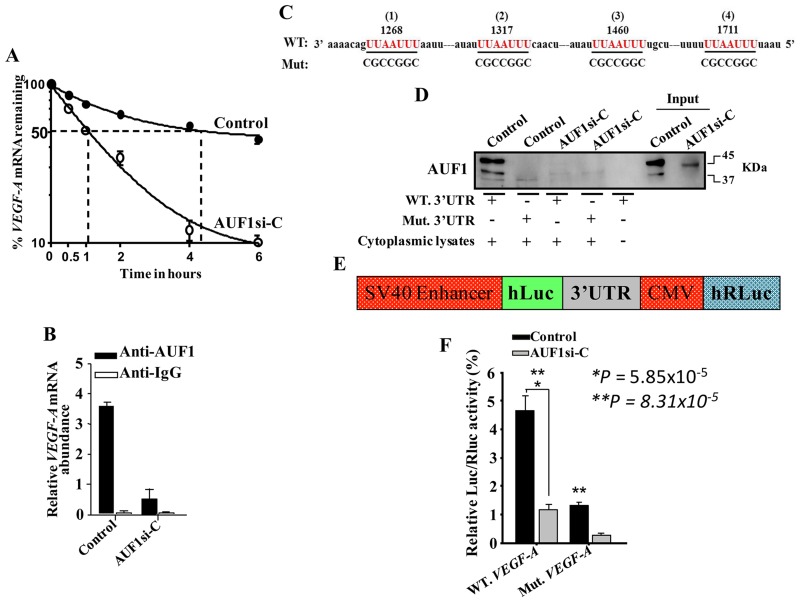
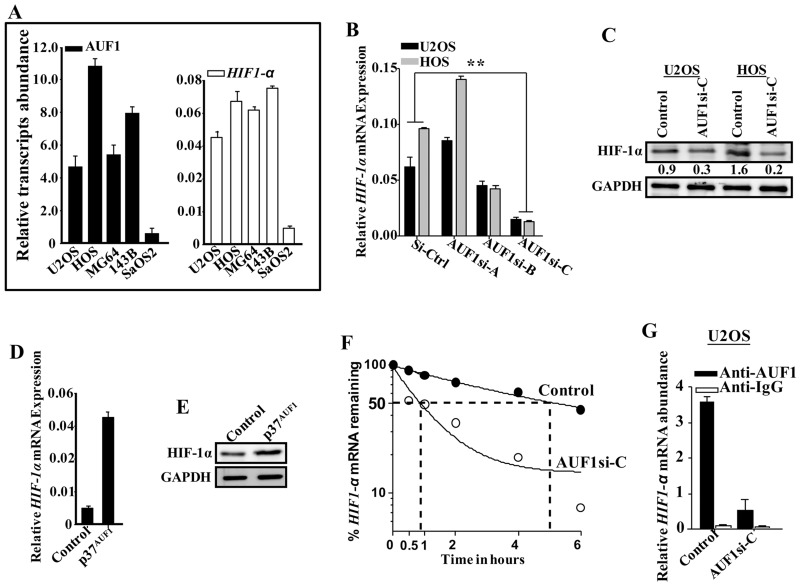
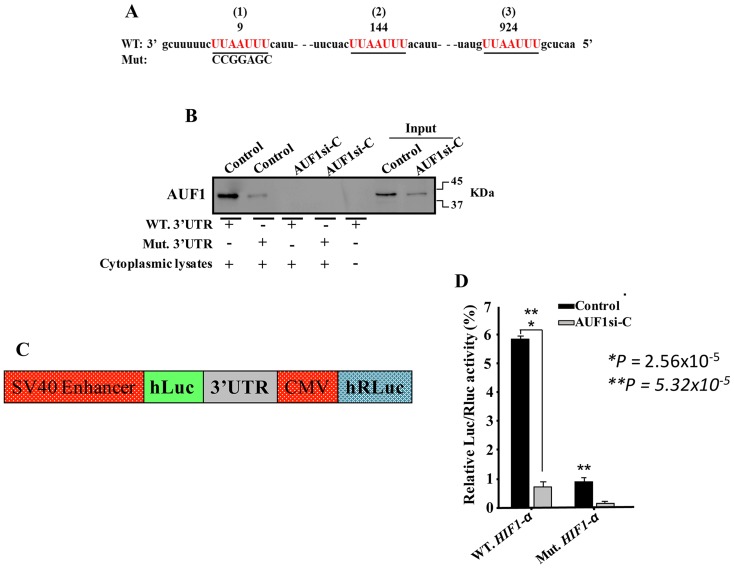
Osteosarcoma is the most common malignant bone tumor in children, adolescents, and young adults. This pleiomorphic tumor depends on new blood vessel development, also known as angiogenesis, for tumor growth and metastasis. Therefore, it's of utmost importance to identify the key genes and pathways that regulate this pro-metastatic process in order to develop more efficient therapies. Here, we have shown that the RNA-binding protein AUF1 positively regulates the expression of the pro-angiogenic factor VEGF-A and its positive regulator HIF-1alpha through direct binding and stabilization of their mRNAs. This effect is mediated through the seeding sequence of the AUF1 protein in the and 3'UTR sequences. As a consequence, the expression of the 3 genes was highly correlative in various osteosarcoma cell lines, and AUF1 enhanced the pro-angiogenic capabilities of osteosarcoma cells both and . Indeed, while inhibition of AUF1 using specific siRNA suppressed the pro-angiogenic effects of osteosarcoma cells, ectopic expression of AUF1 enhanced the pro-angiogenic effect in a VEGF-A-dependent manner. Therefore, in the era of targeted therapy, anti-angiogenic therapies targeting AUF1 could provide effective methods for treating osteosarcoma.
骨肉瘤是儿童、青少年和年轻成年人中最常见的恶性骨肿瘤。这种多形性肿瘤的生长和转移依赖于新血管的形成,即血管生成。因此,识别调控这种促转移过程的关键基因和信号通路对于开发更有效的治疗方法至关重要。在此,我们发现RNA结合蛋白AUF1通过直接结合并稳定促血管生成因子VEGF-A及其正向调节因子HIF-1α的mRNA来正向调节它们的表达。这种作用是通过AUF1蛋白在5'和3'非翻译区序列中的种子序列介导的。因此,这三个基因在各种骨肉瘤细胞系中的表达高度相关,并且AUF1在体内和体外均增强了骨肉瘤细胞的促血管生成能力。实际上,使用特异性小干扰RNA抑制AUF1可抑制骨肉瘤细胞的促血管生成作用,而异位表达AUF1则以VEGF-A依赖的方式增强促血管生成作用。因此,在靶向治疗时代,针对AUF1的抗血管生成疗法可为骨肉瘤治疗提供有效方法。