1 Department of Oral Cell Biology, Academic Centre for Dentistry Amsterdam (ACTA), University of Amsterdam and Vrije Universiteit Amsterdam, Amsterdam, The Netherlands.
2 Department of Preventive Dentistry, Academic Centre for Dentistry Amsterdam (ACTA), University of Amsterdam and Vrije Universiteit Amsterdam, Amsterdam, The Netherlands.
J Dent Res. 2018 Feb;97(2):201-208. doi: 10.1177/0022034517729998. Epub 2017 Sep 11.
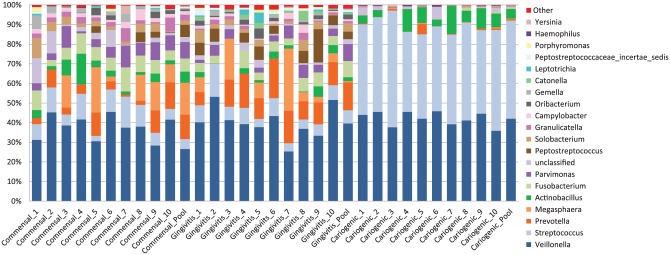
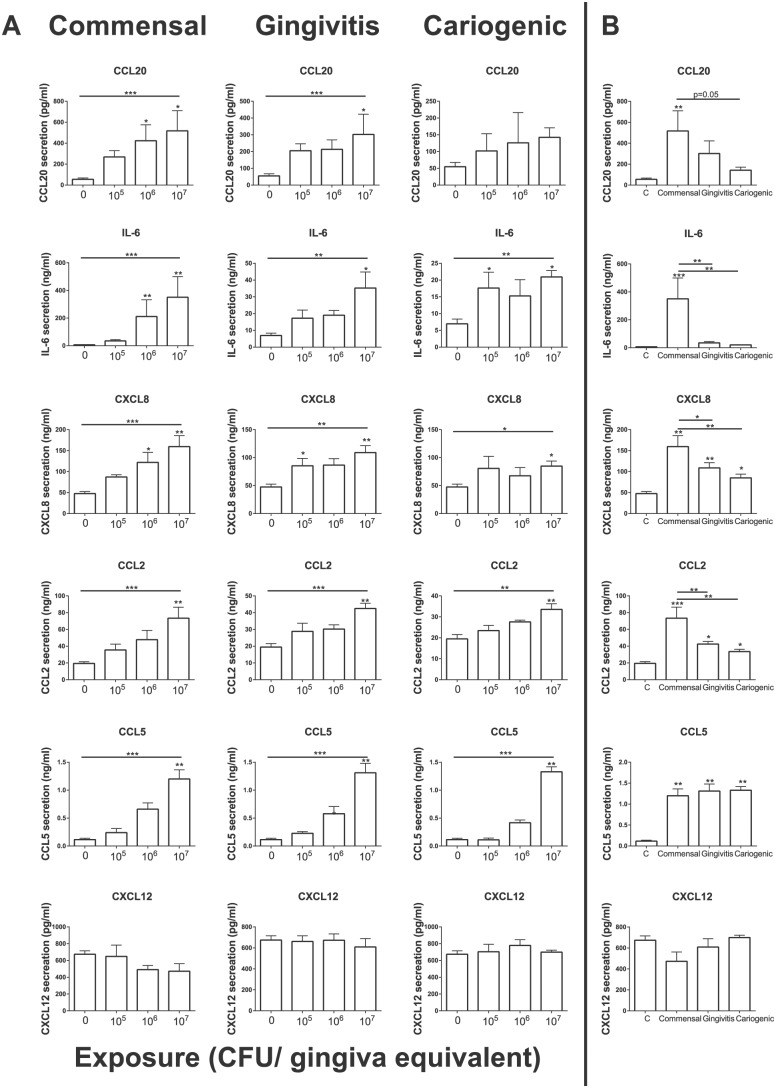
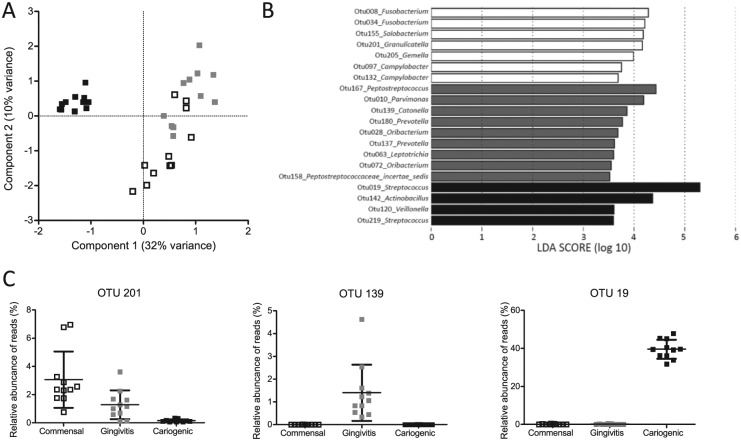
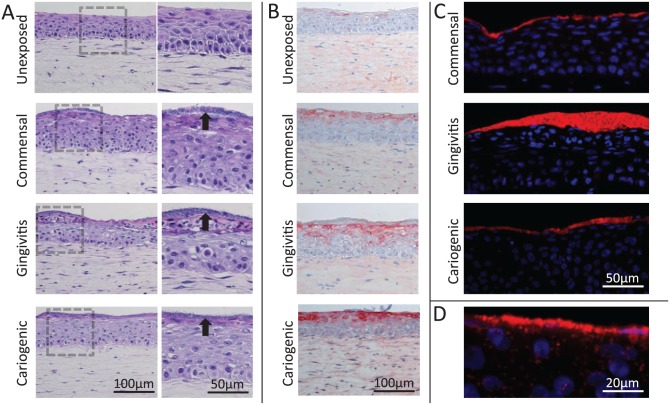
In vitro models that closely mimic human host-microbiome interactions can be a powerful screening tool for antimicrobials and will hold great potential for drug validation and discovery. The aim of this study was to develop an organotypic oral mucosa model that could be exposed to in vitro cultured commensal and pathogenic biofilms in a standardized and scalable manner. The oral mucosa model consisted of a tissue-engineered human gingiva equivalent containing a multilayered differentiated gingiva epithelium (keratinocytes) grown on a collagen hydrogel, containing gingiva fibroblasts, which represented the lamina propria. Keratinocyte and fibroblast telomerase reverse transcriptase-immortalized cell lines were used to overcome the limitations of isolating cells from small biopsies when scalable culture experiments were required. The oral biofilms were grown under defined conditions from human saliva to represent 3 distinct phenotypes: commensal, gingivitis, and cariogenic. The in vitro grown biofilms contained physiologic numbers of bacterial species, averaging >70 operational taxonomic units, including 20 differentiating operational taxonomic units. When the biofilms were applied topically to the gingiva equivalents for 24 h, the gingiva epithelium increased its expression of elafin, a protease inhibitor and antimicrobial protein. This increased elafin expression was observed as a response to all 3 biofilm types, commensal as well as pathogenic (gingivitis and cariogenic). Biofilm exposure also increased secretion of the antimicrobial cytokine CCL20 and inflammatory cytokines IL-6, CXCL8, and CCL2 from gingiva equivalents. This inflammatory response was far greater after commensal biofilm exposure than after pathogenic biofilm exposure. These results show that pathogenic oral biofilms have early immune evasion properties as compared with commensal oral biofilms. The novel host-microbiome model provides an ideal tool for future investigations of gingiva responses to commensal and pathogenic biofilms and for testing novel therapeutics.
在体外模拟人体宿主-微生物相互作用的模型可以成为筛选抗菌药物的有力工具,并在药物验证和发现方面具有巨大的潜力。本研究的目的是开发一种器官型口腔黏膜模型,能够以标准化和可扩展的方式暴露于体外培养的共生和致病性生物膜。口腔黏膜模型由组织工程化的人牙龈等效物组成,其中包含在含有牙龈成纤维细胞的胶原水凝胶上生长的多层分化的牙龈上皮(角蛋白细胞),代表固有层。角蛋白细胞和成纤维细胞端粒酶逆转录酶永生化细胞系的使用克服了需要可扩展培养实验时从小活检中分离细胞的局限性。口腔生物膜在定义的条件下从人唾液中生长,以代表 3 种不同表型:共生、牙龈炎和致龋。体外生长的生物膜含有生理数量的细菌物种,平均 >70 个操作分类单位,包括 20 个区分操作分类单位。当生物膜在 24 小时内局部应用于牙龈等效物时,牙龈上皮增加其弹性蛋白酶抑制剂和抗菌蛋白 elafin 的表达。观察到这种 elafin 表达的增加是对所有 3 种生物膜类型(共生和致病(牙龈炎和致龋))的反应。生物膜暴露还增加了从牙龈等效物分泌抗菌细胞因子 CCL20 和炎症细胞因子 IL-6、CXCL8 和 CCL2。与致病性生物膜暴露相比,共生生物膜暴露后的炎症反应要大得多。这些结果表明,与共生口腔生物膜相比,致病性口腔生物膜具有早期的免疫逃避特性。新型宿主-微生物模型为未来研究牙龈对共生和致病性生物膜的反应以及测试新型治疗方法提供了理想的工具。