Section of Veterinary Bacteriology, Institute for Food Safety and Hygiene, Vetsuisse Faculty, University of Zurich, Zurich, Switzerland.
Microbiologyopen. 2019 Dec;8(12):e919. doi: 10.1002/mbo3.919. Epub 2019 Aug 25.
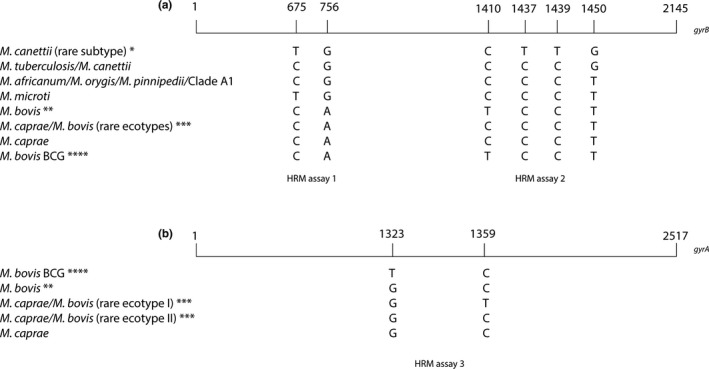
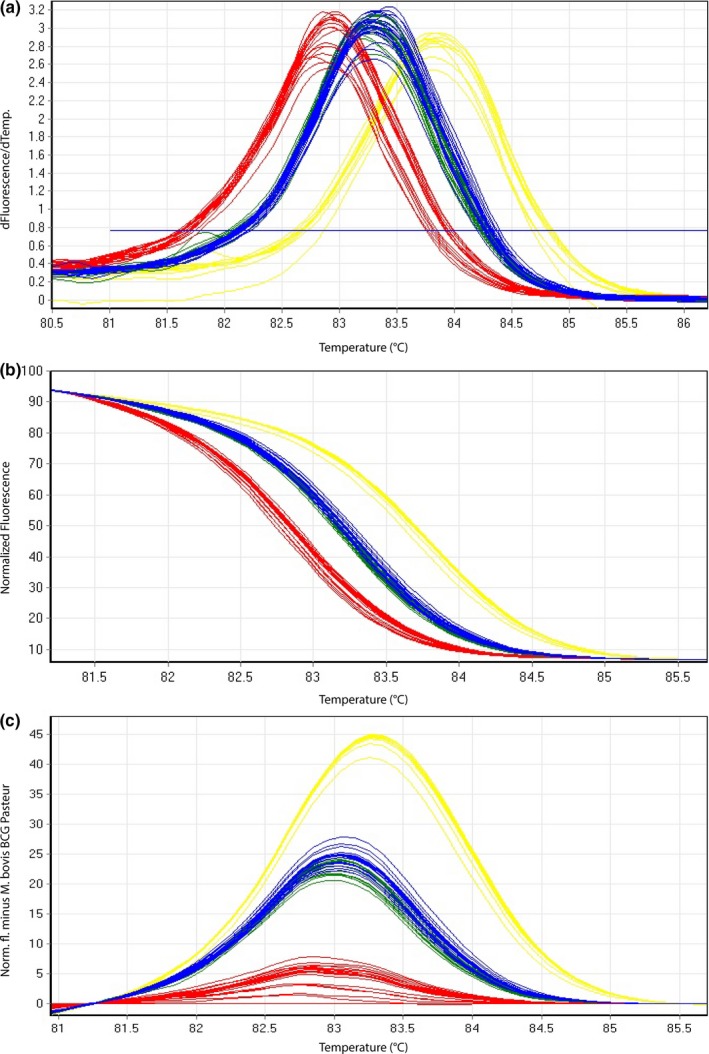
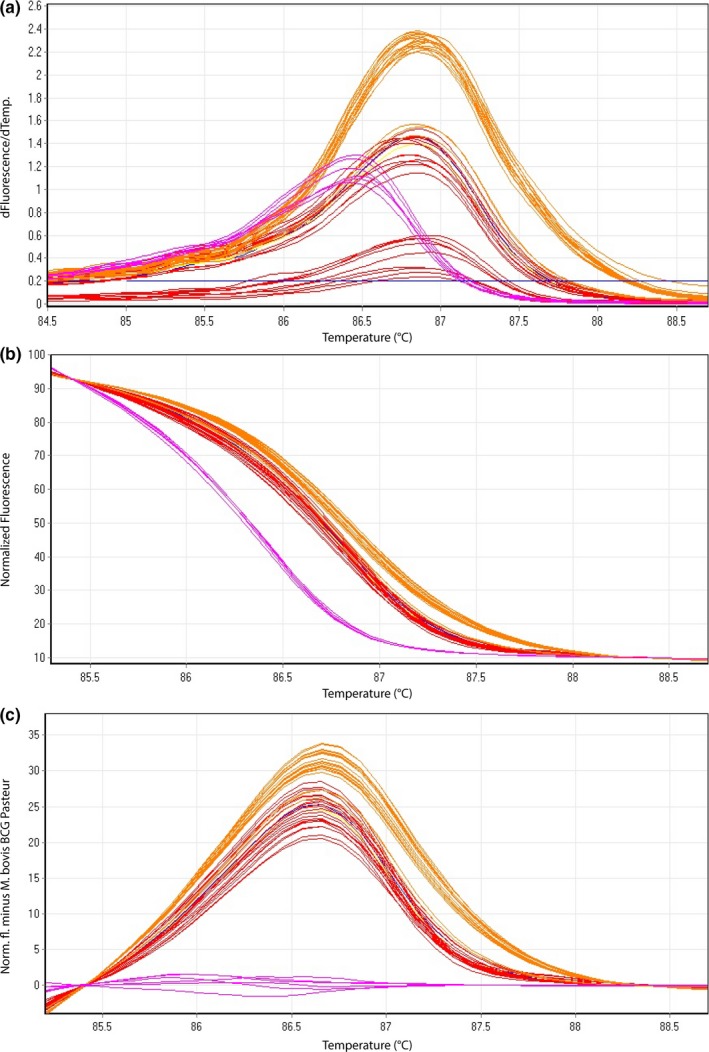
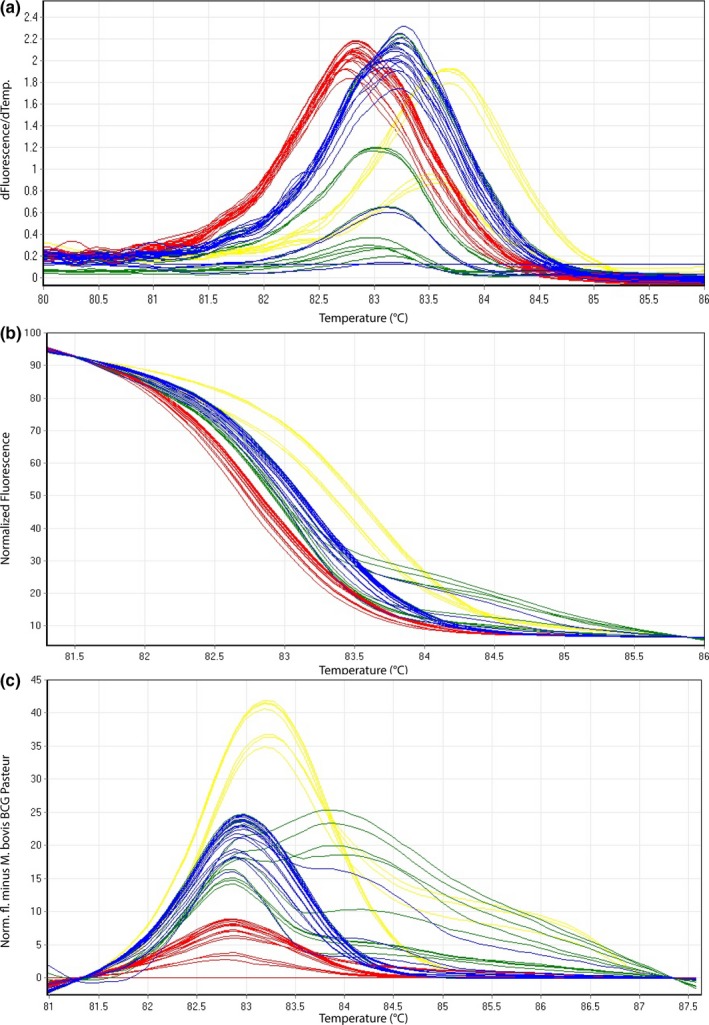
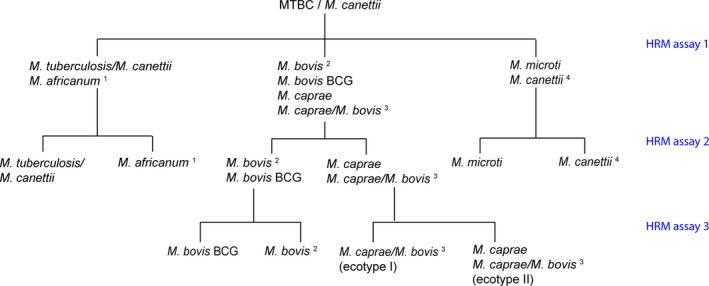
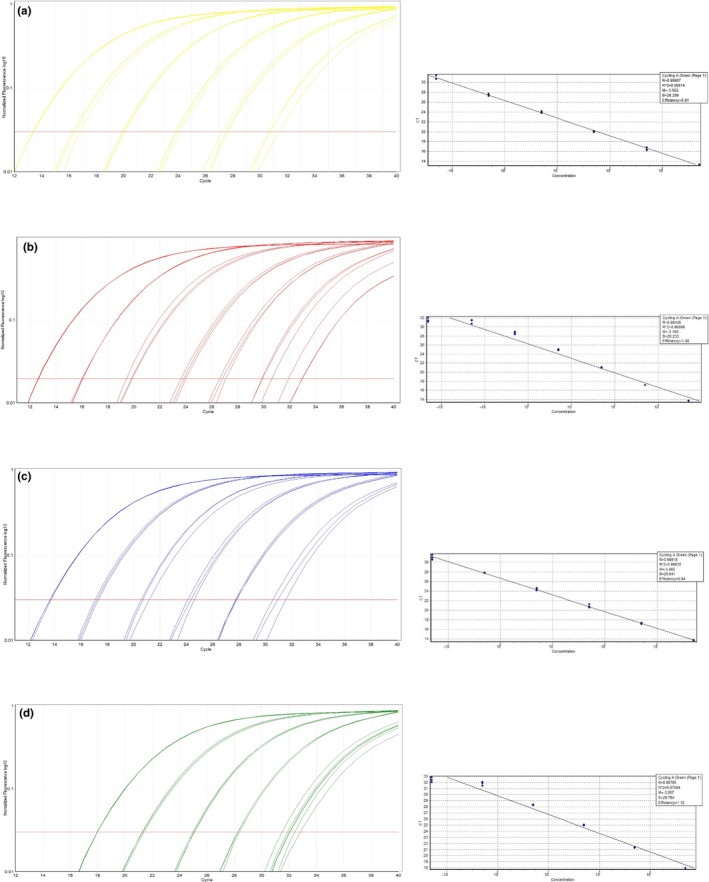
The possibility of introducing a reliable assay for a quick identification and differentiation of the main species of Mycobacterium tuberculosis complex (MTBC) supports the improvement of efficient tuberculosis combating strategies worldwide. Commercially available assays are often based on cultured samples; however, due to the long cultivation time of mycobacteria, results are delayed. Developed PCR approaches have been published previously, though, when testing intricate veterinary samples, the complex composition of multiplex qPCRs frequently leads to assay failure. In order to overcome those limits, a paradigm of a three-reaction high-resolution melting (HRM) assay for the simultaneous identification and differentiation of the main members of MTBC was established. The assay is based on single nucleotide polymorphisms within gyrB and gyrA, which have been used as target for the establishment of two highly specific HRM assays (HRM assays 1 and 2) discriminating M. tuberculosis/ Mycobacterium canetti, Mycobacterium bovis/M. bovis BCG, Mycobacterium caprae/rare M. caprae/M. bovis ecotypes, Mycobacterium africanum/Mycobacterium orygis/ Mycobacterium pinnipedii/Clade A1, Mycobacterium microti, and a rare subtype of M. canettii followed by a third HRM assay (HRM assay 3) allowing a further differentiation of M. bovis, M. bovis BCG, and a rare subtype of M. caprae/M. bovis, which is considered to be a novel ecotype. High-resolution melting assay 1 is described in a previously published report. High-resolution melting assay 2 showed 100% correlation of all 39 examined isolates with the results of a commercial identification kit. 96% of the clinical samples tested demonstrated concordant results. High-resolution melting assay 3 showed an accordance of 100% with the results of the commercially available identification kit of all 22 samples analyzed. The proposed strategy of the three-reaction HRM assay can be used for an accurate differentiation of up to seven groups of MTBC and potentially to identify a rare subtype of M. canettii either on isolates or on clinical samples.
引入一种可靠的检测方法,能够快速鉴定和区分结核分枝杆菌复合群(MTBC)的主要物种,这有助于改善全球范围内有效的结核病防治策略。市售检测方法通常基于培养样本;然而,由于分枝杆菌的培养时间较长,结果会延迟。以前已经发表了开发的 PCR 方法,但是,在测试复杂的兽医样本时,多重 qPCR 的复杂组成经常导致检测失败。为了克服这些限制,建立了一种用于同时鉴定和区分 MTBC 主要成员的三反应高分辨率熔解(HRM)检测方法的范例。该检测方法基于 gyrB 和 gyrA 中的单核苷酸多态性,这些多态性已被用作建立两种高度特异性 HRM 检测方法(HRM 检测方法 1 和 2)的靶标,用于区分结核分枝杆菌/分枝杆菌堪萨斯亚种、牛分枝杆菌/卡介苗、山羊分枝杆菌/罕见的山羊分枝杆菌/牛分枝杆菌生态型、非洲分枝杆菌/分枝杆菌奥里格斯/分枝杆菌海狮/Clade A1、微小分枝杆菌和一种罕见的分枝杆菌堪萨斯亚种,然后是第三种 HRM 检测方法(HRM 检测方法 3),可以进一步区分牛分枝杆菌、卡介苗和一种罕见的山羊分枝杆菌/牛分枝杆菌亚种,被认为是一种新型生态型。高分辨率熔解检测方法 1 在以前发表的报告中有所描述。高分辨率熔解检测方法 2 显示所有 39 个检测分离株与商业鉴定试剂盒的结果完全相关。96%的测试临床样本显示出一致的结果。高分辨率熔解检测方法 3 显示与分析的所有 22 个样本的市售鉴定试剂盒的结果完全一致。该三反应 HRM 检测方法的策略可用于准确区分多达七个 MTBC 组,并有可能在分离物或临床样本上鉴定一种罕见的分枝杆菌堪萨斯亚种。