Department of Molecular Biophysics and Biochemistry , Yale University , New Haven , Connecticut 06511 , United States.
Biochemistry. 2019 Sep 17;58(37):3838-3847. doi: 10.1021/acs.biochem.9b00394. Epub 2019 Sep 3.
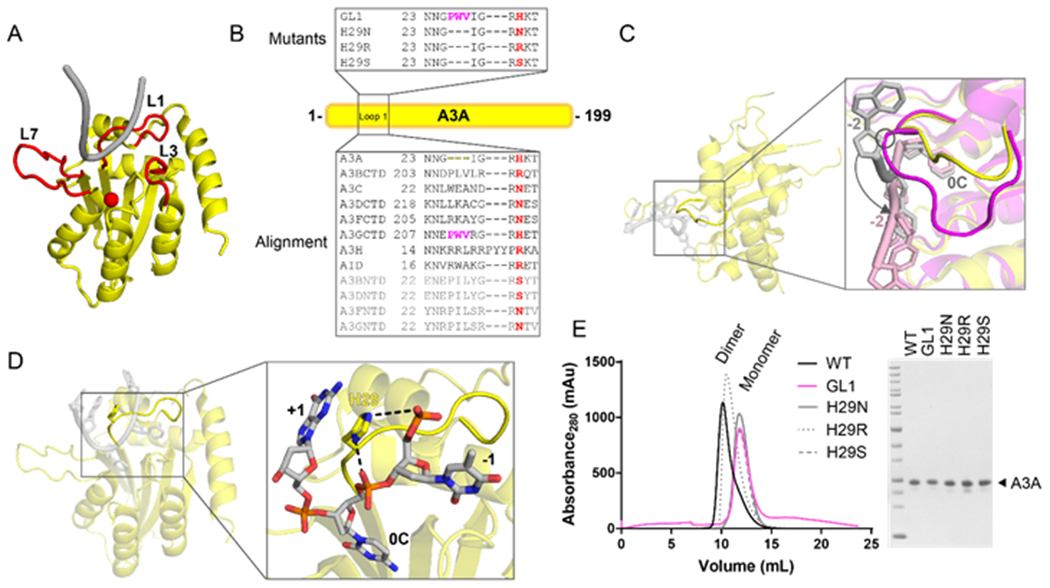
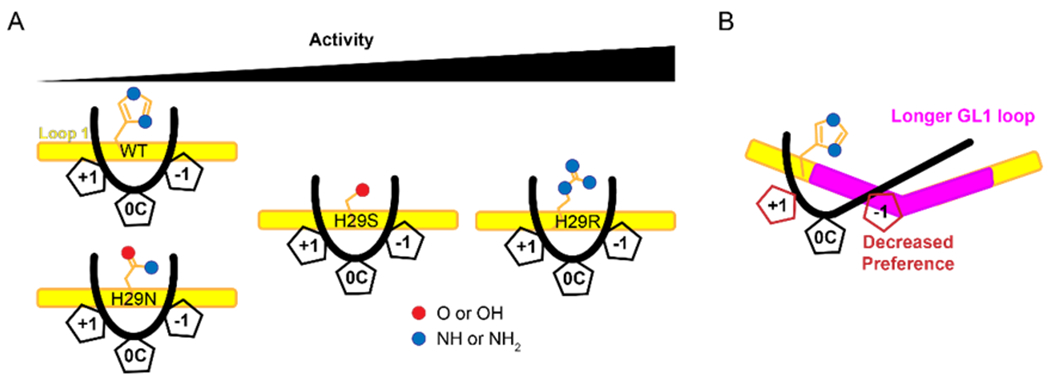
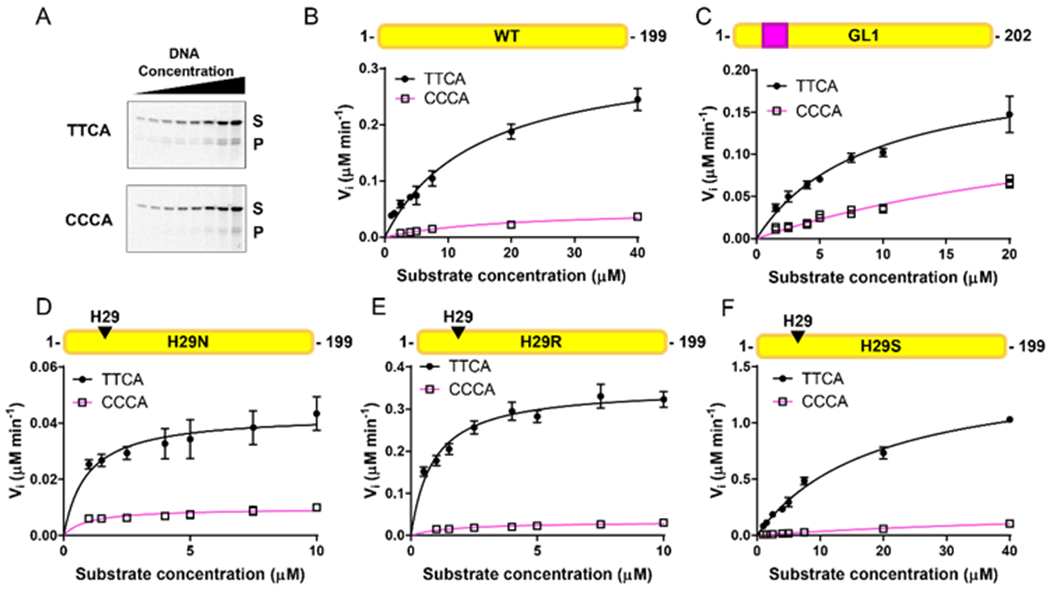
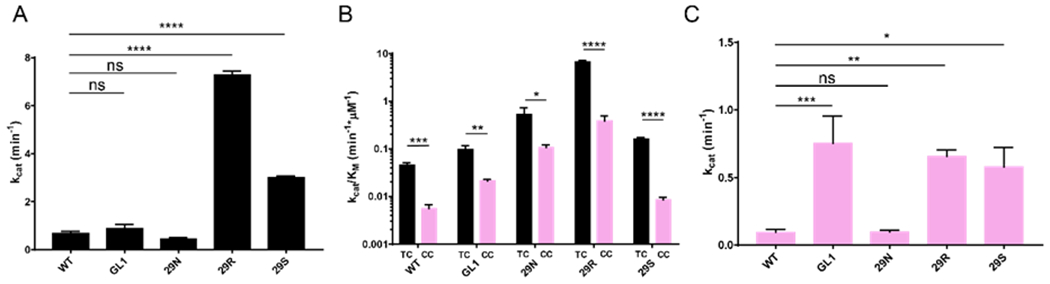
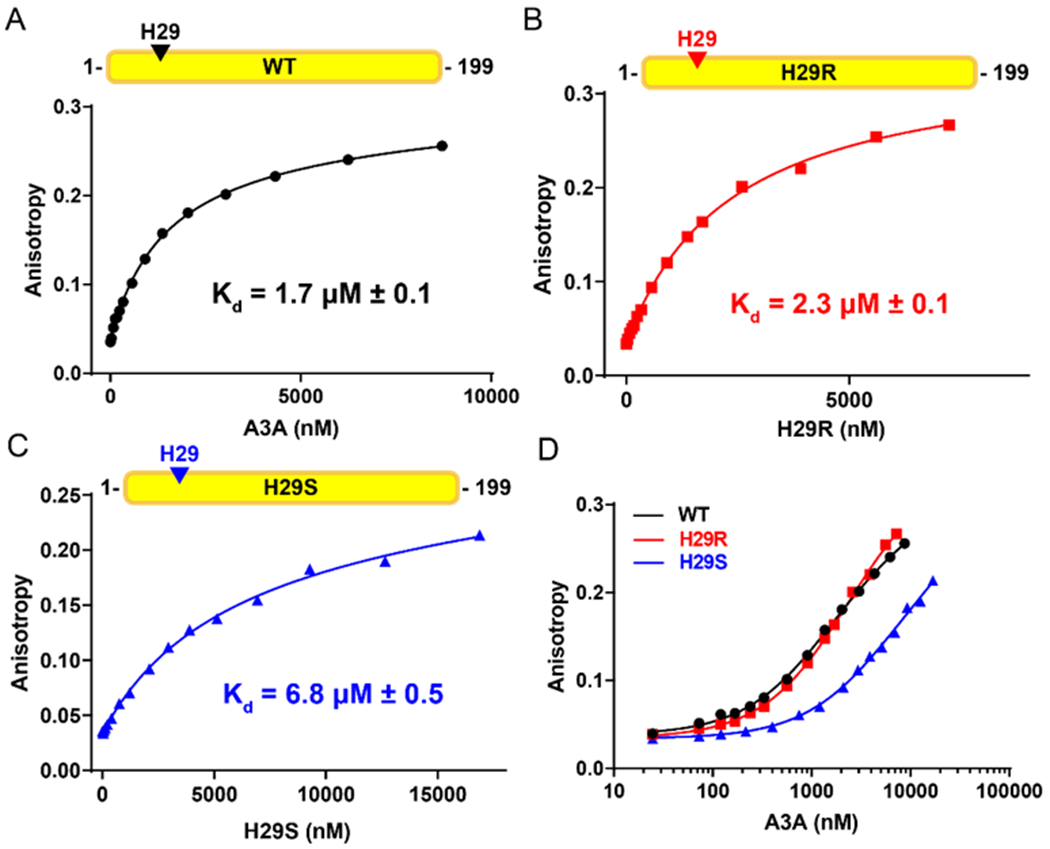
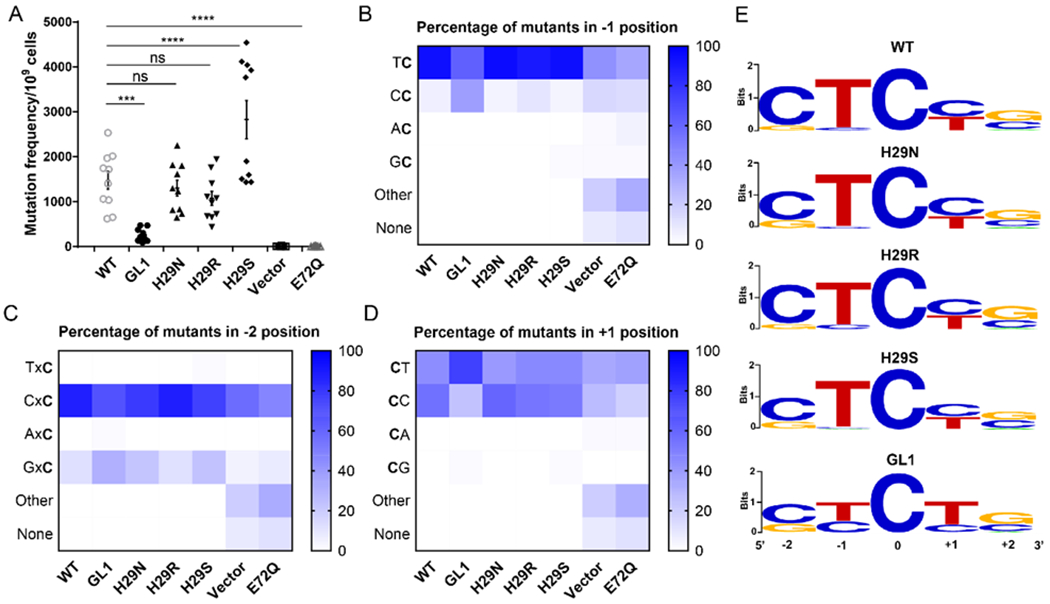
The apolipoprotein B mRNA editing enzyme catalytic polypeptide-like 3 (APOBEC3 or A3) family of proteins functions in the innate immune system. The A3 proteins are interferon inducible and hypermutate deoxycytidine to deoxyuridine in foreign single-stranded DNA (ssDNA). However, this deaminase activity cannot discriminate between foreign and host ssDNA at the biochemical level, which presents a significant danger when A3 proteins gain access to the nucleus. Interestingly, this A3 capability can be harnessed when coupled with novel CRISPR-Cas9 proteins to create a targeted base editor. Specifically, A3A has been used to revert mutations associated with disease states. Recent structural studies have shown the importance of loop regions of A3A and A3G in ssDNA recognition and positioning for deamination. In this work, we further examined loop 1 of A3A to determine how it affects substrate selection, as well as the efficiency of deamination, in the hopes of advancing the potential of A3A in base editing technology. We found that mutating residue H29 enhanced deamination activity without changing substrate specificity. Also interestingly, we found that increasing the length of loop 1 decreases substrate specificity. Overall, these results lead to a better understanding of substrate recognition and deamination by A3A and the A3 family of proteins.
载脂蛋白 B mRNA 编辑酶催化多肽样 3(APOBEC3 或 A3)家族的蛋白质在先天免疫系统中发挥作用。A3 蛋白是干扰素诱导的,可在外源单链 DNA(ssDNA)中将脱氧胞嘧啶突变为脱氧尿嘧啶。然而,这种脱氨酶活性在生化水平上无法区分外源和宿主 ssDNA,这在 A3 蛋白进入细胞核时带来了巨大的危险。有趣的是,当与新型 CRISPR-Cas9 蛋白结合使用时,这种 A3 能力可以被利用来创建靶向碱基编辑器。具体来说,A3A 已被用于纠正与疾病状态相关的突变。最近的结构研究表明,A3A 和 A3G 的 loop 区域在 ssDNA 识别和定位脱氨中非常重要。在这项工作中,我们进一步研究了 A3A 的 loop1,以确定它如何影响底物选择以及脱氨的效率,以期提高 A3A 在碱基编辑技术中的潜力。我们发现突变残基 H29 增强了脱氨活性,而不改变底物特异性。同样有趣的是,我们发现增加 loop1 的长度会降低底物特异性。总的来说,这些结果使我们更好地理解了 A3A 和 A3 家族蛋白的底物识别和脱氨作用。